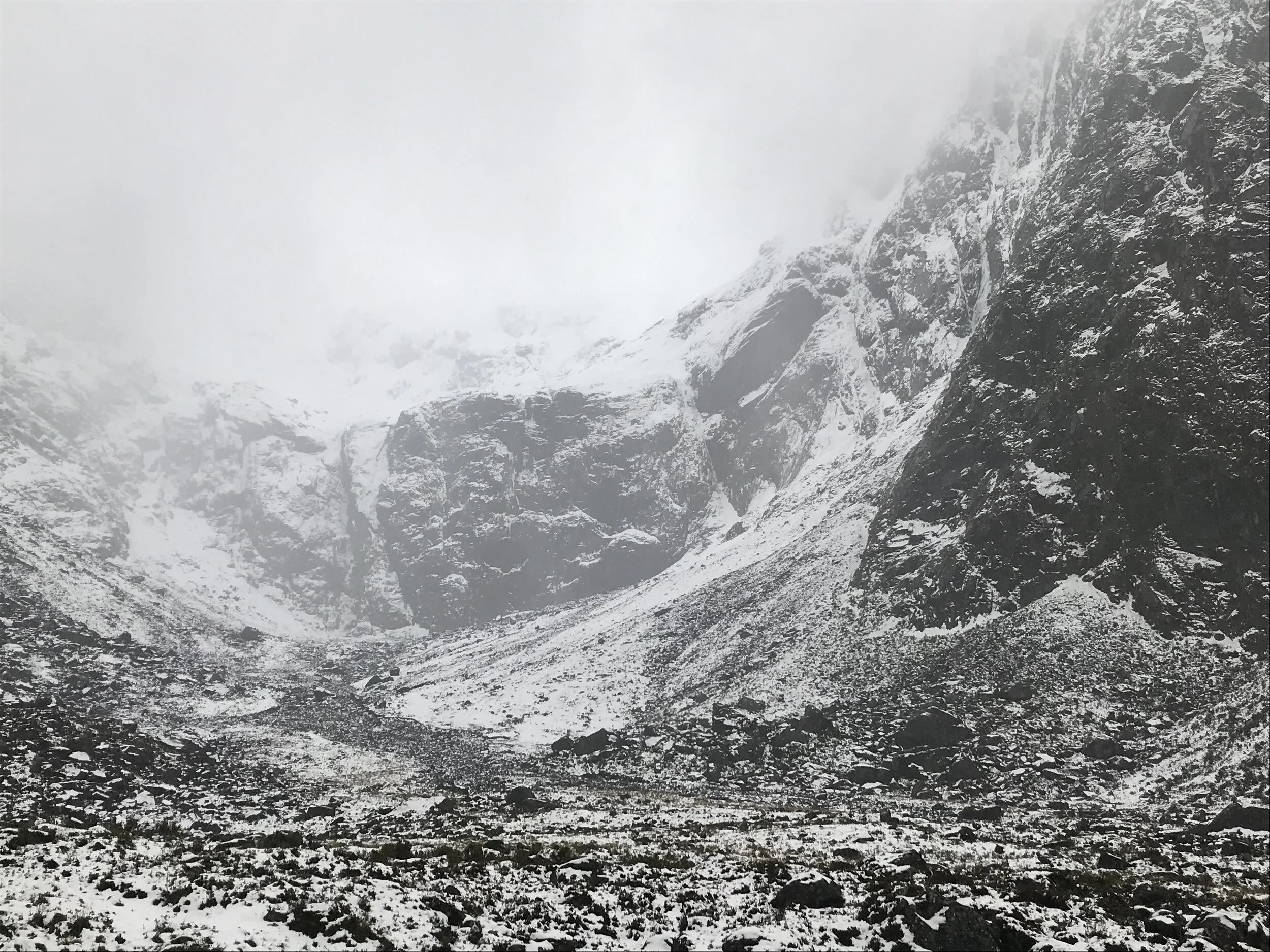
The Road to Milford Sound, continued....
Nature at it’s wildest on the Milford Road
Leaving the Hollyford Valley behind the road met up with a river which seemed to be fed by the imposing mountains now towering above me. As the rain fell waterfalls appeared cascading down from the mountain peaks high above. Warning signs alerted me to the fact that I was now in an avalanche risk area and was unable to stop. This went on for over 30km - such are the perils in this area. The snow now blanketed the sides of the road and as I climbed higher the rain itself actually turned to snow.

Snow lines the road up towards Homer Tunnel
Approaching Homer Tunnel – which was famously cut out through the mountainside to provide much needed manual labour after the war years, the mountains seem to move closer to the roadside and gigantic boulders and lumps of rock lay scattered about. No wonder it was a no stopping area I thought to myself! I had to stop a little further however as the lights for the tunnel were red. It is run on a one way system and the waiting time on the big board in front of me advised 10 minutes. Just enough time to jump out of the car, pull on the waterproofs, and take some essential photographs. Snapping the shots was so easy as there were epic views in every direction. Trying to take in the colossal might of the place and it's sheer wonderment was though another matter. No picture could ever do it justice. Sometimes nature just wins hands down, leaving you with the impression that you are both small and insignificant in her immense scheme of things.

The waiting sign at the entrance to Homer Tunnel
Eventually the lights turned to green and I drove carefully through the tiny hole in the mountainside - no Homer Tunnel isn't small, but it does look like a dot on the mountainside when you are in such a place. Driving through I counted the markings, 600km, 800km etc until I reached the light at the end. It was quite a relief Homer Tunnel is not for the faint hearted, once you've experienced it you will understand my statement. I've been through it in fog once before which was quite an ordeal, a case of clinging on for sheer will if I'm honest. Finally emerging into the Cleddau Valley on the other-side of the mountain range my breath nearly left my body and my hands tightened ever so more on that steering wheel. The drop into Cleddau Valley is impressive, it’s also slightly scary as you corkscrew around the tight bends in the road plummeting you down into the valley. There used to be a great stopping point in this area known as The Chasm but sadly it’s closed at the moment due to the storms earlier in 2020 that caused significant damage in this area. After driving through the avalanche zone for so long I breathed a huge sigh as the signs indicated I was finely free of such risks. Yes, these days the road is controlled and monitored well, with hazardous snow build ups reduced by detonator when the road is closed, to try to prevent any unforeseen avalanche. Nothing is certain though and we all know that nature is a force to be reckoned with.

Nature rules in such a place
I continued weaving my way around the valley floor through dense New Zealand Fiordland rainforest before eventually I reaching my destination, Milford Sound. The drive had been one of amazement, bewilderment, gob smacking scenery and a small bit of terror – colossal in every respect and one that lives in the memory forever afterwards.

The seating area in the Milford Lodge, a welcome escape from the weather

Rain pours down the window panes at Milford Lodge which is surrounded by native rainforest
Milford Lodge was my first port of call as I parked up and purchased a well earnt coffee to relax the nerves and enjoy in their freshly decorated café. The fur coverings on my seat warming me as I watched the rain tumble through the bush and wash down the window outside – this is the Fiordlands after all and to make it this incredible it needs all that rain…..

The departure point for boat trips at Milford Sound
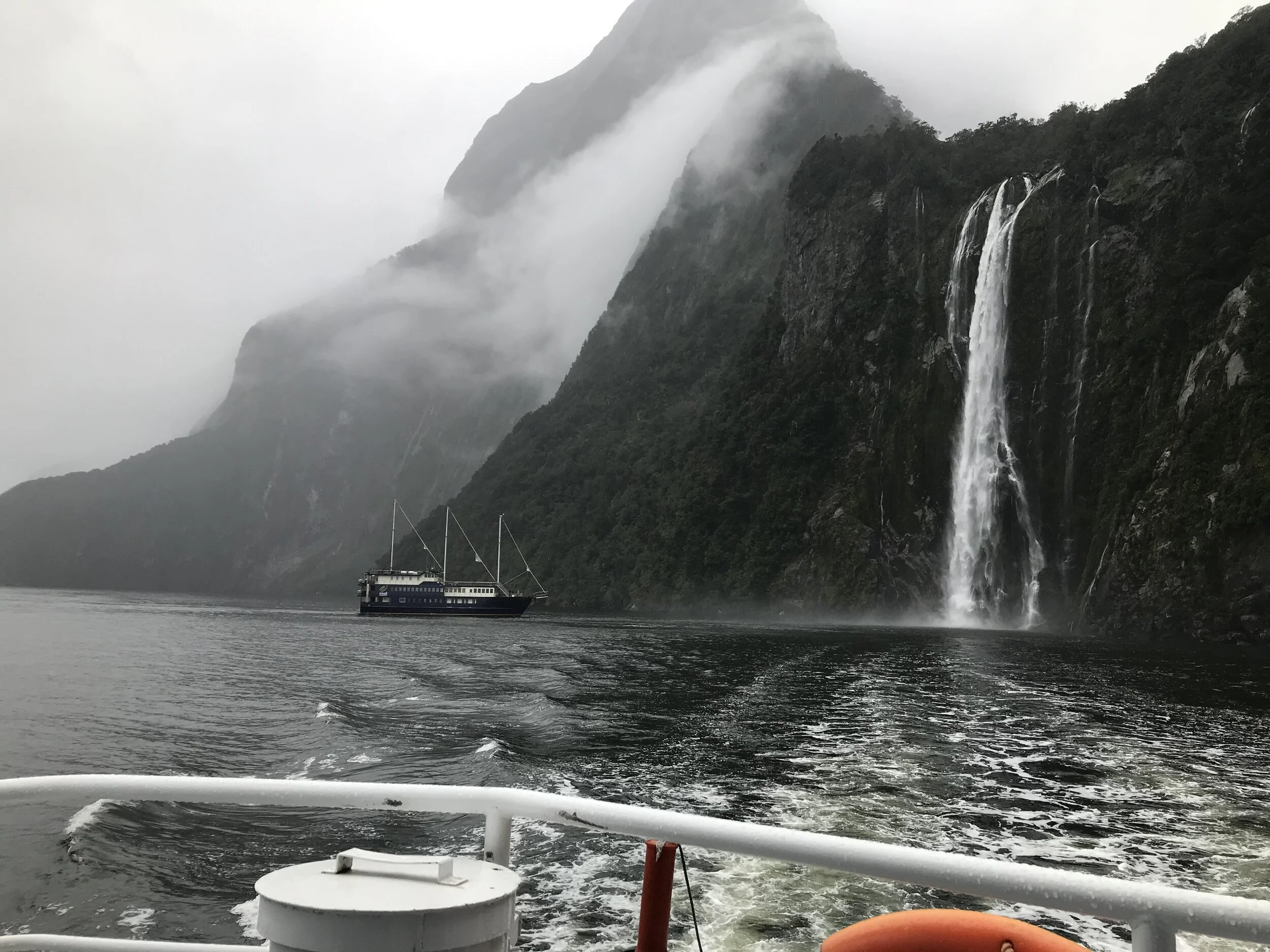
Milford Sound, a nature cruise on the wild side
Stirling Falls at Milford Sound, grasping the scale and majestity of this place is virtually impossible…..
Although it cannot be overstated enough that any visit to Milford Sound is as much about the drive as it is about the destination, please don’t underestimate the destination. Milford Sound was claimed to be the 8th wonder of the world and after any visit it’s very difficult to argue with this. I’ve been to this incredible place three times now and still feel overwhelmed by its splendour on every visit.

Magnificent, yet moody, Milford Sound is an epic experience
At first glance on arrival, after you have ventured through so much epic scenery on the road, it is easy to feel a little underwhelmed. The village at Milford has little to show for it, with a few buildings and an oversized car park. There is also the boat terminal which is on the large side to accommodate all the tours that depart from here. But if you take a moment and peer out towards the water your breath can be quite literally taken from you – Mitre Peak rising out of any lingering cloud dominates the scene and is the picture postcard image for Milford Sound.
If you journey all the way to Milford you must head out on the water. A boat trip is a necessity to grasp the sheer length of the sound itself but there is also a great kayaking trip to experience. I will come to this option in a later blog as the sunrise kayak is a special day out. This blog will focus only on the cruise. With several options to choose from (all largely following the same route) I joined a Nature Cruise with Southern Discoveries onboard one of their catamarans. I decided on this as the cruise left at 10.30am before any of the day trips and coach parties travelling down from Queenstown could arrive. It had been raining hard that morning but was only drizzling once we boarded the boat itself which was a good thing – you need water at Milford to get a glimpse of all those majestic waterfalls that plunge down from the huge cliff faces all around, but it’s not too much fun getting soaked to the skin as you try to photograph them. You also don’t want too much low cloud hanging around as this obscures the tops of the mighty peaks and prevents you from grasping the sheer scale of the place.

The boat terminal at Milford Sound
Trying to grasp this size is so difficult until you spot another tour boat out on the water (there was a grand total of three throughout the whole Sound on my visit) and can take that magical shot of the boat looking so small up against the waterfall and the mountain – nature is mega here.

The Milford Mariner just below Sterling Falls, one of the waterfalls at Milford Sound
The journey out through the length of the Sound enabled us to absorb it’s length and awe inspiring beauty. In some parts trees and shrubs grow out of the sheer rock face and there are a couple of waterfalls that continue to plunge down even when it hasn’t rained. The Sound is home to a pod of bottlenose dolphins that we didn’t spot on my cruise, but we were fortunate to spy some New Zealand fur seals – young males who hang out on the rocks and peer at you with mild curiosity. I also witnessed a very rare Fiordland penguin leaping through the glassy smooth waters surface. At Harrison Cove, the site for the first ever settlement in these parts, and now the spot for the overnight trips to berth, we paused for a moment to appreciate the peace – a place hardly touch by humanity, with little sound except the ripple of the water and the breath of wind through the trees.
As our boat made it’s slow journey back to the Milford Sound terminal I took one last look around – there are some special places out there, to be left as nature intended.


Coming shortly, the amazing drive to Milford Sound…….
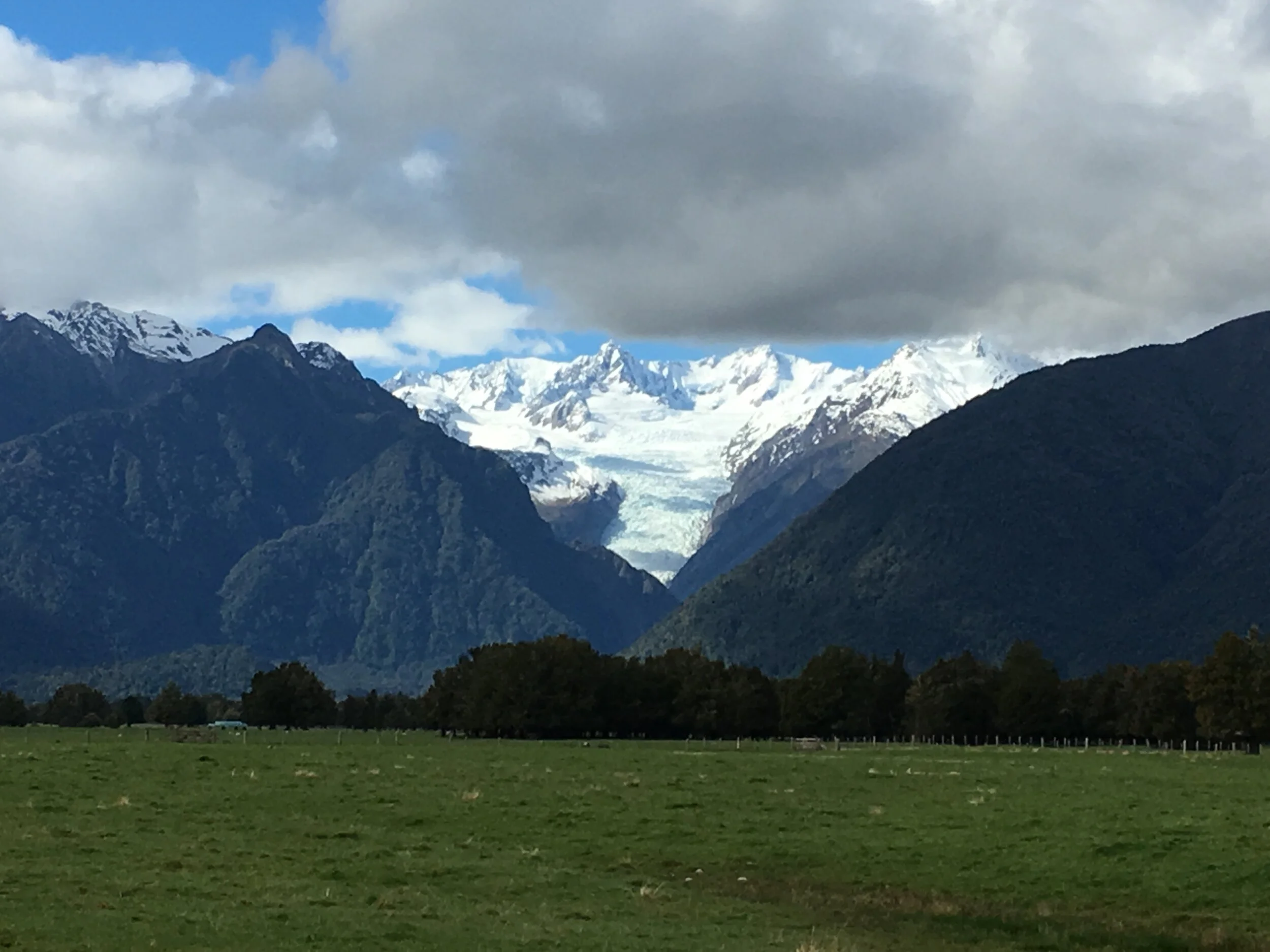
Glacier Express
Fox and Franz Josef, the two glaciers on the West Coast of New Zealand’s South Island
Well not exactly glacier express, but these two, Franz Josef and Fox, are amongst the most easily accessible glaciers to be found throughout the world. They are also the only glaciers that descend so closely to the sea. Although steadily retreating it is still possible to take Heli hikes to traverse the glacier surface at both
Franz Josef and Fox Glaciers. Only a short ten years ago I followed a pathway up through bush and climbed onto the surface of Fox Glacier, my crampons in place as I carefully followed my guide and wandered across the ice. I was lucky enough to explore crevasses and large ice caves. Alas the glacier has receded a fair distance since that time and can only now be walked on from the said helicopter tours. The same applies at Franz Josef which is the most popular of both the glaciers apparently due it being slightly steeper than Fox and with larger ice caves, although I suspect that it might be just the fact that is it the first glacier you come to as you make your way down the West Coast. None of this should put you off a visit to the longer Fox Glacier though – enjoy the fewer visitors.

Walking through a glacial valley to the terminal for Franz Josef
Both glaciers are home to small townships bearing their names. Alike the Glaciers both are quite different in personality – Franz is lively and bustling (well as close to bustling as you can get on the West Coast) whilst Fox is its lazier, sleepier little brother. They both have some excellent outdoor activities to enjoy though and some good accommodation options.
At Franz Josef you can still take a hike to the glacier terminal. I’ve taken a guided walk through the valley to the glacier and been fortunate enough to learn all about the landscape and geology of the glacier. The pathway takes you beside and across an old river bed that was formed as the ice melted and the glacier resided. The geology of the area is quite remarkable and although you can walk from the car park on your own it is worth taking a guided trip to discover and learn so much more.


Back at Franz Josef village you have the option off an adrenaline rush or some much deserved R&R. Quad Biking here is awesome as you are guided across a dried-up river bed and glimpse some epic views of the glacial valley all around - be prepared though to get very muddy. The Glacier Hot Pools offer a more tranquil alternative after a busy day. The steaming pools positioned within the rainforest are just the tonic to revive weary limbs. For an even more relaxing experience book one of their private pools which will not disappoint.

Fox Glacier Village
Further down the road in Fox Village (the drive alone down the highway is worthy of a trip) the attractions are more natural and further spread out. Take a trip to Lake Matheson about 6km out of town. It takes about 1 ½ hours to circuit the lake and on a clear day you are rewarded with some incredible views of the Southern Alps reflected in the lake’s clear waters. There is also an excellent café by the car park that offers some great kiwi fare – make sure you call in for at least a coffee and slice, and I highly recommend the breakfasts.
Continue down the same road you have traversed for Lake Matheson (it’s not hard there aren’t many roads in this area), and you will eventually come to the coast and Gillespie’s Beach. This used to be an old mining settlement but now is a windswept sandy retreat. You can camp here but watch out for those sand-flies that are venomous in this area. The best reason to call here though is to follow the 3 ½ hour return walk to even remoter Galway Beach – the walk is great, the beach even better. Seals have adopted this sandy stretch as their own and you will spot several hanging out as you make your way along.
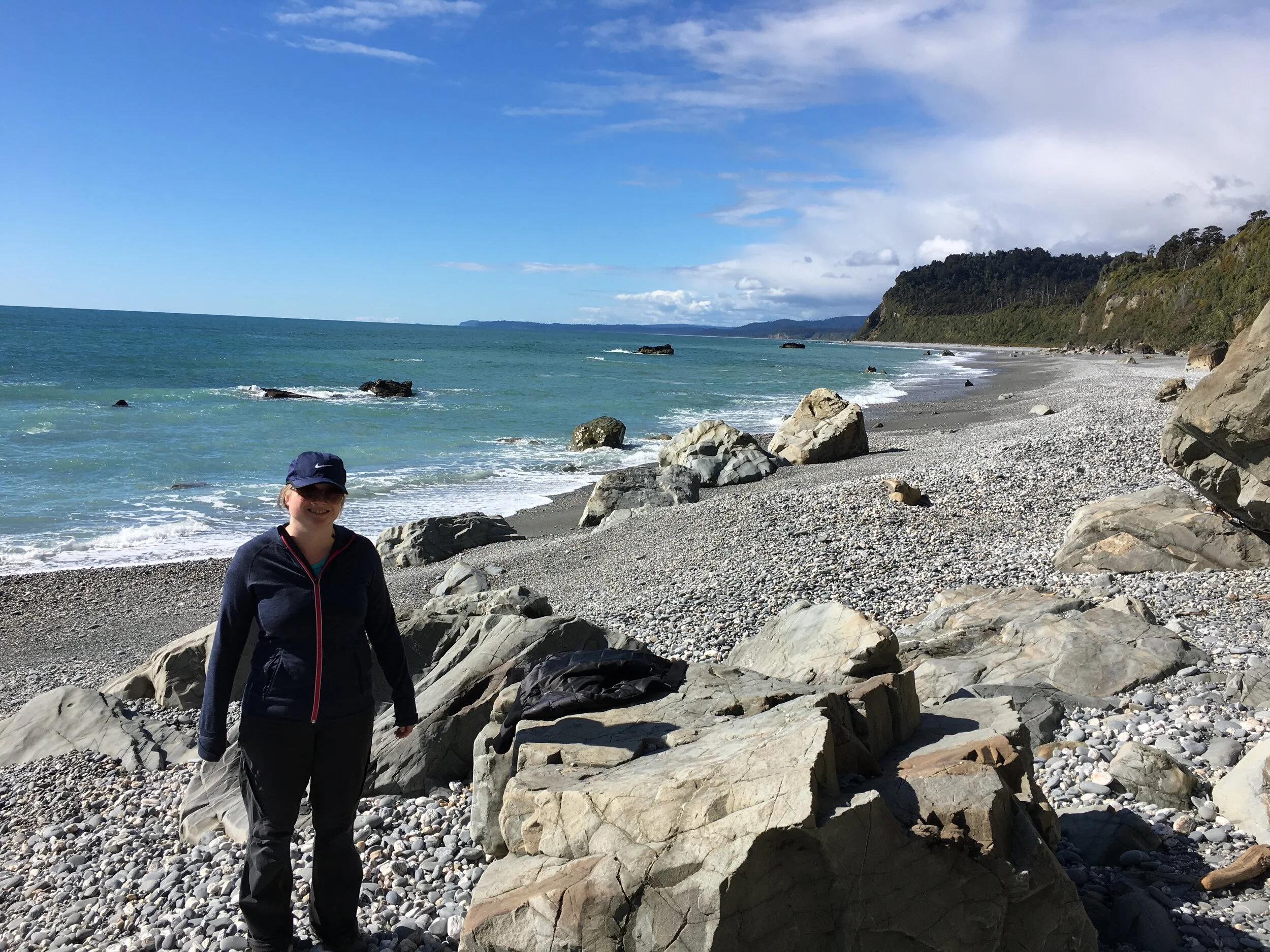
Seal beach on the West Coast
Fox Glacier township offers many motel style options and the Last Kitchen is a worthy spot to spend an evening. Franz Josef though does win the overnight battle. There are some top spots to stay at including 58 on Cron, a stylish motel and the Rainforest Retreat which has a terrific bar called Monsoon on site that is generally packed to the rafters.
My next blog will uncover Okarito and its amazing Kiwi spotting tours just a short drive north of Franz Josef.


West Coast Pancakes
The West Coast does literally rock…..
After a day spent around the Hokitika area exploring the breath-taking colours of the gorge, the supreme serenity of Lake Kaniere and the tasty pizza concoctions of Fat Pippi (yes some of the best pizzas to be found anywhere are in Hokitika) it’s good to drive further up the West Coastline. The only road weaves along beside the rugged coastline squeezed between the mountains, rainforest and sea. The Tasman Ocean pounds the beaches on one side whilst the mountains of the Southern Alps rise majestically on the other. The main township north of Hokitika is Greymouth which offers numerous accommodation and refreshment options. It’s home to Speights Brewery, a world-famous beer often known as West Coast gold. The brewery offers tours and is reported to have one of the best restaurants in town. I haven’t tried it yet, but it is on my list. Greymouth is also the end of the line for the ‘Tranzalpine’, the scenic train journey that traverses from Christchurch on the East Coast through the mountainous Arthur’s Pass area.
North of Greymouth the road twists and turns around many corners and the scenery becomes largely dense bush and rainforest. There is a scattering of small settlements here and there and some wonderful places to stay offering incredible views. The rainforest ends where the rock-strewn coastline starts and there are endless sandy beaches to pull over and enjoy. Overall the atmosphere is one of isolation yet wonderment. A turn in the road can lead to yet another awe-inspiring vesta. The temptation in such a setting is to continue driving – and this is indeed an excellent option to consider as further up the coast are such wonders as Cape Foulwind and Karamea – both of which I will come to in a later blog, but the drive for today is to Punakaiki.
Punakaiki is popular with everybody due to its remarkable location with famous blowholes and pancake rocks. It’s so popular that sometimes its difficult to find a parking space close by.
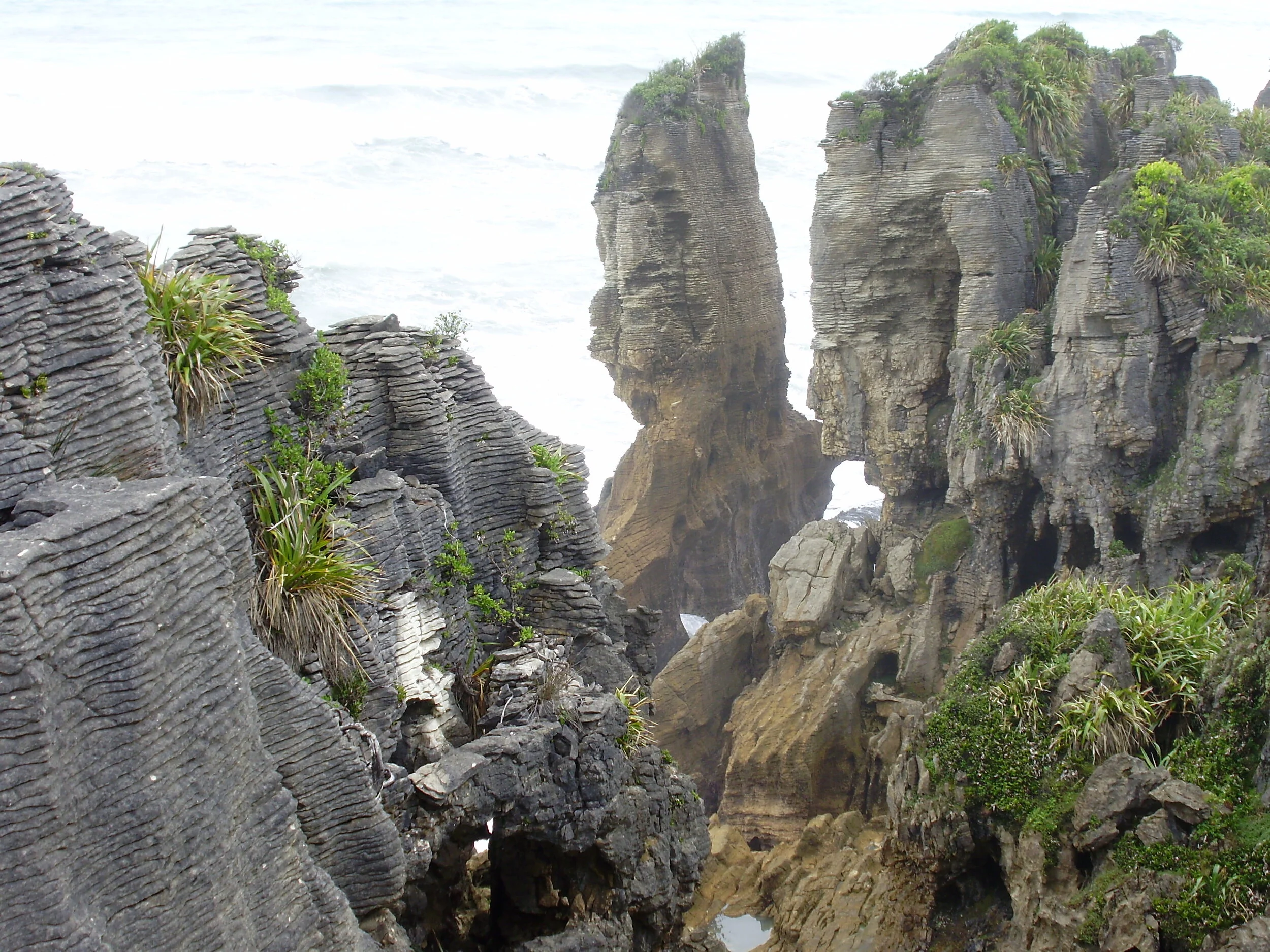
Top Tip: if you have time stay the night in Punakaiki, there is some top accommodation options and excellent walks and kayaking trips to appreciate. You will also get to enjoy the pancake rocks at quieter times.The loop walkway is easy to manage, it traverses through a native bush area full of Nikau Palms that forms the start of the track and you soon understand why it’s called Pancake Rocks. The limestone cliffs have been battered by both the weather and the tide over the years so that they now resemble pancakes stacked jaggedly on top of one another. Try to time your walk with high tide and ideally a rough sea. This will enable you to witness the blowholes in their full glory – the one labelled ‘chimney’ is aptly named as when a powerful surge of water flows through the chamber underneath it forces itself up through the rock creating a spray of water that looks like steam rising upwards into the air. I’ve been lucky enough to visit the rocks in various sea conditions – with rough seas you are avidly watching the waves form out to sea keen for them to break in time to raise the water level to pound through the narrow chambers. But equally in calm seas the rocks can be just as appealing as looking outwards you can often spot Hector’s Dolphins (the world’s smallest) cruising by in small pods close to the coastline.
Once you have completed your circuit and taken all the required photographs head across the road that is opposite the walkway entrance Here you will find a Department of Conservation centre useful for souvenirs or ideas for further adventures along the West Coast. There are also a couple of cafes that offer some good refreshment.
My next blog in this series will take us further up this striking coastline to Cape Foulwind and Westport.

A journey to the West Coast - Arthurs Pass to Hokitika
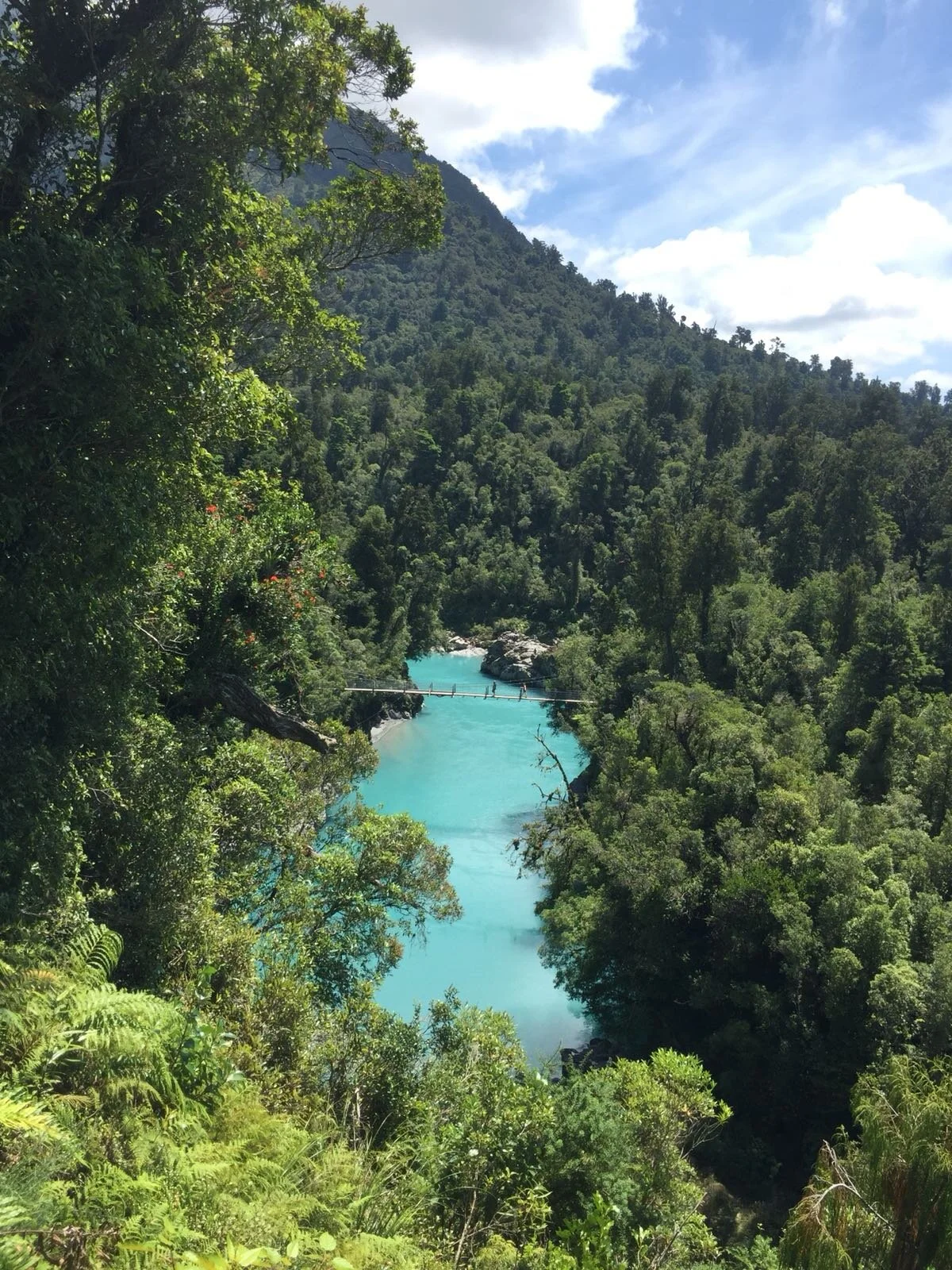
The vivid blue colours of Hokitika Gorge, well worth exploring on any road trip around the West Coast of the South Island
Arthurs Pass traverses its way through the mountain ranges of the Southern Alps in the middle of the South Island. Named after Arthur Dudley Dobson, who was the first European to escort a party through the area, it is a drive that requires you to have your camera at the ready. My first port of call was the small settlement of Sheffield. Sheffield is home to an amazing pie shop - one that is world famous around Canterbury! Each day they serve up a vast array of sweet and savoury pies and stopping for one is kind of a compulsion for anyone in the know. I bought my vegetarian pie (yes I know but I love my veggies, although the chicken pies are also pretty tasty) complete with a nanna slice (chocolate heaven) for afterwards and headed on my way. The scenery on this, the Eastern side of the Alps, is tussock grasses, oddly shaped rocks (Castle Rock is an excellent stopping point) glistening lakes brimming with trout, expansive braided rivers and sharp mountain edges. Numerous gravel tracks lead off the highway to various tramping tracks and ski resorts in winter. Everything is so immense it causes you to catch your breath.
Top Tip: stop at Arthurs Pass Village - it’s not only great for a refreshment break (the coffee is good), there is also a chance of spotting a Kea - the world’s only Alpine Parrot. I’ve had one approach me and try to pinch my mobile phone whilst I sat outside one of the roadside cafés sipping my coffee. Please don’t feed them though as so many die from being too close to the road or eating the wrong type of food.
As I left Arthurs Pass Village I noticed the scenery begin to change. The rainforest of the West Coast begins to emerge with enormous waterfalls plunging down from mountain edges and road sides covered in a dense assortments of ferns. This is the wet side of the country and the scenery certainly reflects that. Rugged forests climb high up the mountain edges. Arthurs Pass finishes at Kumara Junction where I joined State Highway 6 - the only road to be found up and down the West Coast. I was heading to Hokitika but first my journey took me through farmland towards Lake Kaniere. Even on a misty overcast day this lake is something else. It’s setting is sublime, with rainforest edging its shore and the peaks of the Southern Alps looming above. The lake is a mecca for watersport but I enjoyed wandering some of the tracks nearby. A loop walk took me through a Kahikatea forest and past a small stream. Weka (a native bird which looks a bit like a kiwi only it is active during the daytime and doesn’t have quite as long a beak) came and approached me as a I ate my pie at the lakeside.
I drove around the lakeside until the road zig zagged it’s way through farmland to Hokitika Gorge. Up ahead the weather had cleared and I could just about make out the peak of Aoraki/Mt Cook, New Zealand’s largest mountain. Hokitika Gorge is a real feature of this area - a place where the glacial rock salt has caused the water to look such a vivid blue it appears as though dye has been poured into it. I tried to take a picture from the viewing platform overlooking the gorge but couldn’t really do it justice. A pleasant board walk took me out to a swing bridge across the river - holding on to your bags and cameras here is a must as with a couple of people on it the bridge really does swing! On the other side the walk continued through untouched bush and I was serenaded by fantails and bellbirds. There is a spot where you can clamber down onto rocks and actually reach the rivers edge if you so wish.
That evening I headed back into Hokitika Town. Please see my next blog for the Hokitika and Pancake Rocks road trip weekend adventure.