Havelock, home of the delicious green lipped mussel and gateway to Marlborough
Mussels are fresh as a daisy in Havelock, and pretty tasty too!
Havelock is known as the gateway to the Marlbourgh Sounds. It’s also the mussel capital of New Zealand – and that’s quite a claim given how well renowned the green lipped mussels are in this area.
The town itself is neat and compact postioned at the end of one of the sounds. Like many people I had only previously ever driven through it on my way to places. I was always tempted to pull over and try out one of the many eateries along the main highway which offered lunches of the local mussels amongst other temptations. I’d never got around to it though until I hired a campervan to spend the weekend touring the local area. Havelock has a friendly, efficient camp site situated right in the centre of the township. It’s so easy to park up and then get out and explore. The marina is just behind the site and it was much bigger than I imagined. The gateway out into the Sounds it’s a popular spot to launch a boat. The mussel barges also berth here servicing the farms growing in the vast clean waters. You can be absolutely certain that any mussel served here is as fresh as it comes given they are grown just out across the bay.

Havelock Marina, a popular spot on a sunny afternoon
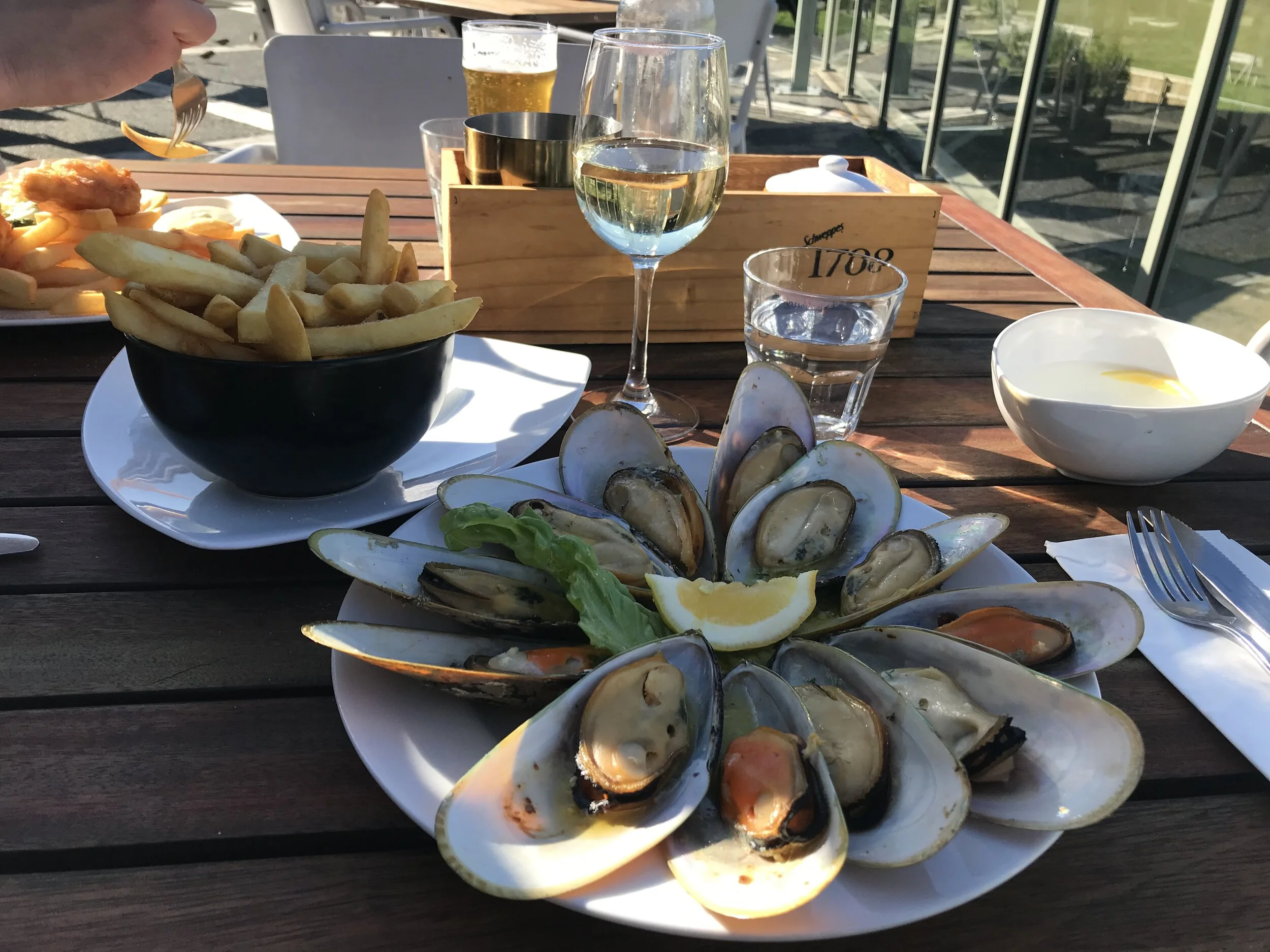
A circuit around the marina and onto the main high street brought me to a number of pubs and cafes offering mussel creations. I opted for the Captains Daughter, a pub built in a traditional manner, the type you would expect to find in an English village with a real fire glowing in the centre to warm the coggles. It wasn’t too chilly though on the winters day I visited and the deck outside was inviting. A large area it was warmed by the weak winters sun. I ordered a glass of local Marlborough sav and the toughest decision was to decide between the steamed or grilled mussels. I opted for grilled in garlic butter and a side portion of chips to complete the meal. It sure was heaven..

Locally caught green lipped mussels served grills from the Captain’s Daughter in Havelock
Havelock is surrounded by bush lined hills rising to meets the sounds, and although the main road to Nelson was just outside the door I failed to notice it.
Just down the road from Havelock is Pelorus. A pull off just before the small one lane bridge takes you into a carpark surrounded by bush. There is access to a campsite and café here. The café is an excellent spot to call off at – their cakes and pies are top notch (yes okay I’ve sampled a few, I confess). To make up for said calorie count are several walks leading off from here that range in lengths - I will discuss all about the local walks in this area in a later blog…..
Coming up – great camping spots around the South Island

The bush smothered hills surrounding the town of Havelock, gateway to the Marlborough Sounds
Take a walk on the wild side, with the New Zealand Fur Seals of Kaikoura
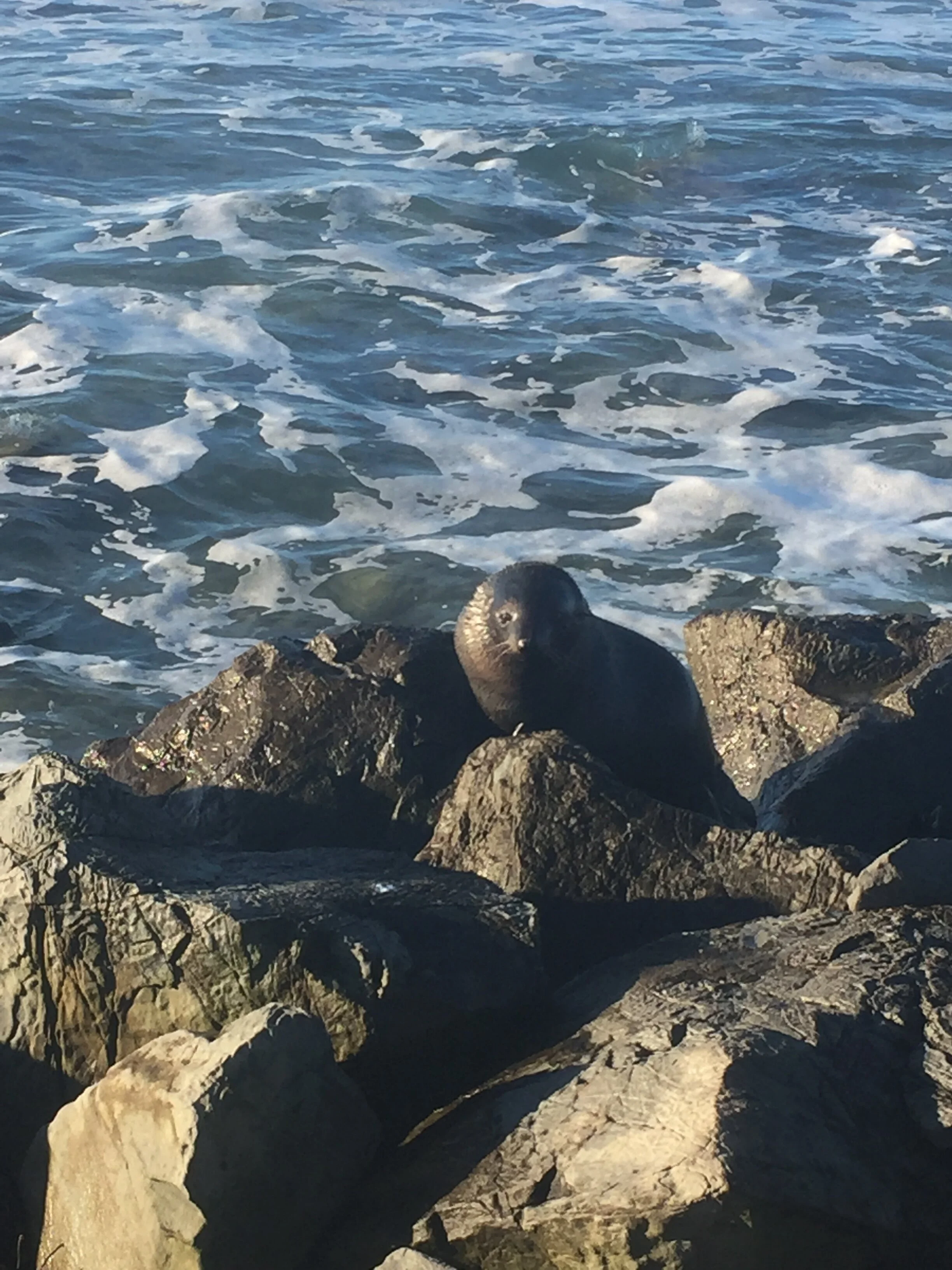
Seals can be found everywhere around Point Kean at Kaikoura
Kaikoura is home to one of the largest populations of New Zealand Fur Seals in the country. It’s also one of the easiest and most accessible places to spot and observe seals given they are found in numerous places up and down it’s rocky coastline. Once hunted nearly to extinction the New Zealand Fur Seal is now legally protected and has made a miraculous recovery. Numbers are booming which means more seal encounters for everyone to enjoy.
There are several ways to interact with seals in the Kaikoura area and I will start with the most obvious and simple one – walking.

A local wandering along the track near the Point Kean Seal Sanctuary at Kaikoura
Point Kean Seal Sanctuary is found at the end of the road leading from the main centre of Kaikoura Township. If in doubt, follow the road alongside the coast and you will end up at the car park with no were else to go. The seals here used to be spotted in the car park itself, under cars and snoozing on the boardwalk. I have even encountered several plucky youngsters half way up the grassy cliff side. Since the 2016 earthquake that caused so much damage around these parts the land has changed. Point Kean itself has extended further out along the peninsula meaning that the seals have also spread out. Although you will always find a couple snoozing on the board walk by the car parks entrance as no matter what time of day they always seem to be there. Sometimes too you will hear a couple snorting underneath the wooden boardwalk panels as you walk over them. If you want to see the seals in larger numbers though, or indeed have closer encounters with some of the braver, more inquisitive babies continue to walk around Point Kean and under the large protruding cliff face. You may have to scramble over the jagged rocks around here being careful not to slip on some of the greasy seaweed (Kaikoura is famous for this and indeed the pungent smell regularly greets you on arrival, especially in summertime). Once around this headland you will come upon a well-formed stony path alongside which are many snoozing seals. Trying to avoid the ones laying over the path itself is another matter – but they will snarl to warn you of their presence if you dare to get too close. – don’t, there will only be one winner and it won’t be you! Just about every rock and smooth surface around this headland is covered by the bulk of a seal, both big and small. The mothers are usually snoozing in between weaning their youngsters whilst the little ones wander about, play fighting with one another and looking for a sheltered rock pool in which to practice their swimming with twists and turns. I was merrily observing all the seals when I suddenly heard a heap of snorting and rustling behind me – I turned around anxious to not be in the way of a seal heading back to sea, when I spotted two babies chasing one another in and out of the long grasses up on the sloping hillside. They can be quite fearless these littlies.

Young seals can be found everywhere around these parts…..
Coming next, some more great wildlife walks around Kaikoura…..
Glacier Express
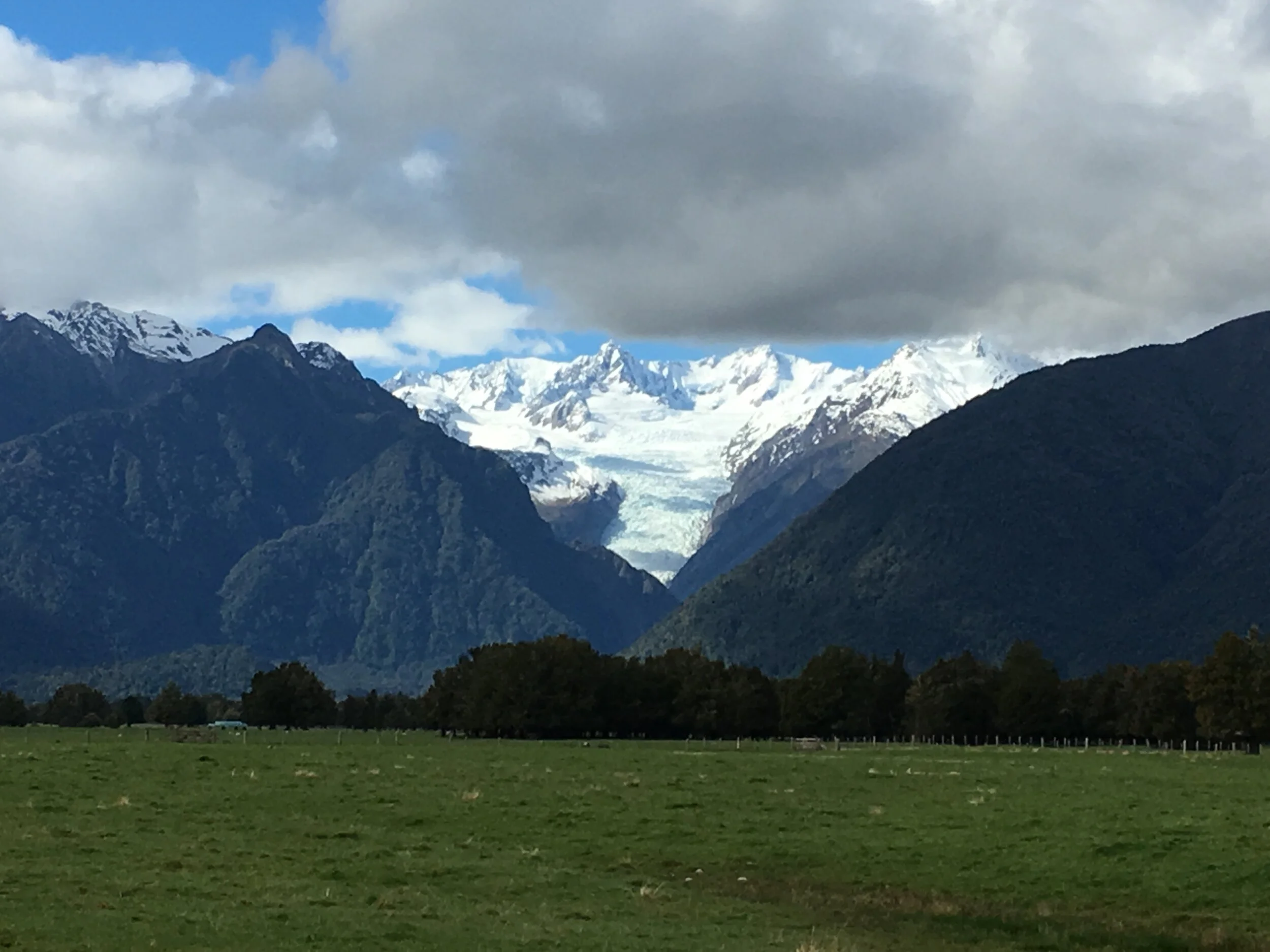
Fox and Franz Josef, the two glaciers on the West Coast of New Zealand’s South Island
Well not exactly glacier express, but these two, Franz Josef and Fox, are amongst the most easily accessible glaciers to be found throughout the world. They are also the only glaciers that descend so closely to the sea. Although steadily retreating it is still possible to take Heli hikes to traverse the glacier surface at both
Franz Josef and Fox Glaciers. Only a short ten years ago I followed a pathway up through bush and climbed onto the surface of Fox Glacier, my crampons in place as I carefully followed my guide and wandered across the ice. I was lucky enough to explore crevasses and large ice caves. Alas the glacier has receded a fair distance since that time and can only now be walked on from the said helicopter tours. The same applies at Franz Josef which is the most popular of both the glaciers apparently due it being slightly steeper than Fox and with larger ice caves, although I suspect that it might be just the fact that is it the first glacier you come to as you make your way down the West Coast. None of this should put you off a visit to the longer Fox Glacier though – enjoy the fewer visitors.

Walking through a glacial valley to the terminal for Franz Josef
Both glaciers are home to small townships bearing their names. Alike the Glaciers both are quite different in personality – Franz is lively and bustling (well as close to bustling as you can get on the West Coast) whilst Fox is its lazier, sleepier little brother. They both have some excellent outdoor activities to enjoy though and some good accommodation options.
At Franz Josef you can still take a hike to the glacier terminal. I’ve taken a guided walk through the valley to the glacier and been fortunate enough to learn all about the landscape and geology of the glacier. The pathway takes you beside and across an old river bed that was formed as the ice melted and the glacier resided. The geology of the area is quite remarkable and although you can walk from the car park on your own it is worth taking a guided trip to discover and learn so much more.


Back at Franz Josef village you have the option off an adrenaline rush or some much deserved R&R. Quad Biking here is awesome as you are guided across a dried-up river bed and glimpse some epic views of the glacial valley all around - be prepared though to get very muddy. The Glacier Hot Pools offer a more tranquil alternative after a busy day. The steaming pools positioned within the rainforest are just the tonic to revive weary limbs. For an even more relaxing experience book one of their private pools which will not disappoint.

Fox Glacier Village
Further down the road in Fox Village (the drive alone down the highway is worthy of a trip) the attractions are more natural and further spread out. Take a trip to Lake Matheson about 6km out of town. It takes about 1 ½ hours to circuit the lake and on a clear day you are rewarded with some incredible views of the Southern Alps reflected in the lake’s clear waters. There is also an excellent café by the car park that offers some great kiwi fare – make sure you call in for at least a coffee and slice, and I highly recommend the breakfasts.
Continue down the same road you have traversed for Lake Matheson (it’s not hard there aren’t many roads in this area), and you will eventually come to the coast and Gillespie’s Beach. This used to be an old mining settlement but now is a windswept sandy retreat. You can camp here but watch out for those sand-flies that are venomous in this area. The best reason to call here though is to follow the 3 ½ hour return walk to even remoter Galway Beach – the walk is great, the beach even better. Seals have adopted this sandy stretch as their own and you will spot several hanging out as you make your way along.
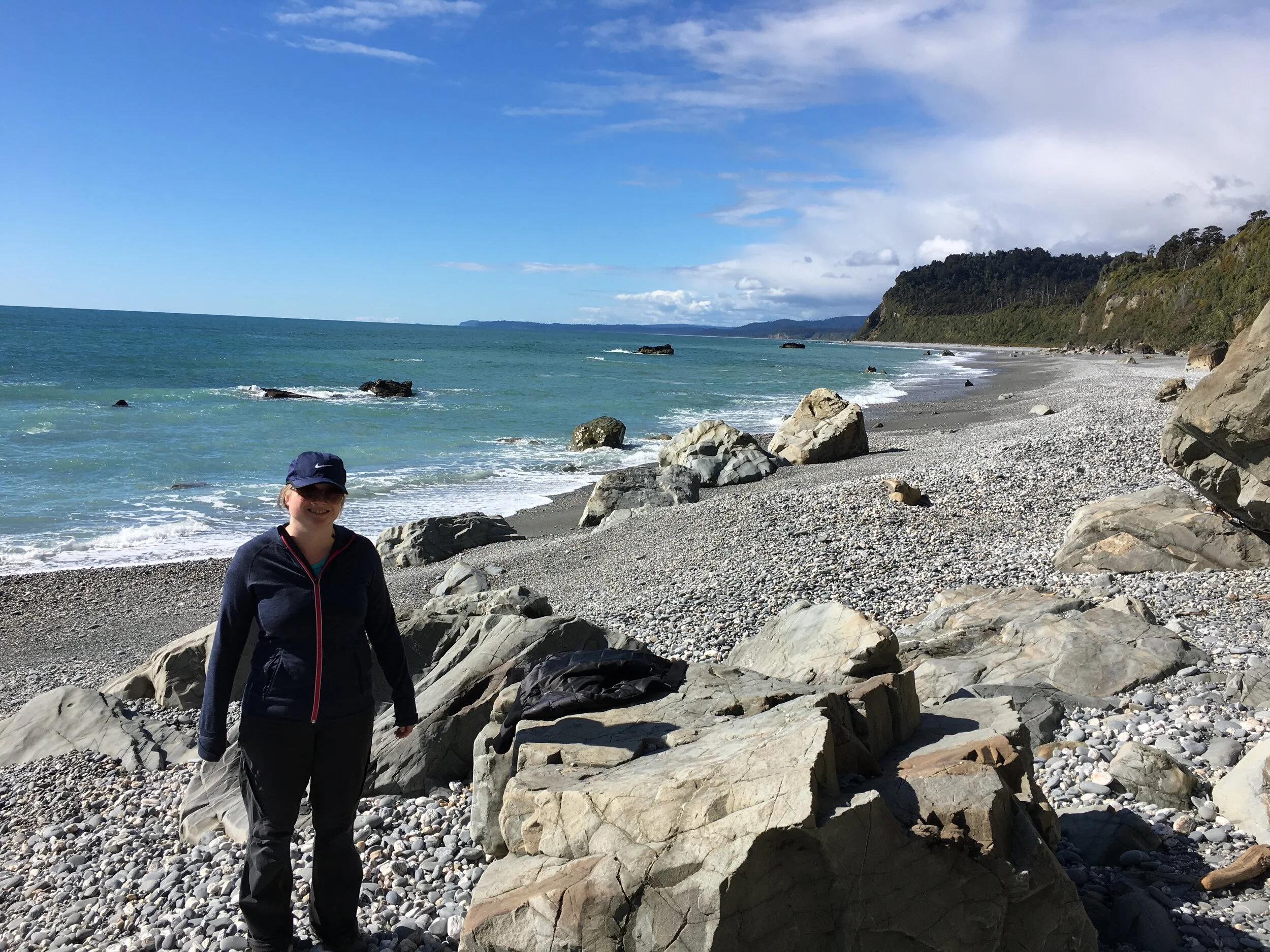
Seal beach on the West Coast
Fox Glacier township offers many motel style options and the Last Kitchen is a worthy spot to spend an evening. Franz Josef though does win the overnight battle. There are some top spots to stay at including 58 on Cron, a stylish motel and the Rainforest Retreat which has a terrific bar called Monsoon on site that is generally packed to the rafters.
My next blog will uncover Okarito and its amazing Kiwi spotting tours just a short drive north of Franz Josef.


A morning driving a sled dog team - dreams do come true
Spending a morning with these eager friends is the stuff of dreams
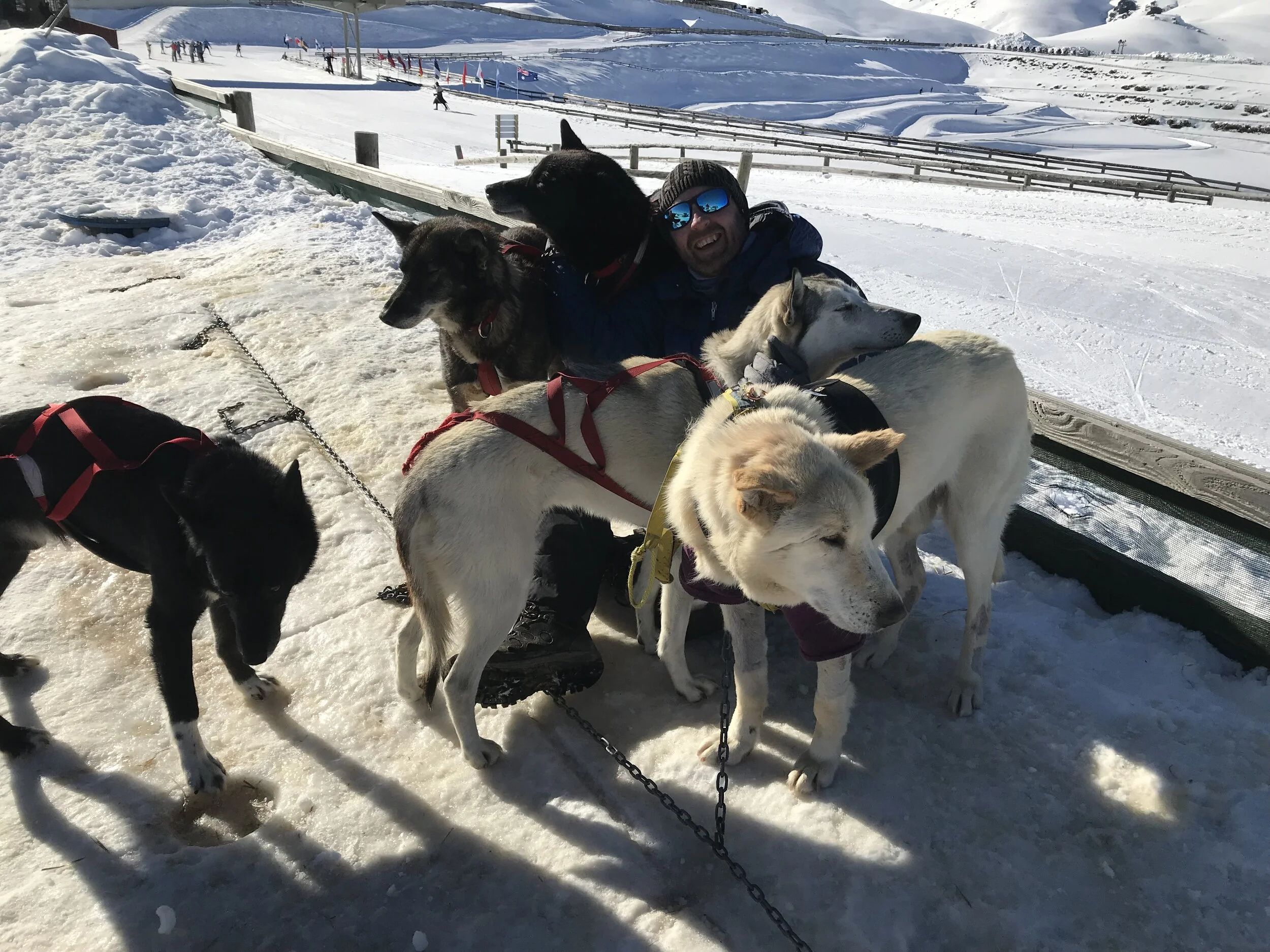
I’d arranged to meet up with Underdog NZ at 10.30am at the Snow Farm to start my tour. After a brief talk about what to expect I was taken across to meet the dogs, and what a greeting it was. It seems the dogs absolutely love these tours and get incredibly excited about it all. I was smothered in doggy loves very quickly. There were a mixture of Alaskan Huskies, Siberian Huskies and Alaskan Malamutes all keen to get started. My human guide gave me a brief outline on how to use the kart and a demonstration on how to control the dogs – yeah right, it was more the dogs controlling me I think, and we were all set up and ready to go. I started off cautious, pressing the break to check it was working and trying my hardest not to tangle up the reigns. Four animated and eager dogs were ready to pull me along and I was a bit nervous at first in case I fell off!!! The snow was smooth but compacted and I had visions of being dragged along on my stomach by four excited animals. My concerns didn’t last for long, well only until my hands could no longer cope with the discomfort of gripping on so tightly! Within a few minutes I was riding the cart like a professional – well in my opinion anyway - and we were off soaring across the snow-covered landscape as one. Well maybe not quite. I had to get off on any upwards slope to take the pressure off my four-legged friends and help push the cart. I also spent a significant amount of time trying not to get them all tangled together so that the back two didn’t trip over the front twos’ reigns – there was a lot of responsibility looking after these keen racers! None of this distracted from the sheer joy of directing my dogs as we ploughed across the snow. The setting was majestic with the perfect clear blue skies reflecting off the brilliant white of our snow-covered carpet. It was a truly memorable moment in time.
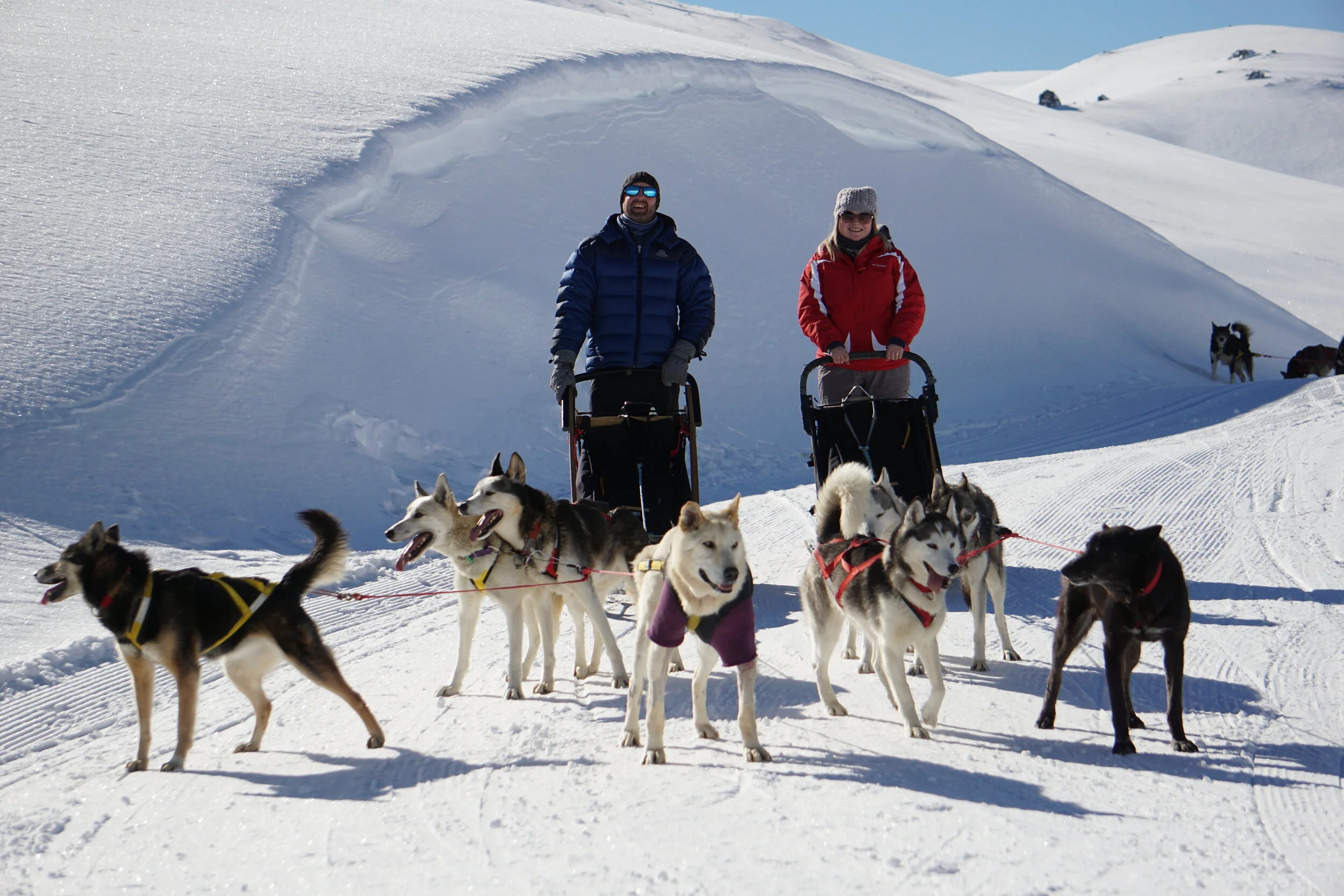
Dan and I attempting to be in charge of 4 four legged bosses! Yeah right…..
Reluctantly I drew up to where I had started and had to discard our cart. The fun didn’t stop there though as now it was time for doggy pats and treats as my new best friends were rewarded for their endeavours and sheer hard work in dragging someone as clumsy as me along. I was allowed to spend as much time as I wanted with my new mates and soon learnt the names and mannerisms of most of them. I was also rewarded with puppy cuddles as two new members of the team were taken out of their kennels and introduced to me.

Dan enjoying lots of cuddles after the race.
I returned to the lodge brimmed with enthusiasm and chuffed to bits. There are lots of other options to take in here with snow shoe routes laid out and cross-country ski-ing lessons available. I was personally exhausted so settled for a warming hot chocolate from the bar upstairs with great views across the ski field and
beyond. Underdog offer night runs and even overnight stays – I will undoubtedly be back…


Cruising in Cromwell, home to the gold rush of wineries
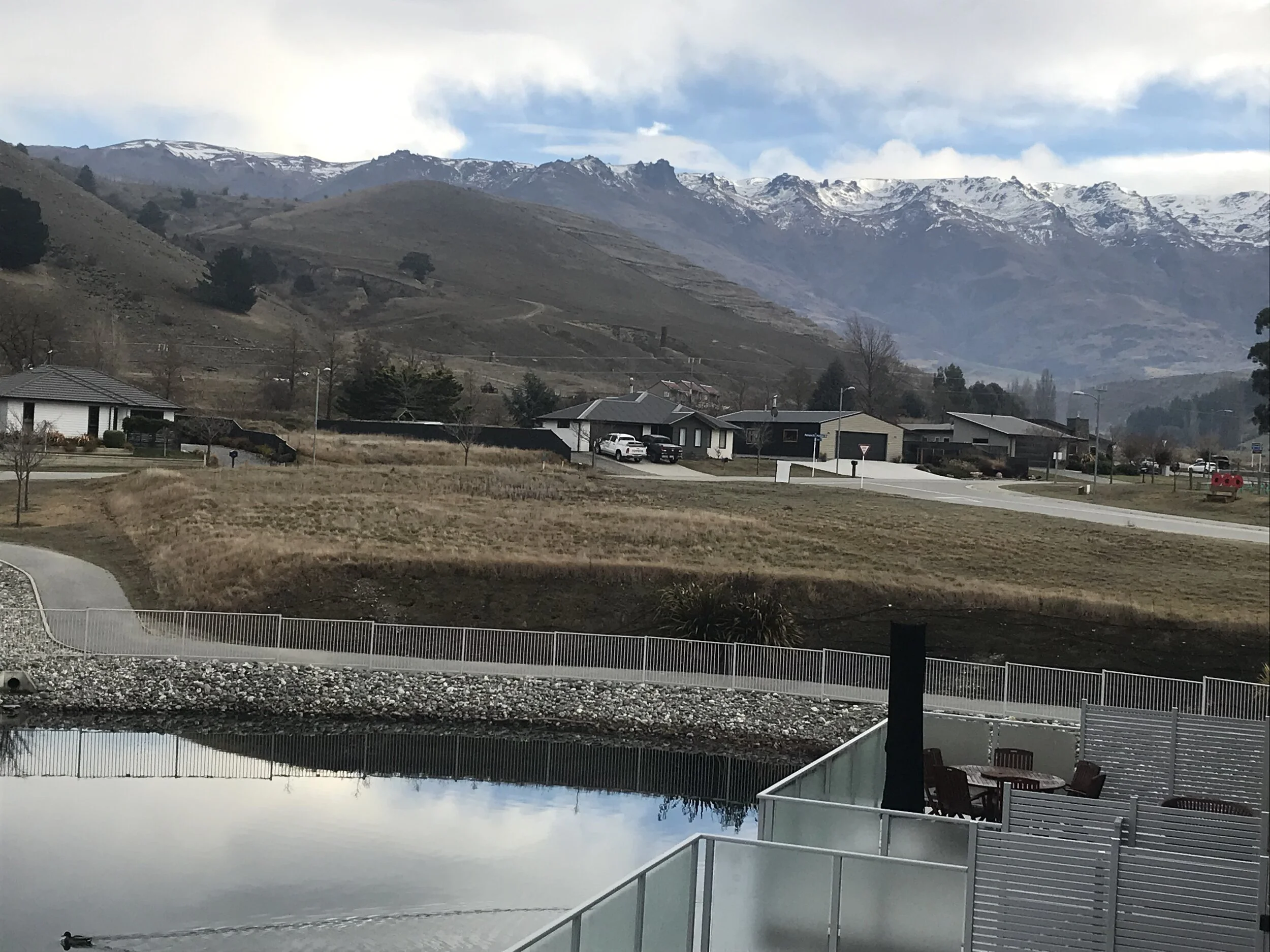
The lake and mountains surrounding Cromwell Basin are as noticeable as the wineries here.
Cromwell sits in the heart of the Central Otago region. It’s an area synomonous with excellent wines and mouth watering stone fruits. The town was established by gold miners and originally named The Junction. In 1992 the Clyde Dam Power Station was completed and the valley in which Cromwell sits was flooded to create the picturesque Lake Dunston. The original old town of Cromwell now sits under this lake. However some of the buildings were removed prior to the lake being created and have been lovingly restored and are now situated within the Historic Precinct.
Any trip to Cromwell begins with a drive around the lake and past the numerous vineyards that climb the valley walls on each side. Names such as Lowburn, Bannockburn, Bendigo are familiar to anyone with a love of New Zealand’s famous Pinot Noir. The Cromwell Valley is lovely with views everywhere you look. A cycle/walking trail follows the lakeside from the township to Pisa Moorings a settlement a few kilometres away which is home to the Heritage Lakeside Resort - a great place to stay if you desire peace and tranquillity. The rooms here are positioned over the water and you are greeted each morning to the quack of the ducks. The resort has it’s own onsite restaurant and bar and the newly opened ‘Bunker’ is ideal for a pre- dinner drink. It’s just a shame it’s so difficult to find but ask the hotel staff for directions and they will happily guide you there. The room is furnished with saddles and woodworking features with a large open fire place dominating. It’s both cosy and curious in equal measures.
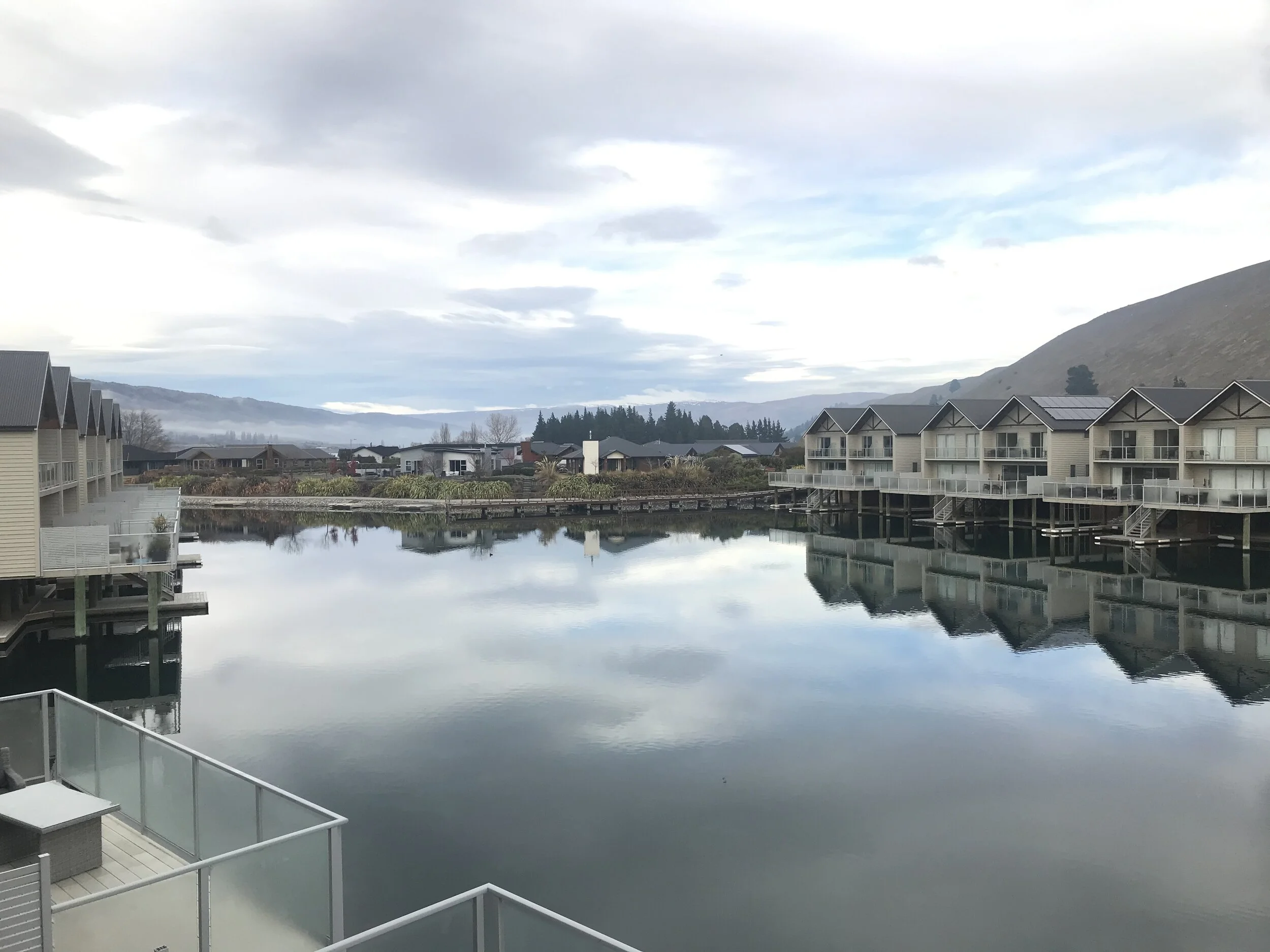
Heritage Lakeside Resort near Cromwell, experience and overwater villa
Cromwell itself seems somewhat light weight on first appearances. Take this with a pinch of salt though. Yes the large plastic fruit are somewhat tacky and the sterile town-centre perhaps lacks the atmosphere of nearby Wanaka or Queenstown, but underneath Cromwell packs a vibe. The nearby Swimming and Fitness centre is the envy of other towns. The sports fields are always buzzing with competitors. The stream flowing through the middle of the pedestrian area gurgles away as shoppers browse the local bookstore, deli and bakery. With fruit trees and vines surrounding the township, and it’s setting alongside the lake-front in the heart of a mountainous valley, Cromwell is truly a wonderful place to while away a few days. There are numerous walking trails and even the opportunity to hire an e-bike from the local visitor centre. A day ride will take you through the valley to neighbouring Clyde – it is on my list to do this summer.
Any trip to the Otago area though must involve visits to wineries. Put simply this is a food and wine lovers paradise. I’ve already mentioned the Pinot Noir but the wineries here are creative and have some excellent sparkling’s, roses and chardonnays to sample. Cromwell itself is home to several wineries. The Four Barrels Walking Trail is a must do. It involves a short walk between 4 of the local wineries, Misha’s, Scott Base, Aurum and Wooing Tree. All offer platters or snacks of some type and each, of course, offers impeccable tastings. Misha’s is in the town surrounded by orchards, perch on one of the stools and allow one of the cellar door staff to talk you though the tastings. Nearby the Wooing Tree is set by a small lake within their own vines. They have seating outside under shady canopies and their platters have to be tried. As does a glass of their legendary ‘blondie’ wine – the ideal sunny summer afternoon tipple. Scott Basin sits up above the valley on its own little platform, again the cellar door is rustic with indoor and outdoor seating. The wine tasting is excellent and they are even the wine providers to the Antarctica Scott Base!
After a couple of wine induced days in Cromwell it’s time to discover it’s partner in crime Bannockburn…. Uncovered in another blog coming very soon……

Following the pathway alongside Lake Dunston
Hanging out in history in the old gold town of Cardrona
Snow Farm Cardrona is a paradise of snow……..
The Cardrona Hotel is one of the oldest in New Zealand and reckoned to be the most photographed. It’s not hard to understand why. The grand old dame dates to 1863 when the area was in the midst of a gold rush. At the time there where four hotels in Cardrona and it was a bustling prosperous hub for the area. Visiting the sleepy settlement now it’s hard in all honesty to imagine it. Today it’s a quiet place with just a few properties remaining. The Cardrona Hotel still stands due to the endeavours of previous owners who were keen to preserve this slice of New Zealand history. It is now a popular spot for après ski drinks (there are a couple of excellent ski fields just down the road) an excellent restaurant and even has a few comfortable hotel rooms at the back. I decided to stay the night to experience this unique spot for myself. It was a cold blustery evening, but the bar was cosy with its real log fires and huge comfy sofas. There were crowds of people both inside and outside – the back garden is home to an appealing fire pit which lets off a lot of heat to warm the chilly cockles. After a day on the ski fields there is probably no better place to hang out.
My room was at the back of the hotel, thankfully not overlooking the raucous beer garden, which meant I could enjoy some quiet time to myself. With the radiator cranked up it soon became lovely and toasty. Furnishings are old worldly and charming a bit like the pub itself, so even though this part of the hotel was only built this century it has the feel of times past. I’d booked dinner in the restaurant that night (the nearest other place to eat was in Wanaka several kilometres drive away, which at night in the dark didn’t really appeal). I was glad I did have a booking as it was packed. I was seated at a table by the fire which was very welcoming to enjoy a hearty plate of homemade curry. I’d heard that the current owners had worked hard to improve the food offerings, and this was certainly bared testament in my meal. There are burgers, steaks even nachos on the menu depending on your appetite.
I ventured to bed very contented and pleased I hadn’t had an encounter with the resident ghost!

Dan enjoying a local beer by the fire at the Cardrona Hotel
After a comfortable night’s sleep, I was up much earlier than most which meant a quick visit to the hotel’s restaurant again for a breakfast of poached eggs on toast. I would have tried their homemade porridge or eggs benedict, but I had a pressing engagement so needed to be on my way swiftly. I’m heading back to linger longer and enjoy the hotel as it rises to another busy day.
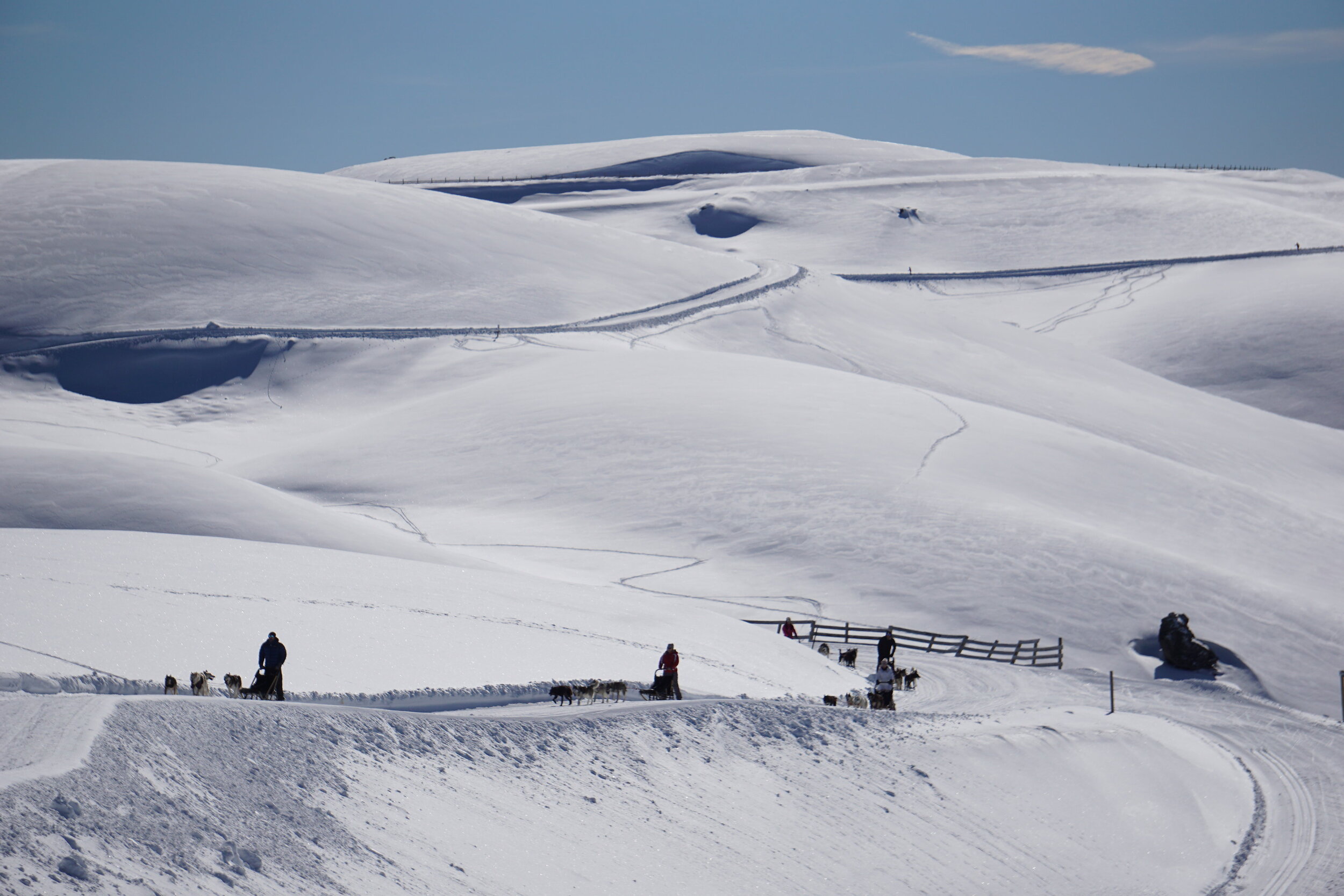
The reason for my hurry on this particular morning was that I had to drive up the long meandering road to the top of the Snow Farm, one of the ski fields in the Cardrona area. Whilst it takes a while to twist and turn upwards the views on offer are spectacular. As you venture higher the scene beneath you unwraps in every direction and affords awesome views of the other Cardrona ski field just across the valley. On a clear day it is quite a sight. As I reached the top the grassy tussock roadside scenery was replaced by alpine rubble covered with a thick layer of pure white snow. The Snow Farm lodge itself is an extensive building complete with eateries, ski facilities and accommodation. If you are fortunate to have a clear day it would be a top place to base yourself, especially at night when it must feel that you can actually reach up and touch the stars.

Looking out over the magnificent Snow Farm at Cardrona
My morning was going to be taken up doing something I’d always dreamt about, driving my own sled dog team. I’d arranged to meet up with Underdog NZ at 10.30am at the Snow Farm to start my tour.
Look out for my next blog soon………
West Coast Pancakes
The West Coast does literally rock…..
After a day spent around the Hokitika area exploring the breath-taking colours of the gorge, the supreme serenity of Lake Kaniere and the tasty pizza concoctions of Fat Pippi (yes some of the best pizzas to be found anywhere are in Hokitika) it’s good to drive further up the West Coastline. The only road weaves along beside the rugged coastline squeezed between the mountains, rainforest and sea. The Tasman Ocean pounds the beaches on one side whilst the mountains of the Southern Alps rise majestically on the other. The main township north of Hokitika is Greymouth which offers numerous accommodation and refreshment options. It’s home to Speights Brewery, a world-famous beer often known as West Coast gold. The brewery offers tours and is reported to have one of the best restaurants in town. I haven’t tried it yet, but it is on my list. Greymouth is also the end of the line for the ‘Tranzalpine’, the scenic train journey that traverses from Christchurch on the East Coast through the mountainous Arthur’s Pass area.
North of Greymouth the road twists and turns around many corners and the scenery becomes largely dense bush and rainforest. There is a scattering of small settlements here and there and some wonderful places to stay offering incredible views. The rainforest ends where the rock-strewn coastline starts and there are endless sandy beaches to pull over and enjoy. Overall the atmosphere is one of isolation yet wonderment. A turn in the road can lead to yet another awe-inspiring vesta. The temptation in such a setting is to continue driving – and this is indeed an excellent option to consider as further up the coast are such wonders as Cape Foulwind and Karamea – both of which I will come to in a later blog, but the drive for today is to Punakaiki.
Punakaiki is popular with everybody due to its remarkable location with famous blowholes and pancake rocks. It’s so popular that sometimes its difficult to find a parking space close by.
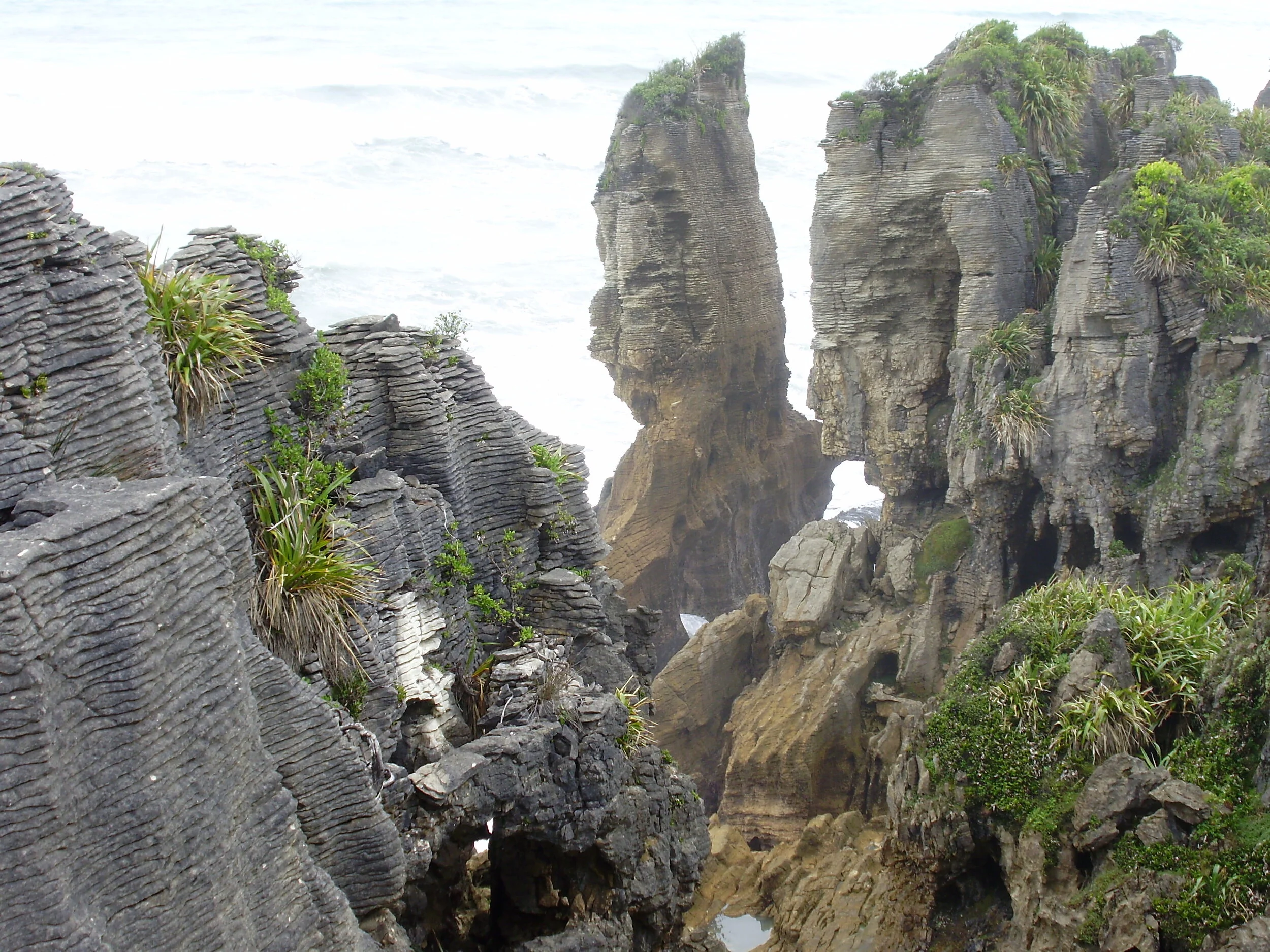
Top Tip: if you have time stay the night in Punakaiki, there is some top accommodation options and excellent walks and kayaking trips to appreciate. You will also get to enjoy the pancake rocks at quieter times.The loop walkway is easy to manage, it traverses through a native bush area full of Nikau Palms that forms the start of the track and you soon understand why it’s called Pancake Rocks. The limestone cliffs have been battered by both the weather and the tide over the years so that they now resemble pancakes stacked jaggedly on top of one another. Try to time your walk with high tide and ideally a rough sea. This will enable you to witness the blowholes in their full glory – the one labelled ‘chimney’ is aptly named as when a powerful surge of water flows through the chamber underneath it forces itself up through the rock creating a spray of water that looks like steam rising upwards into the air. I’ve been lucky enough to visit the rocks in various sea conditions – with rough seas you are avidly watching the waves form out to sea keen for them to break in time to raise the water level to pound through the narrow chambers. But equally in calm seas the rocks can be just as appealing as looking outwards you can often spot Hector’s Dolphins (the world’s smallest) cruising by in small pods close to the coastline.
Once you have completed your circuit and taken all the required photographs head across the road that is opposite the walkway entrance Here you will find a Department of Conservation centre useful for souvenirs or ideas for further adventures along the West Coast. There are also a couple of cafes that offer some good refreshment.
My next blog in this series will take us further up this striking coastline to Cape Foulwind and Westport.

Best places to stay in Aoraki/Mt Cook Alpine Village - that don't involve camping
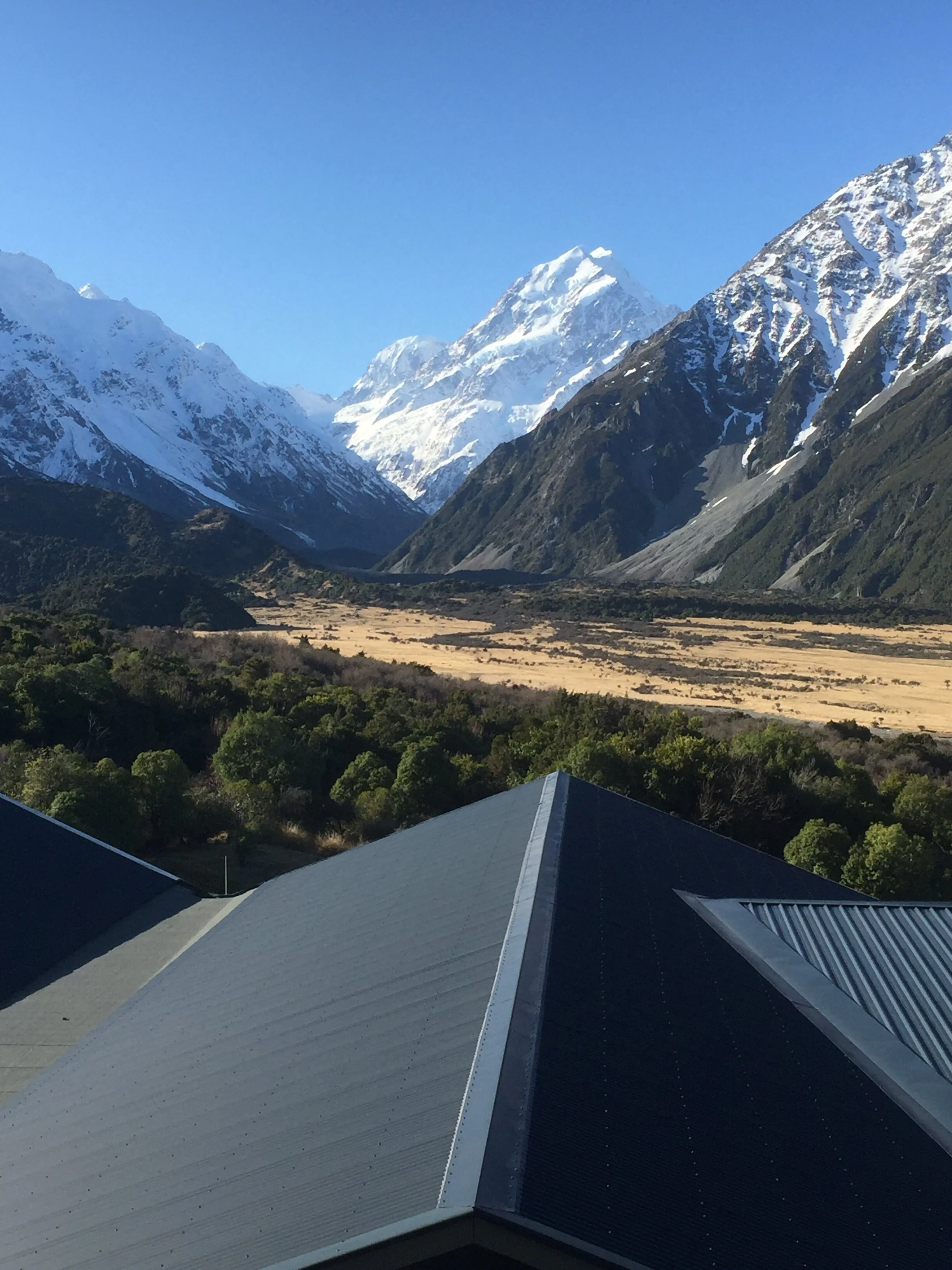
The view from the Hermitage Hotel in Aoraki is quite something…..
Let’s face it there isn’t a lot of choice in this resort style village which is basically a base for exploring the stunning national park area. Whilst everyone visits here for the epic alpine scenery and to get out into the great outdoors, it’s still important to have a comfortable place to stay for the night, right? And somewhere good to eat or indeed cook for oneself?
Now for the nitty gritty, the accommodation here isn’t cheap. It’s a lot more expensive than what you would pay down the road in Twizel. But then when I say down the road, it’s all relative as Twizel is a considerable drive down a lengthy highway. It’s over 50km from Mt Cook Village to the main turn off. That’s a pretty long way especially in winter time when snow often blankets the edges of the highway. This journey though is phenomenal and anyone would be a fool to miss it – indeed it’s the only possible way to arrive at the village except by helicopter. I will discuss this in a separate blog coming shortly…….
Whilst I digress somewhat from the accommodation offerings what I am trying to say is that staying in Mt Cook Village is probably a really good idea if you want to see this area properly rather then cram it all in. And hey in all honesty who doesn’t want to see the sun set on the towering peaks of Aoraki?
So, to that accommodation, The Hermitage is the largest and most popular option in town. It’s the first thing you notice on arrival, well apart from those mountains of course. It’s positioned to offer guests a colossal view from all its floor to ceiling windows. It’s worth staying here as it’s home to numerous activities and eatery options. There is a planetarium, a 3D theatre and even a museum dedicated to Sir Edmund Hillary, the first man confirmed to have climbed Everest.
Top Tip: when staying at The Hermitage it’s worth paying extra for an alpine view room – talk about picture perfect.
My second recommendation in town is Aoraki Mt Cook Alpine Lodge. Positioned close to The Hermitage this place is family run, super-efficient and offers that same incredible view from most of the rooms as The Hermitage. They even have a guest lounge complete with log burner fire and fully equipped kitchen to cook your own meals. Rooms here are a mix of studios, family rooms and even bunks.
My final selection is the Aoraki Court Motel which is a little bit more luxurious than most of the accommodation options. Although you do tend to pay for it too – in peak season this place can charge some eye watering rates. However, if you can find a deal, snap it up as it really is a top spot to stay at – the rooms are large, extremely comfortable and have those required exceptional views. It’s also close-by to a pleasant bush walk and other facilities in the resort.
Coming soon the best day walks in Aoraki and Tekapo


A day out in Akaroa, New Zealand's little slice of French paradis
The Star Gazer on a clear night is the perfect camping spot on at Onuku Farm Hostel
The drive to Akaroa across the rugged hills of the Banks Peninsula is worthy of a day trip in its own right. There are two routes – a tourist route high above the peninsula which offers great views and turns offs to some of the regions most remote beaches – and the main route
(when I say main it’s all relative) which takes you through small townships and pass pretty bays.This blog though is about Akaroa itself and I will focus on the two memorable journeys to get there in a later article.
Akaroa is a small seaside settlement set in an idealyic location at the end of a long harbour bearing the same name. It has a French feel to it with French street names and Parisian style signs. The story is that the French originally thought they had agreed with local Maori to
inhabit the area only to find on their return that the British has claimed the area for themselves following the signing of the Treaty of Waitangi. However, the French that did arrive where invited to stay and their influence on the area is still felt today.Akaroa is a pretty place to just wander around, there are a couple of beaches to enjoy and an historic lighthouse. As you walk along the waterside boardwalk there are numerous cafes and restaurants to enjoy with pavement seating if the weather is good. There is even a
waterside bar (Harbar) which has been developed from the old toilet block!
Paddle boards can be hired from the beach and a little further around the bay
there are kayaks and paddle boats available.If you venture to Akaroa though (and please do) the main incentive is to get out onto the water. There are several boat trips to choose from and all take in the gorgeous harbour (Akaroa actually means long harbour) and seek out the resident Hector Dolphins that frequently inhabit the bay. Hectors are the worlds smallest dolphins and stand out due to their rounded dorsal fin. Several of the operators allow swimming with the dolphins if the conditions are right. The boat trips come in all shapes and sizes so it’s entirely up to you which you select. The one with the dog spotting dolphin is recommended though….how could you possibly resist?
After an exhausting fun packed day out on the harbour it’s worth indulging in some fish and chips and this is something Akaroa does well. There are two options – Akaroa Fish and Chips which is situated on the seafront and often has a queue spilling out the door, or Murphys which is tucked away down a side street. Blue cod is most likely available at the first option and it is very good, but Murphy’s actually catch their own fish daily. So your choice is what has been caught by their fishermen that morning! Murphys has a kiosk on the main wharf which is popular in the summer months. There is also a caravan serving delicious pizza back on the main shopping street in summertime – if he’s open you’ll spot his sign outside – the salmon pizza is a must try, as is the standard Margaretia.
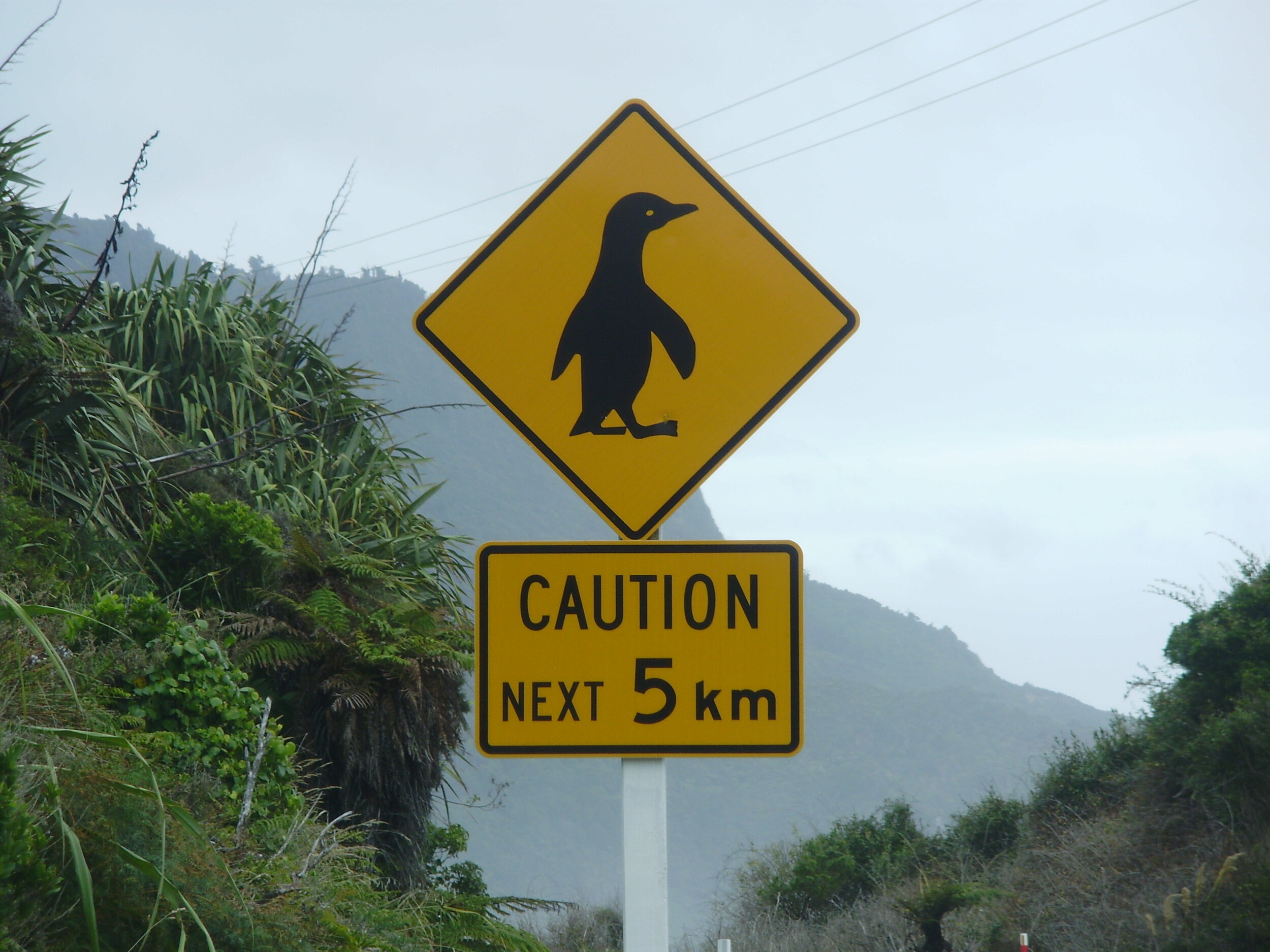
As night falls the options in this small town keep coming. You can choose to join one of the excellent trips to the family farm over the headland in Pohatu. The beach here is called Flea Bay and its home to the most successful colony of little blue penguins to be found in all of Australasia. The evening tour starts at dusk as the little penguins begin returning to their nests after a day out fishing. You can easily spot them returning from the sea and if your lucky you will spot a few in their nests. They are quite territorial and will soon warn you if they don’t want you close, one actually tried to peck me when I crouched down for a closer look! Another of the boxes opened by my guide revealed two youngsters eagerly awaiting their parents return. The guides use the tours to monitor the many boxes. It is a truly wonderful tour as you learn about the penguins and the farms owners who have done so much for conservation in this area. The scenery you encounter isn’t too bad either. They also run day trips and offer guided kayaking tours.
Another must try after dark activity for the adventuress is NightSUP paddle boarding. LED lights are fitted under the boards so that the sea water beneath is lit up to reveal all the underwater activity. It is a magical sight. There are huge stingrays that inhabit the shallow waters and are often spotted underneath the paddle boards.
Akaroa is also home to a popular cooking school. It’s worth checking out their timetable to see what availability there is for attending one of their courses. They offer many different types depending on taste, so you can indulgence in Italian, Spanish or even Asian cuisine.
They all come with excellent reviews and who doesn’t love an afternoon wineing and dining.Of course there are many other things to try in Akaroa and it might be worth extending your stay. Excellent accommodation options can be found in the area. One of my own favourites is
slightly out of town at Onuku Farm Hostel which offer Star Gazers - small tent shape huts with glass panels above your head – you can well and truly star gaze here on clear evenings. Another top spot is at the Pohatu Penguin colony where you can stay overnight and fall asleep to the sound of penguin chatter. If you wish to stay in Akaroa itself I would recommend the Criterion Motel.
A few snaps from our time in Akaroa. Star Gazing, paddle boarding and penguin spotting…..


Biking the Little River Rail Trail in Canterbury, South Island New Zealand
Hiking and biking are two of my favourite outdoor activities.
They are easy to combine on a weekend and one of the best places is Little
River on the Banks Peninsula. There are some easily accessible Department of
Conservation walks in this area and the Little River Rail Trail is one of the
best mountain bike tracks in the country.The Trail covers nearly 50km of mainly off-road biking following, as you can probably guess, an old rail line from southern suburbs of Christchurch to Little River township. It can be broken down into easy manageable sections or enjoyed in one go – although if you aren’t a seasoned biker you will probably suffer sore calves if you do attempt this! Beware! It is all nicely flat though, which is a plus,
and takes you through some magnificent countryside so there are plenty of places to stop off at, rest, and enjoy the scenery and serenity. I have biked the trail a few times and one of my favourite parts is from the small town of Lincoln to Motukarara. This part does include some roadway negotiation, but it is so quiet and you tend to get distracted by all the sheep and horses in the fields, the Pukeko and paradise shell ducks that are abundant around here. Part of the trail traverses alongside the river and a new wetland has recently been developed by some keen locals eager to return the adopted farmland to its former habitat. There are signs telling you all about this initiative and it quite inspiring to witness
at first hand all the hard work and dedication. Over the next few years, as the
plants grow, and birds return it will be a pretty special place for all to
enjoy.Another recommended an enjoyable part of the track is from
Motukarara to Kaituna Quarry Reserve. Look behind you and you have the splendour of the Southern Alps mountain range in full view on a clear day. Beside you is Lake Ellesmere, an inland saltwater lake cut off from the sea by the Kaitorete Spit. The lake and all it’s wetlands and overflows, including Kaikuna Lagoon are home to literally thousands of birds. Up to 98,000 can be hanging out here at any one time! Often as I cycle along the raised track, I spot grey herons standing tall and proud on fence posts. In the wetlands are families of Australian Black Swans who raise their young in these sheltered waters. In Springtime the ponds at the side of the track are home to mother ducks with their tribe of little ducklings innocently negotiating the reeds and bushes. There are often some unusual birds to be found here that I would in all honestly struggle to name, but if you enjoy wildlife and nature it’s an excellent part of the track to explore and linger.My third and last recommended section is the part encompassing Birdlings Flat to Little River township itself. Birdlings Flat is a vast stone covered beach that is pounded constantly by the unforgiving and slightly mercilious Pacific Ocean. With its crumbling cliffs at one end and seemingly endless expanse at the other it is both atmospheric, wild and beautiful. Fishermen love it here and there is a constant trail of eager anglers keen to make a catch just off the beach. Little River reached by following the rail trail along the banks of Lake Forsyth from Birdlings Flat along the floor of the rolling hills of Prices Valley is a small settlement which is usually a stop off-point for those travelling further on around the peninsula. It has an excellent café, fuel stop, art gallery and even an American Diner. If you are keen enough to tackle the trail in one fell swoop it has the unique Silo Stay to spend the night – hay silos have been converted into stylish hotel units, there is even a place to hang your bike!
Once you have begun your exploration of the area, providing
you still have enough energy in those legs after your bike ride – which along
this trail has a habit of being longer than you expect it to be as you simply
can’t help gazing ahead of yourself despite your legs screaming at you to stop –
you will be keen to go off road altogether and follow one of the walking tracks
into the bush and countryside. The track I would recommend for a day walk would be the Okuiti Track. It’s quite a climb but once you reach the upper areas you are rewarded with some truly splendid awe-inspiring views.


Snowball fights in Mt Cook National Park
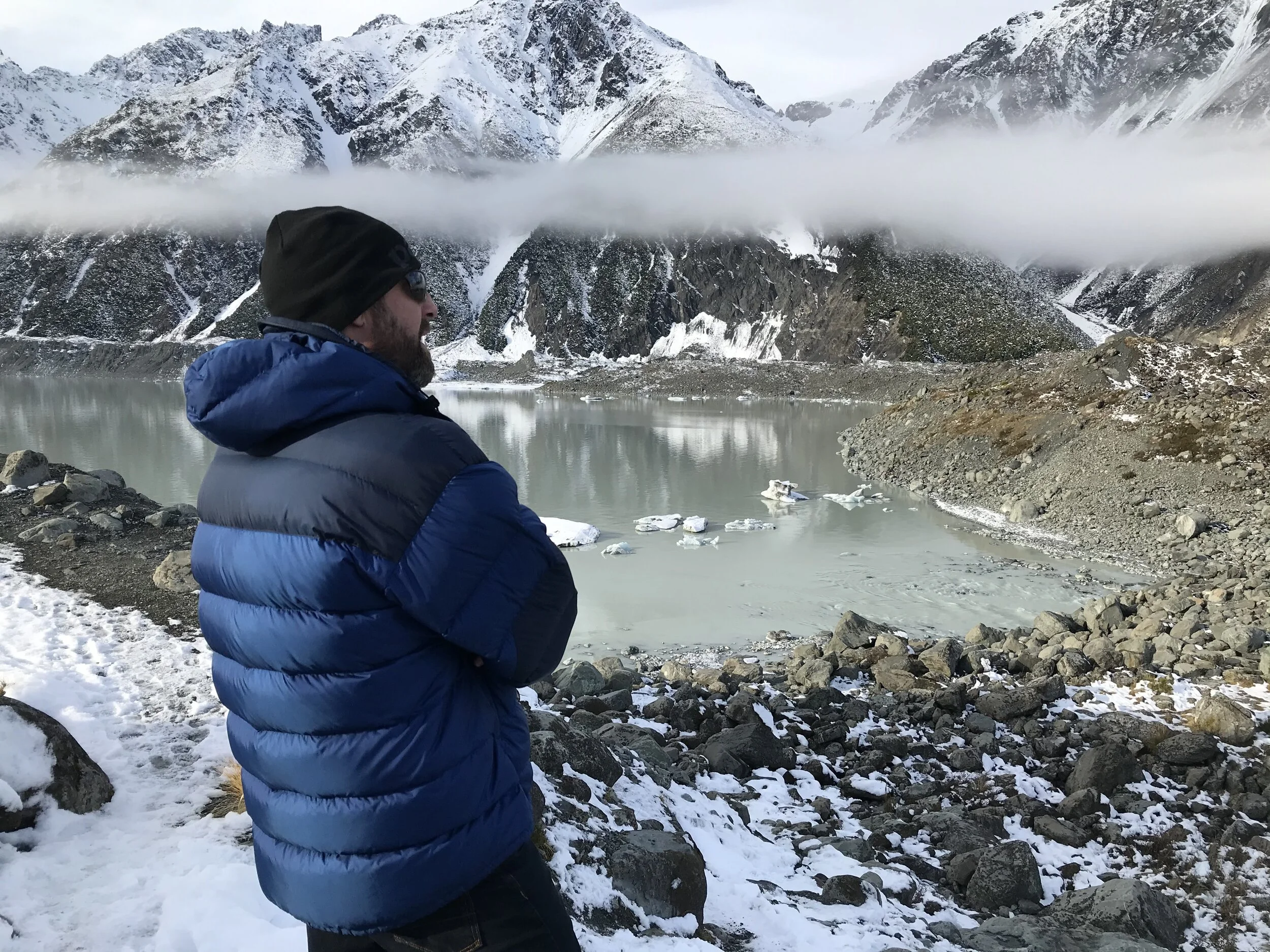
The view looking out over Tasman Glacier Lake, Aoraki National Park in winter time is epic road trip worthy.
There is nothing like a road trip through the mountains when it’s winter time, when a snow blanket coats not only the peaks of New Zealand’s mightiest mountain range but also the frost bitten ground. Even glacial rubble looks pretty with a layer of white glittering snow smothering it. Mount Cook or Aoraki is the name given not only to this national park but the village residing in it. A resort town it consists mainly of places to stay and eat whilst The Hermitage, the area’s largest hotel, offers everything from a gift shop, museum to planetarium. The main reason to visit this national park though is to get out and explore. There are numerous walking tracks a short distance from the village. Head out to Lake Tasman and the Tasman Glacier. The lake was formed only a few years ago as the glacier slowly resided. At all times of year huge chunks of ice can be seen floating down the lake as they gradually break up having chipped off from the glaciers terminal (or end point). It’s quite a sight to see. Follow the track down to the lakeside where there is a makeshift jetty. This is used by the small boats that take tourist groups out across the lake to get close up views of the ice burgs and of course at the lakes far end, the glacier itself. I was more adventuress than this and opted instead to join a guided kayak around the lake. The water is a grim grey colour and although it doesn’t look very appealing it is just melted ice, and therefore the purest water you are likely to find. The murky colour is just a result of rock salt built up over years in the glacial ice. I gulped a few mouthfuls as I kayaked across the water. There were a number of ice burgs floating down the lake for my visit, I was told they were the remains of a big displacement recently. I was able to manoeuvre my kayak around several, careful to not get too close in case some of the ice decided to chip off and make an almighty splash. The colours were brilliant blue and emerald greens and it was difficult to imagine that this ice dated back thousands of years as it had compacted and moved with the glacier. After a generous amount of time spent gawping at these mighty ice cubes we, myself and my guide made our way down the lake to the glacier terminal. We were only allowed within a kilometre of it, again for safely reasons, in case a Tsunamai was triggered across the lake by the breaking of a gigantic slice of ice. To be honest this was more than close enough, especially since it was several kilometres kayak back to the jetty! It is only by being so close and yet so far away that you get to appreciate the sheer scale of the Tasman Glacier. Standing at the viewing platform which you can easily climb up to from the pathway to the lake you cannot quite grasp the size. Everything in the area is enormous so why would you possibly be able to comprehend? But sat in a small kayak just in front of this colossal wall of ice gives you another perspective entirely. Everything is epic in scale in this mountainous area of wonderment.
Look out for my next post about the Hooker Valley Walk and where to stay and eat in Aoraki/Mount Cook Village


A road trip into Mt Aspiring National Park never disappoints
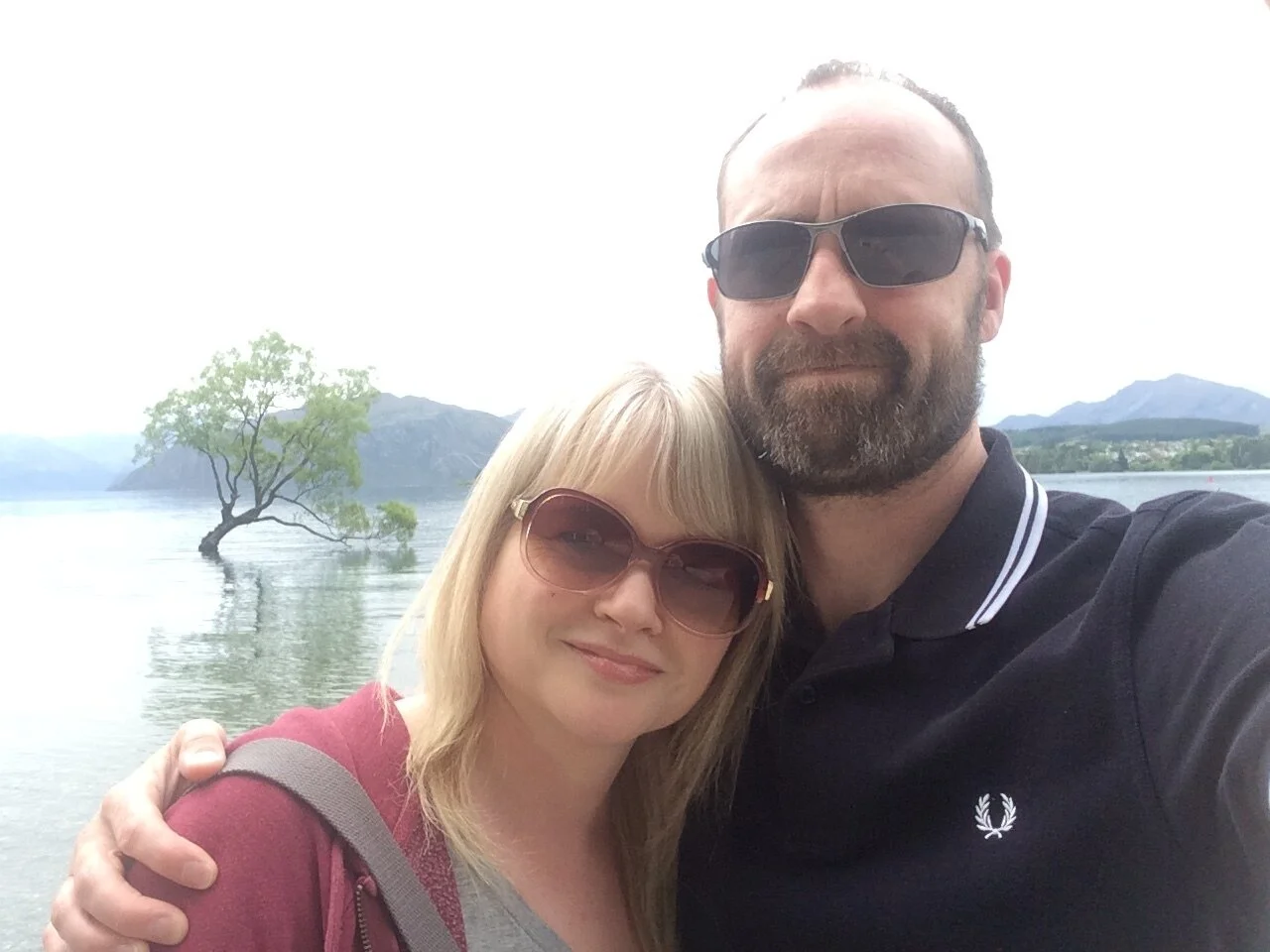
Dan and I beside the shores of Lake Wanka with the famous tree behind us - very touristy I know - but when in Wanaka…
Wanaka is famous for several things, its buzzing atmosphere, its picturesque setting, it’s large lake and it’s famous tree. But what is really inspiring about any road trip to Wanaka is leaving civilisation behind and heading deep into Mt Aspiring National Park.
My first day in Wanaka involved a stroll around the lakefront. I’ve hired a kayak before and taken it across the lake - that is well worth doing - hire of kayak and paddleboards is usually available on the edge of the lake near the town centre. Today though I just felt like a stroll so headed around past the jetty and marina. absorbing all those picture postcard views.
Top tip: make sure you head down the jetty to peer into the clear waters beneath - there are usually heaps of New Zealand Long Fin Eels swimming around. These eels can live up to 100 years in freshwater before heading out to sea.
The lakeside pathway I was following carries on through woodland and meanders by the lakes eastern reaches. You can carry on all the way to Albert Town if you so wish. As I strolled I spotted shags and herons fishing in the lake water and several fantails tweeted a chorus at me as they grazed on the bugs disturbed by my footprint.
I also strongly recommend walking around the other side of the lake which is an even prettier route to follow (had left from the town) and yes this route does indeed take you past the famous ThatWanakaTree# - its also quite a cool mountain biking track and offers some epic photo opportunities.
Wanaka itself is well worth devoting some time too. It’s home to some excellent cafes and restaurants and some cracking pubs. The Lake Bar is one of my favourites - positioned on the corner it does, as the name suggests, have great lake views. The wine and beers pretty good too… Lots of locals congregate here. A few doors away there is an attractive bar called Alchemy which is apparently good to eat in - I haven’t tried it yet as I’m rather addicted to Francesca’s Italian, a somewhat Wanaka institution that serves fabulous pasta and desserts. Don’t miss their polenta fries for starters either - they are irresistible. Whilst mentioning food in Wanaka I must recommend the scones from the Federal Deli found tucked down a little alleyway off the main street (Helwick Street), they sell out quickly but the cheese and date scones here are from another planet……
The shops in Wanaka all tend to cater for the great outdoors which is hardly surprising given where Wanaka is situated. If you don’t go outdoors here and do some hiking, climbing or cycling there is probably something suspicious about you. Yes, I appreciate I’ve just mentioned some incredible eating and drinking spots (I haven’t even started on the wineries and chocolate shops present nearby, I’ll save those for another day) but you must get out in the outdoors in Wanaka it’s just not negotiable - and just think how good you will feel about tucking in to said food and beverage after a day full of exercise….
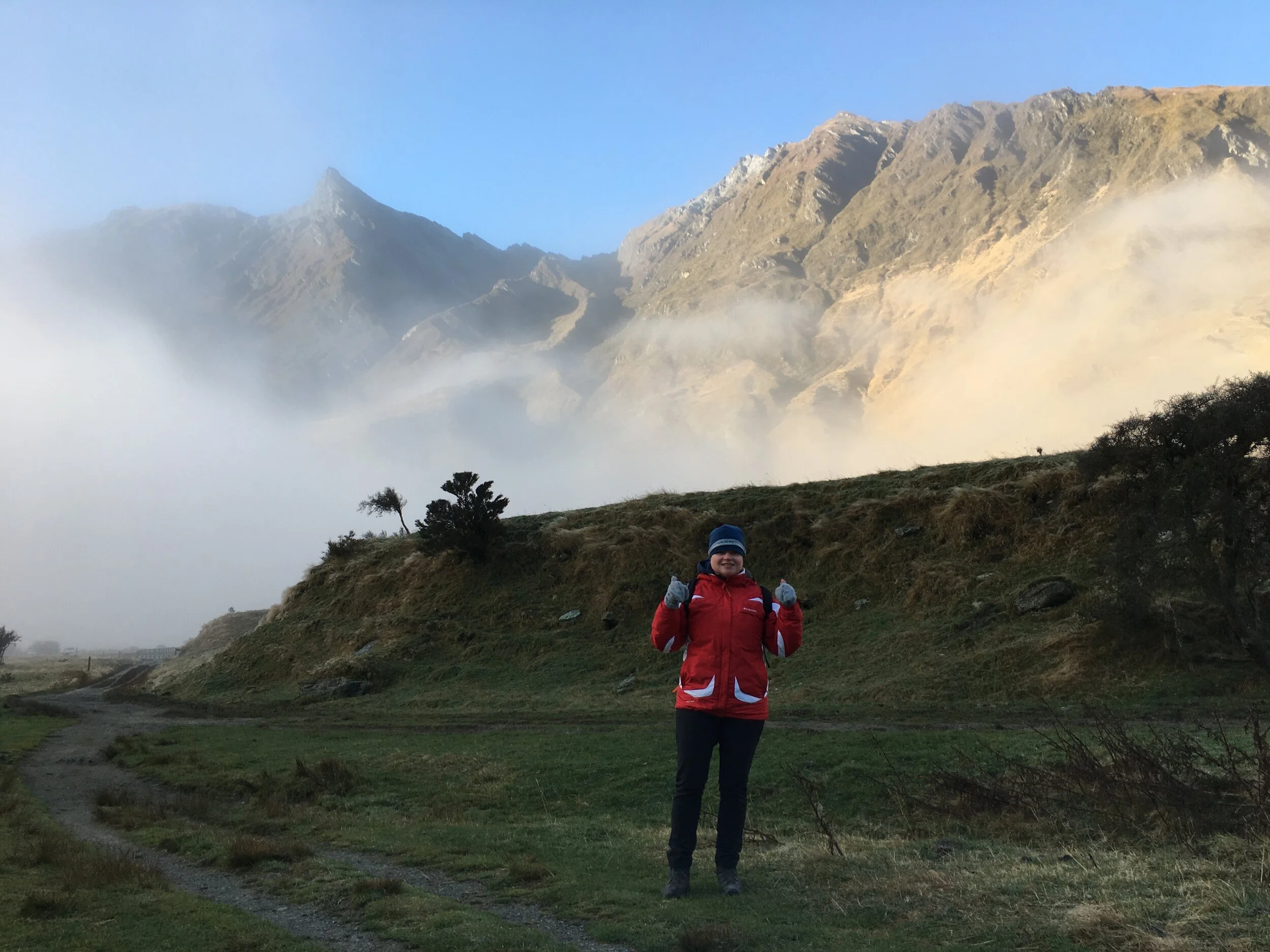
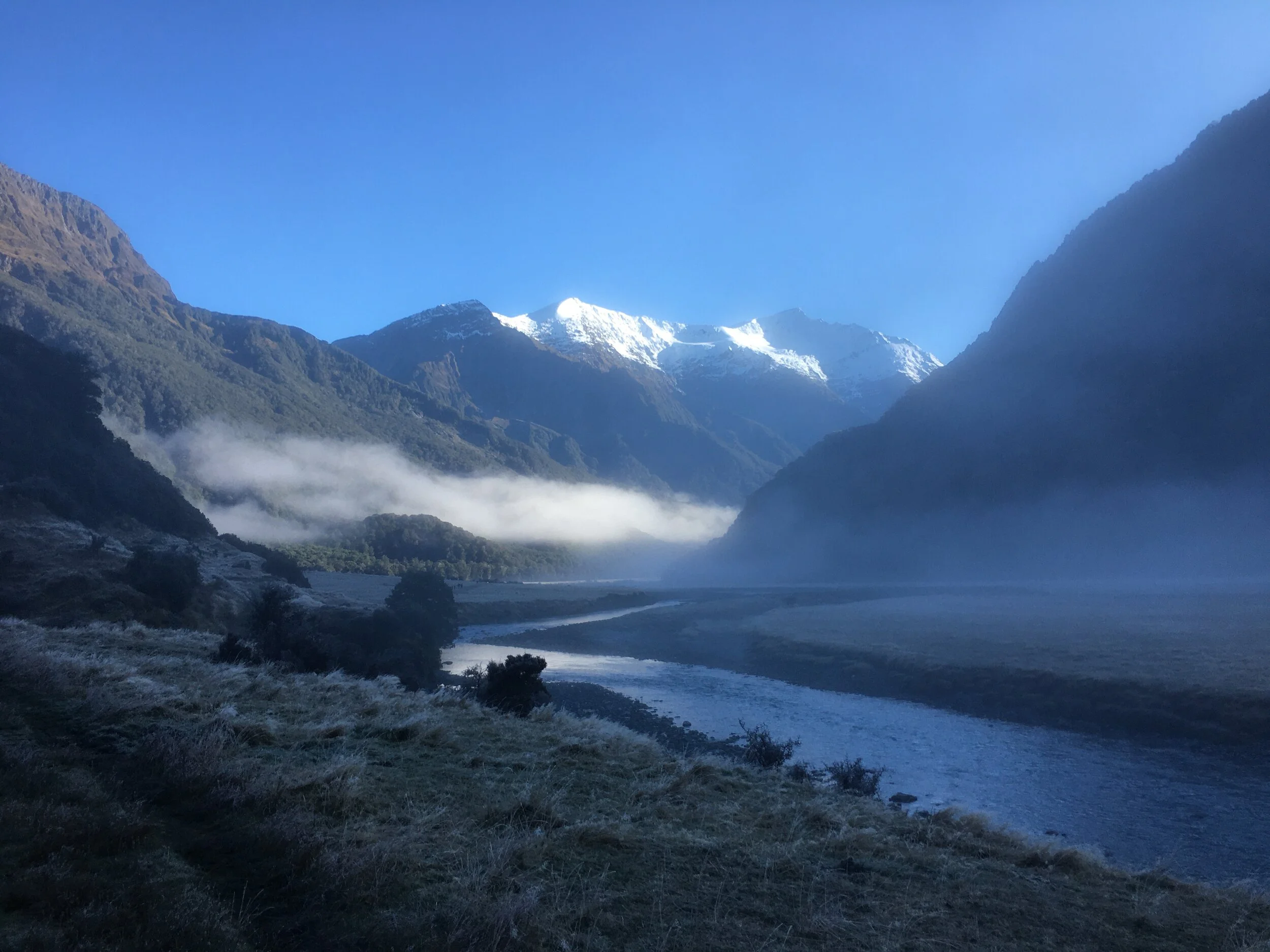
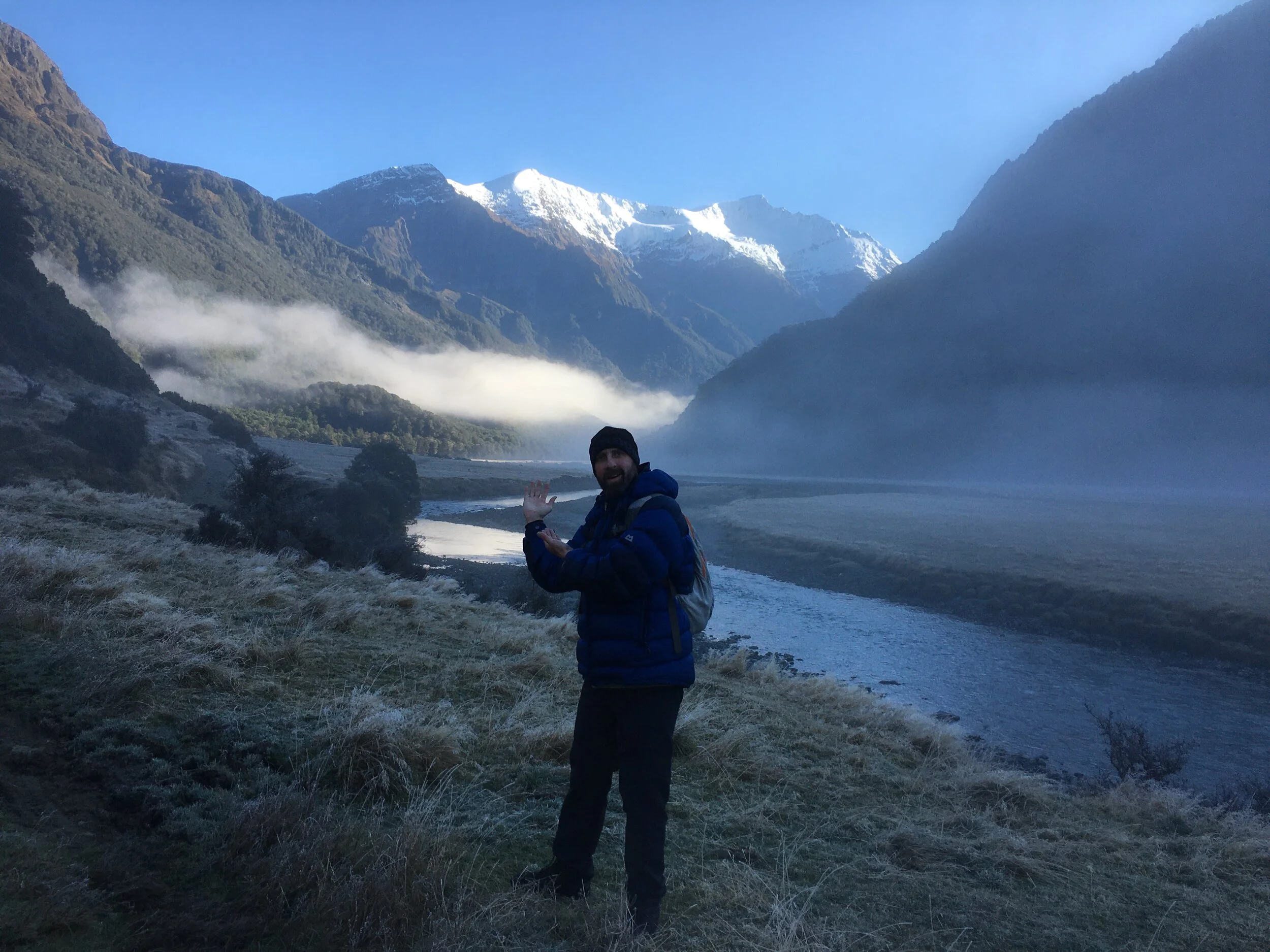
So, in keeping with what I’ve just strongly suggested, my start the next day was early - super early. I opened the curtains to a bank of fog - mountains, what mountains, was grumbled as I looked out of my motel room. This annoying deterrent though did not stop me from heading out on the hour plus drive to Mt Aspiring National Park and the Raspberry Creek Carpark as the sun rose. I could barely make out the valley I was driving through as the fog settled although I did come across a few sheep jams along the way and a couple of cows on the road - hey this is New Zealand after all. After weaving my way along an unsealed road and through some narrow stretches with tight turns I came to the car park which was virtually empty on this cold grim morning. I hoped, as I wrapped myself up in all my cold weather gear, that the visibility would improve - and it sure did in such an incredible way. Glancing up as a began my walk I noticed the top of a snow covered mountain looming high above and slowly poking Its peak out of the freezing blanket of fog and into the sun.
Read my next blog about Mt Aspiring National Park, Rob Roy Glacier and drinking the best hot chocolate ever at Patagonia
A journey to the West Coast - Arthurs Pass to Hokitika
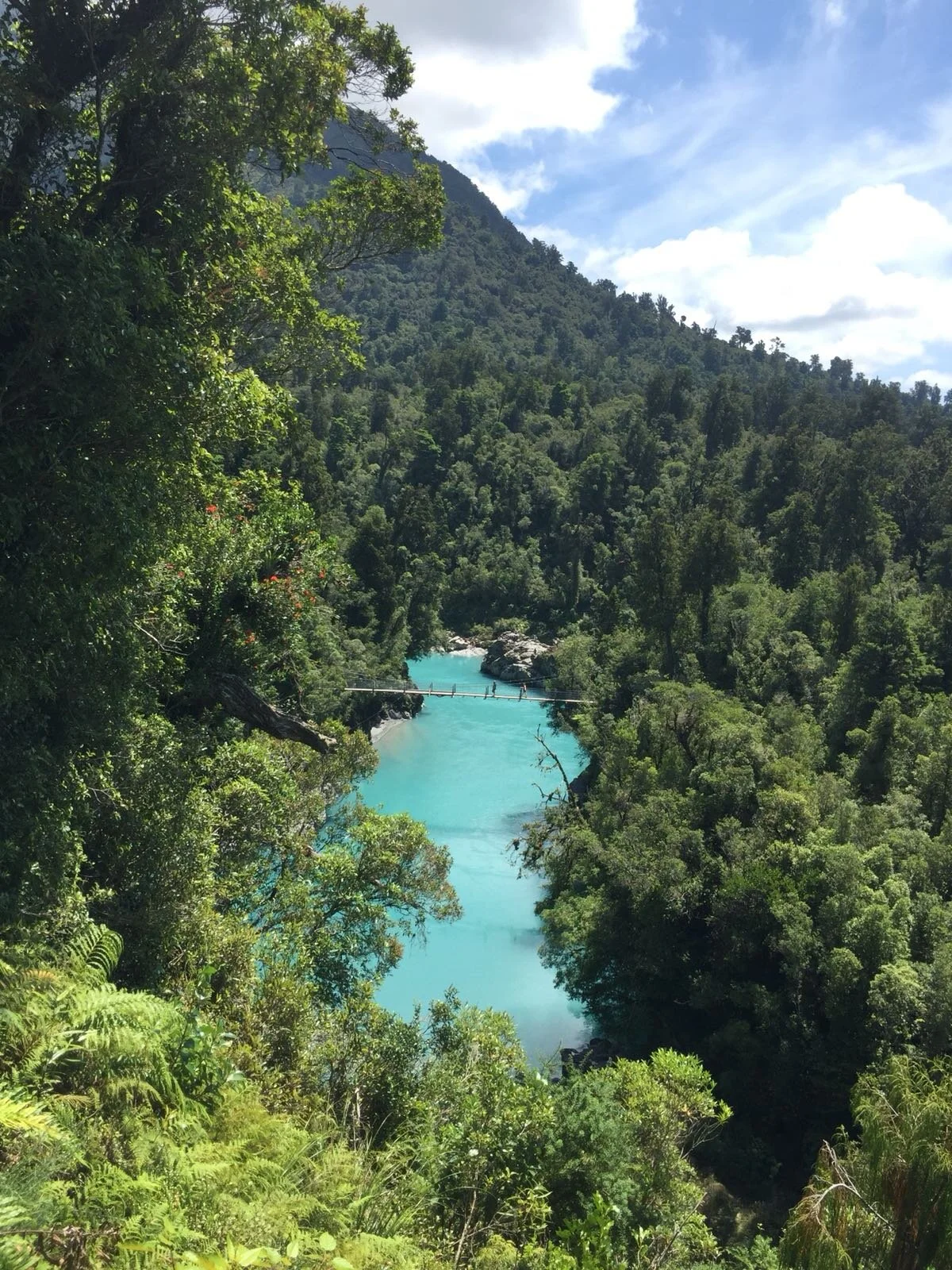
The vivid blue colours of Hokitika Gorge, well worth exploring on any road trip around the West Coast of the South Island
Arthurs Pass traverses its way through the mountain ranges of the Southern Alps in the middle of the South Island. Named after Arthur Dudley Dobson, who was the first European to escort a party through the area, it is a drive that requires you to have your camera at the ready. My first port of call was the small settlement of Sheffield. Sheffield is home to an amazing pie shop - one that is world famous around Canterbury! Each day they serve up a vast array of sweet and savoury pies and stopping for one is kind of a compulsion for anyone in the know. I bought my vegetarian pie (yes I know but I love my veggies, although the chicken pies are also pretty tasty) complete with a nanna slice (chocolate heaven) for afterwards and headed on my way. The scenery on this, the Eastern side of the Alps, is tussock grasses, oddly shaped rocks (Castle Rock is an excellent stopping point) glistening lakes brimming with trout, expansive braided rivers and sharp mountain edges. Numerous gravel tracks lead off the highway to various tramping tracks and ski resorts in winter. Everything is so immense it causes you to catch your breath.
Top Tip: stop at Arthurs Pass Village - it’s not only great for a refreshment break (the coffee is good), there is also a chance of spotting a Kea - the world’s only Alpine Parrot. I’ve had one approach me and try to pinch my mobile phone whilst I sat outside one of the roadside cafés sipping my coffee. Please don’t feed them though as so many die from being too close to the road or eating the wrong type of food.
As I left Arthurs Pass Village I noticed the scenery begin to change. The rainforest of the West Coast begins to emerge with enormous waterfalls plunging down from mountain edges and road sides covered in a dense assortments of ferns. This is the wet side of the country and the scenery certainly reflects that. Rugged forests climb high up the mountain edges. Arthurs Pass finishes at Kumara Junction where I joined State Highway 6 - the only road to be found up and down the West Coast. I was heading to Hokitika but first my journey took me through farmland towards Lake Kaniere. Even on a misty overcast day this lake is something else. It’s setting is sublime, with rainforest edging its shore and the peaks of the Southern Alps looming above. The lake is a mecca for watersport but I enjoyed wandering some of the tracks nearby. A loop walk took me through a Kahikatea forest and past a small stream. Weka (a native bird which looks a bit like a kiwi only it is active during the daytime and doesn’t have quite as long a beak) came and approached me as a I ate my pie at the lakeside.
I drove around the lakeside until the road zig zagged it’s way through farmland to Hokitika Gorge. Up ahead the weather had cleared and I could just about make out the peak of Aoraki/Mt Cook, New Zealand’s largest mountain. Hokitika Gorge is a real feature of this area - a place where the glacial rock salt has caused the water to look such a vivid blue it appears as though dye has been poured into it. I tried to take a picture from the viewing platform overlooking the gorge but couldn’t really do it justice. A pleasant board walk took me out to a swing bridge across the river - holding on to your bags and cameras here is a must as with a couple of people on it the bridge really does swing! On the other side the walk continued through untouched bush and I was serenaded by fantails and bellbirds. There is a spot where you can clamber down onto rocks and actually reach the rivers edge if you so wish.
That evening I headed back into Hokitika Town. Please see my next blog for the Hokitika and Pancake Rocks road trip weekend adventure.
Kaikoura - home to a marine bonanza of wildlife and birds
Kayaking with seals in gorgeous Kaikoura, a small seaside township on the South Island of New Zealand that is a mecca for marine life
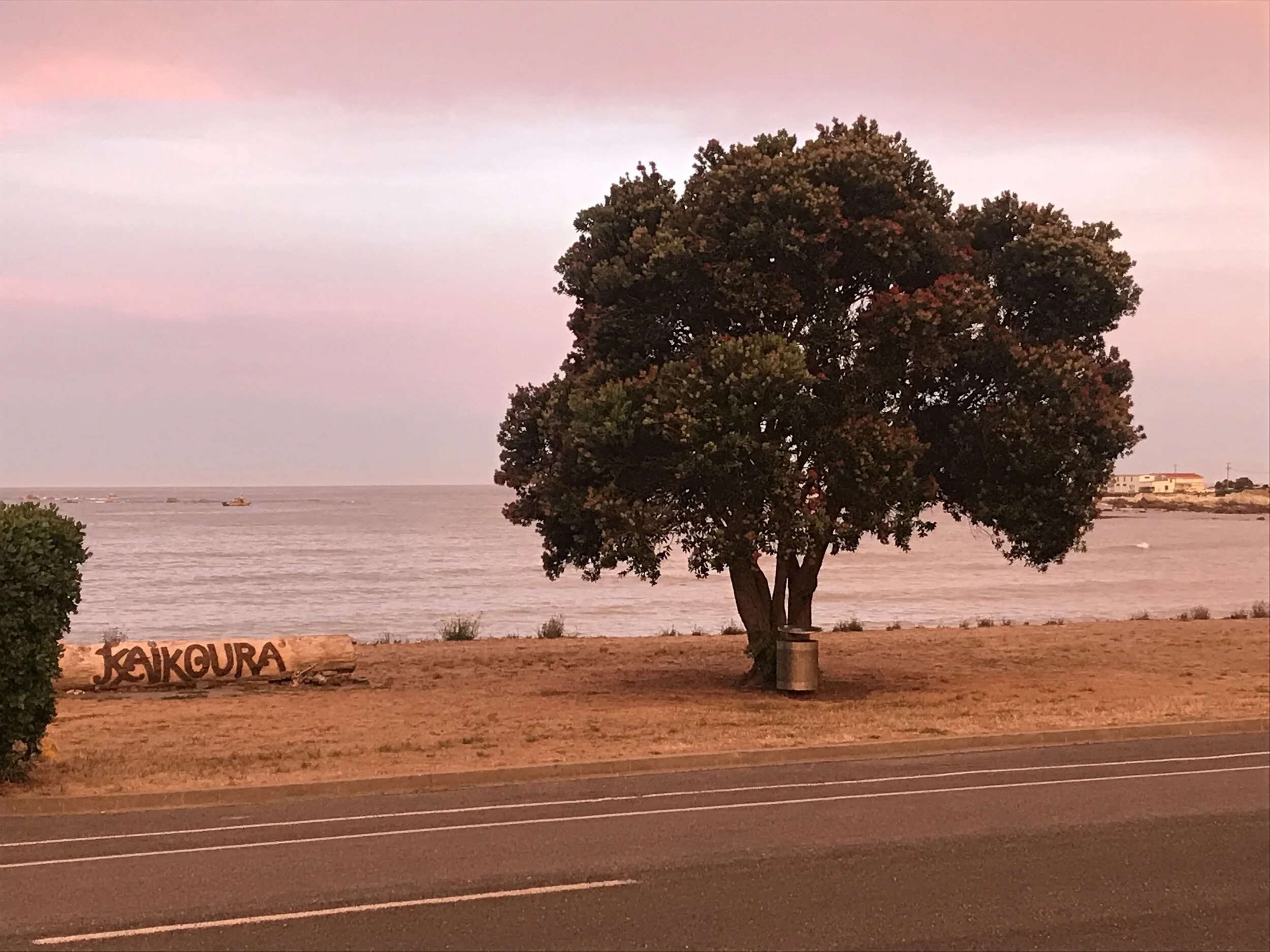
Less than 3 hours scenic drive from Christchurch is the seaside township of Kaikoura. It’s the perfect short break after a hectic working week. Anchor Court Motel has reopened recently following damage suffered after the now famous 2016 earthquake. Directly across from the beach it’s floor to ceiling windows offer stunning views of the ocean complete with sunrise. This was the view from our room - we paid slightly more for a sea view but it was definitely worth the few extra dollars. Kaikoura is a mecca for marine life and this is the main reason to visit. Kaikoura is a placed to knock off some of those bucket list dreams. I’ll tell you more about these in a later blog - swim with wild dolphins, learn to fly a plane, watch a sperm whale breach, even witness the mighty albatross fly overhead. It’s one of my very favourite places and an early morning start is always a must. Up early for the sunrise Dan and I headed out to meet the chaps from Kaikoura Kayaks, to hire a double sea kayak. They also do a few different guided trips which are well recommended but having done one of these previously we decided to head out on our own. After a very thorough safety briefing which came complete with some valuable information for future use we paddled out of South Harbour. The sea was smooth, the sky clear and the going fairly easy. We soon came across our first New Zealand Fur Seal lozenging around on the rocks. Up ahead more where in the water, rolling around attempting to cool off on this warm summers day. After a frantic paddle through the waves out at sea we reached Whalers Bay, only accessible by boat or foot. We kayaked through the shallow waters spotting fish and seaweed floating around in the clear waters beneath. Lots of seals were hanging out in this bay which is a popular area for the young males. They barked at one another a fair bit but were pretty laid back with us. We received a few odd looks and curious glances but on the whole they were more interested than bothered by our presence. As we approached the rocks some flopped down in the water, swimming closer to take a better look. We hung around on our own for quite a while until a Swim with the Seals boat appeared. Being so close to marine life, no matter how many times you’ve been lucky enough to experience it, is always a pinch me moment. Reluctantly we headed back to shore bidding farewell and wishing luck to our new found friends.