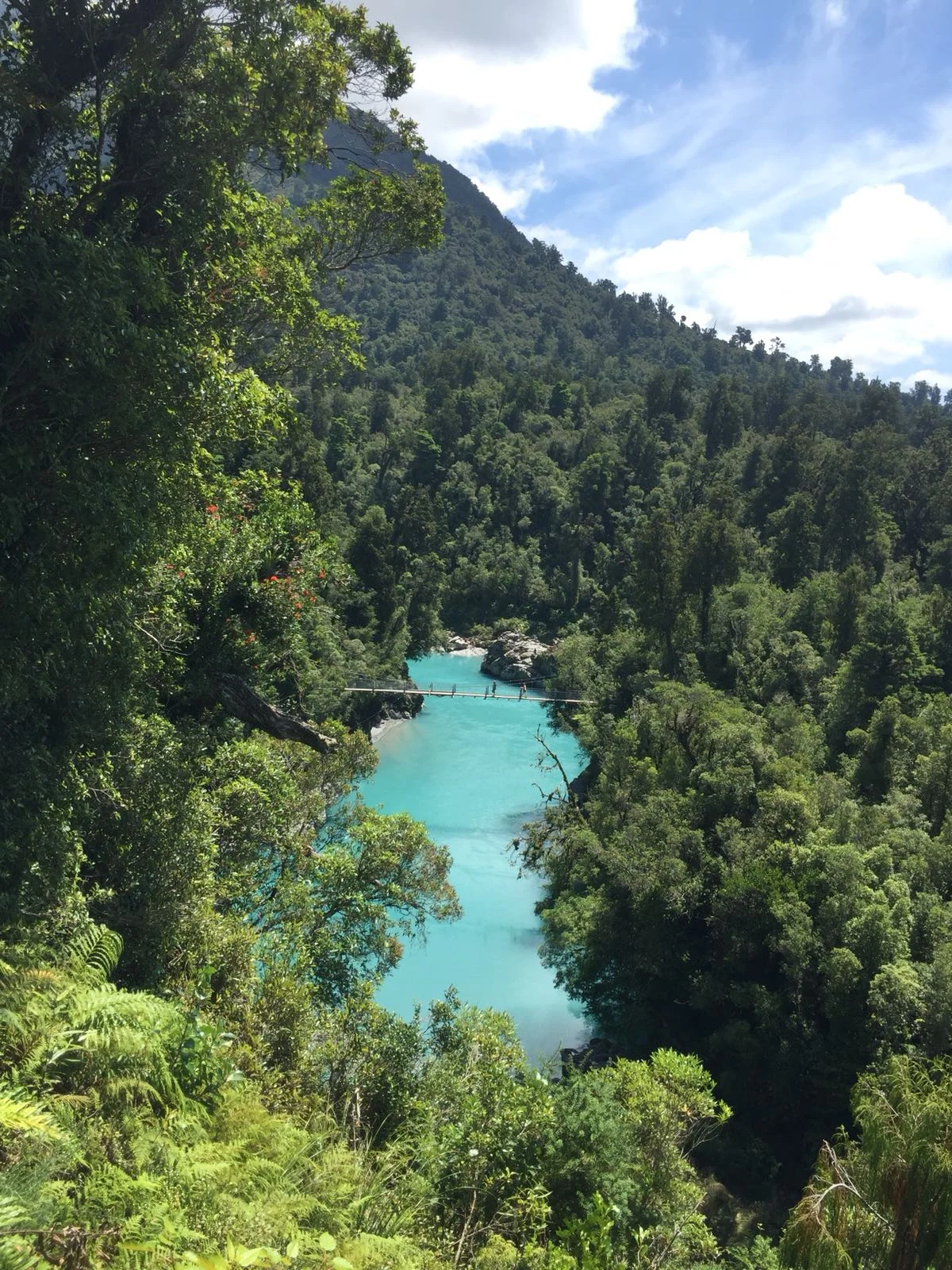
The blue blue blue of Hokitika Gorge, South Island's West Coast
Overlooking the dazzling waters of Hokitika Gorge
I gasped the first time I looked down on the water running through Hokitika Gorge. Such a brilliant blue it looked like someone had actually spilt a paint pot into it. Surely such coloured water did not exist naturally? The road to the Gorge is somewhat uninspiring following long straight roads lined through the farm lands. Once you ditch your car in what is now an extended car park (thankfully as at peak times it was somewhat tight) the adventure begins - taking you through native west coast bush to the viewpoints over the water. Further down the pathway a swing bridge takes you across this ‘mirage’ - believe me it does swing so do hold on tight especially to those cameras and phones. Fabulous views are on offer in either direction up and down the river and you feel at this point that you are actually overlooking the central part of the gorge itself. Across the far side of the bridge is a haven for bird life with many fantails and wax eyes joining you on the track. What you ideally want to miss though are the pesky sandflies that at times can be quite prevalent here - stand still for a couple of minutes and if they are near they will find you, be warned.
Miro Cafe, Christchurch, a foodies delight
The best breakfast to be found in Christchurch? just maybe….
One of my favourite spots for breakfast this place rocks great food and coffee. So far I’ve sampled their Portobello Mushrooms with panko crumbed eggs - intriguingly delicious. The Beef Cheeks - yes beef cheeks for breakfast - is also heavenly and very rich. There are also healthier options too with a range of nutritious smoothies and Acai Bowls and unusual concepts such as Buffalo Panna Cotta with citrus granola and seasonal fruit. You can even wash these down with a Cereal Killer cocktail or Breakfast Martini, personally I prefer to stick to the awesome coffee. The service is top notch and the atmosphere welcoming. Two huge open fires make for a cosy ambience and it’s only a short walk from Hagley Park, making it a great spot after an energetic circuit or two.
Miro is now open for Tapas on a Thursday, Friday and Saturday evening.
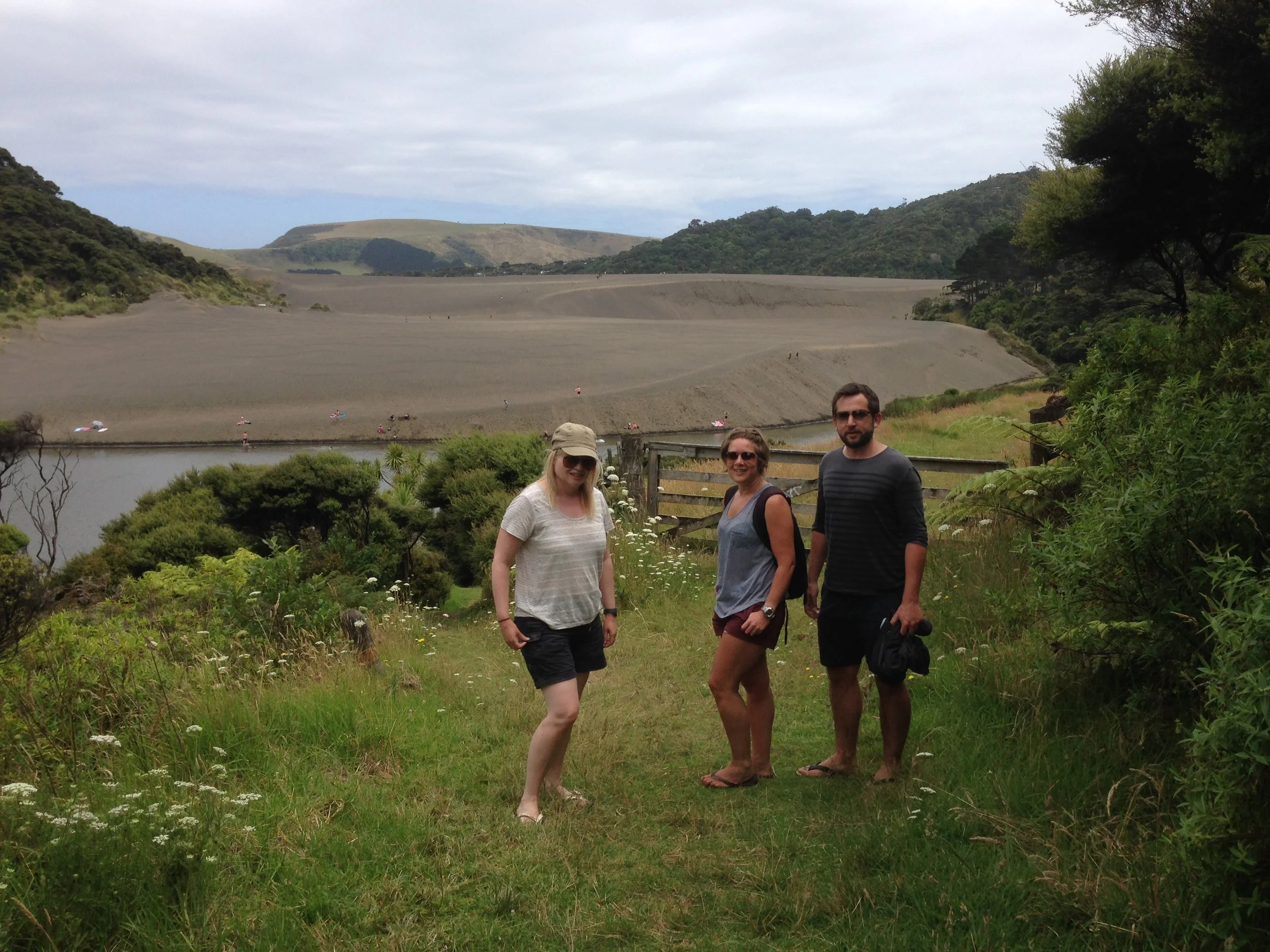
Bethells Beach Sand dunes - sand, mud and yet more sand......
Sand dunes galore with lakeside walk
I followed an established track down to a clearly illustrated picture sign which gave details of the walk I was about to undertake. At this point I had a choice – to take the slightly shorter route up over the sand dunes or to walk alongside the stream leading to the lake. I choose the latter. Passing through a pedestrian gateway I made my way along a grassed verge until the sand dunes appeared as short distance later, dominating the landscape. Huge black volcanic sands glisten in the sunlight above the stream. I carried along keeping to the right hand side of the stream and negotiating the soft sand underneath my feet. In some sections it was obvious that the path had been flattened and you had to make your own pathway. Sometimes it was easier to simply wade through the shallow waters of the steam than to try to tackle the steep edges of the sand dune that could easily turn your ankle.
I soon figured out as I came across the orange markers of the Hilary Trail that I would have to cross over the stream at some point. In some areas the stream is quite fast flowing and deep enough to soak you half way up your leg. In many others it is passable with a long stride or jump or being prepared to get your boots wet.
Across on the other side I came to a grassy path and as I turned the corner the lake appeared in all its glory. Hidden away behind the dunes and surrounded by dense native bush it is quite a sight. Just past this point is a jetty, slightly broken in parts but a good place to take a photograph. The track around the lake takes around two hours and I chose to walk it clockwise. Just after the start of the walk is a steep section to the highest point – not exactly over strenuous but it is quite slippery in the mud after a period of rain. There is bush all around including prickly Manuka trees. The lake is nearly always visible from the pathway. At the far end of the lake, around half way round I heard the sound of running water and soon realised I was at the lakes source. Emerging out of the bush I came into a clearing with a small two tier waterfall descending into a water hole. A sign here explains the Maori legacy and how small water holes such as this one were used by Maori to teach youngsters how to fish. It is a pretty peaceful spot with nothing but bush all around. I can imagine in the summer months it would be tempting to dip your feet in the water. I continued my walk around the other side of the lake, in spots it was very muddy and difficult to negotiate. After a while the bush clears and you find yourself on private land with signs stating to stick to the path. The sand dunes again rear up in front of you welcoming you back to the very start. It was at this point I noticed a sign pointing to a portaloo perched high up on the top of the sand dune, surreal.
I continued the final part of the walk sliding down the sand dunes and wading back through the stream. A great opportunity to wash the mud from my boots. Be careful at the gate to take the correct pathway to the left as the right side is a private driveway.
Top tip: take a boogie board and surf down the dunes, great fun.
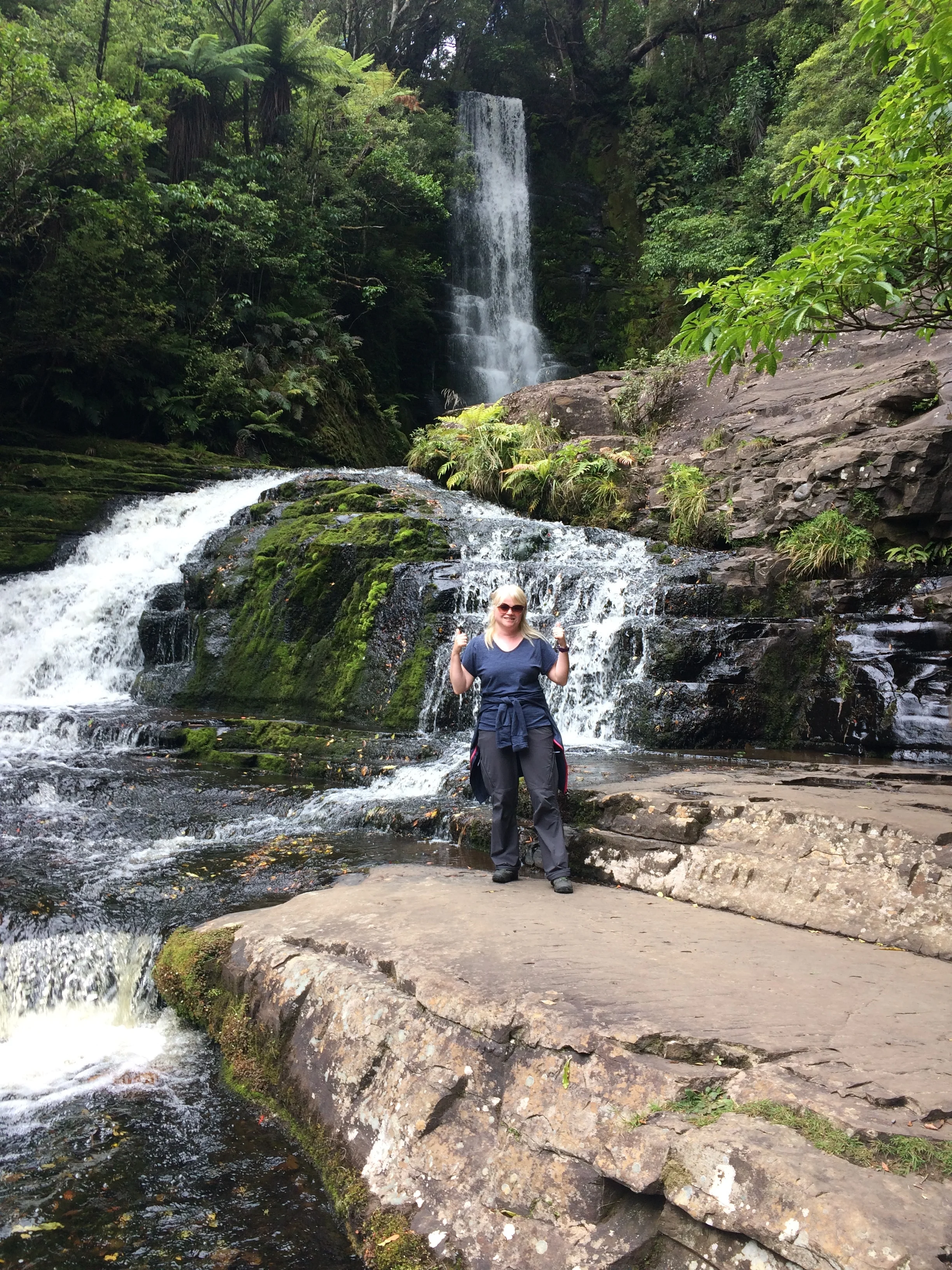
McLeans Falls, the highest waterfall in The Catlins
In an area blessed with waterfalls this one stands out….
In an area seemingly blessed with picturesque water falls McLeans Falls is another that easily catches the eye. It takes a forty-minute return walk through Rimu and Fuchsia forest to reach the 22-metre-high waterfall, the highest in The Catlins. I timed my visit at sunset when it is especially rewarding as the sun glistens through the tree canopy providing a surreal background to an already breath-taking location.
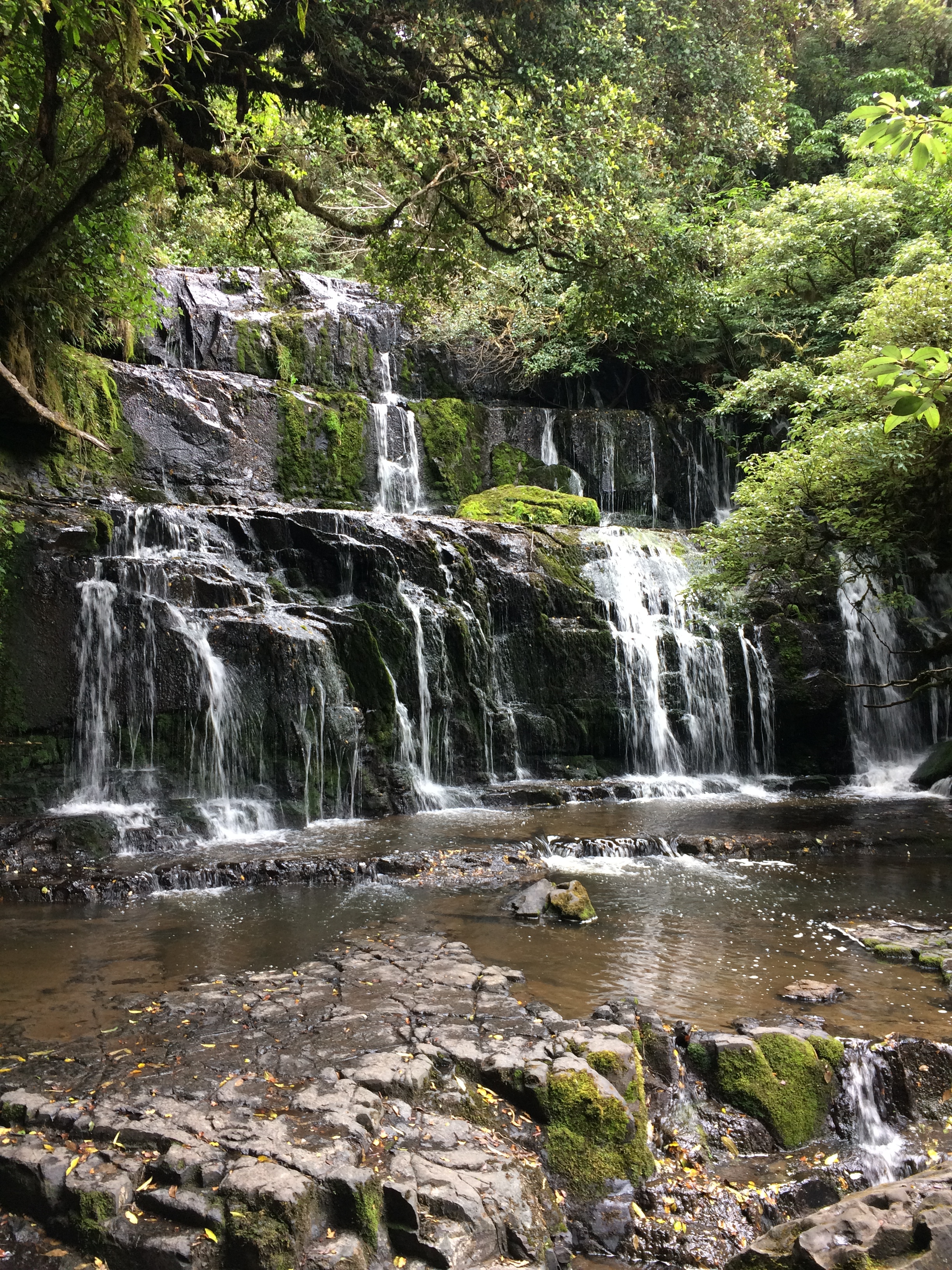
Purakaunui Falls, a photographers dream
So famous it’s appeared on a New Zealand postage stamp
If The Catlins did need a trademark feature to aptly define its beauty Purakaunui Falls would most likely be it. A photographer’s dream it has even made an appearance on a New Zealand postage stamp.
Framed by podocarp trees and native shrubs the three-tiered waterfall is positioned in a sublime setting. A pretty bushwalk takes you on an easy and relaxing stroll to the viewing platform. The Falls are especially impressive after a hefty rainfall.
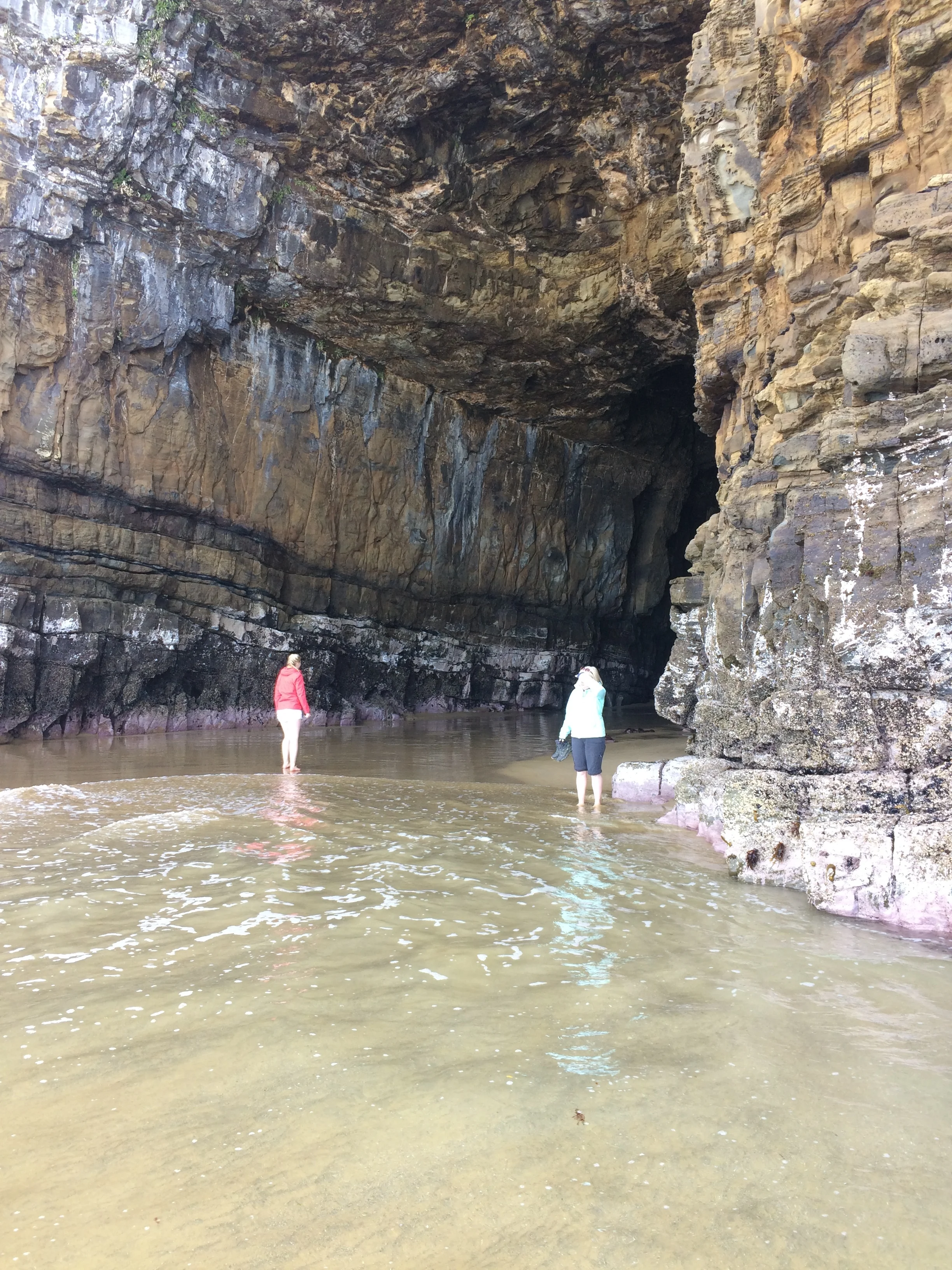
Cathedral Caves one of the worlds longest sea caves
Getting drenched by the sea, watch for those waves….
Cathedral Caves are only accessible two hours either side of low tide. I struck lucky and arrived an hour into the restricted four-hour window when the tide was agreeable for exploration. A stroll down through native bushland brought me out onto the wide expanse of glorious Waipati Beach. The caves are situated on the Western edge and as I crossed the golden sand I encountered not only a slumbering New Zealand Sea Lion but an inquisitive and playful seal. Cathedral Cave itself is one of the thirty longest sea caves in the world and it can be walked through from one side to the other although you must be prepared to get wet! I removed my trainers and rolled up my trousers and began my wade through the icy cold sea water which had formed a deep well in the entranceway. Further into the darkness of the cave it soon became apparent why it had been named as such with its high sides and raised ceiling reminiscent of European Cathedrals. The acoustics were somewhat nifty too as waves soared across the beach and through into the caves creating booming soundwaves. At the very back of the cave I spotted a Little Blue Penguin having a well earnt rest in between the tides.
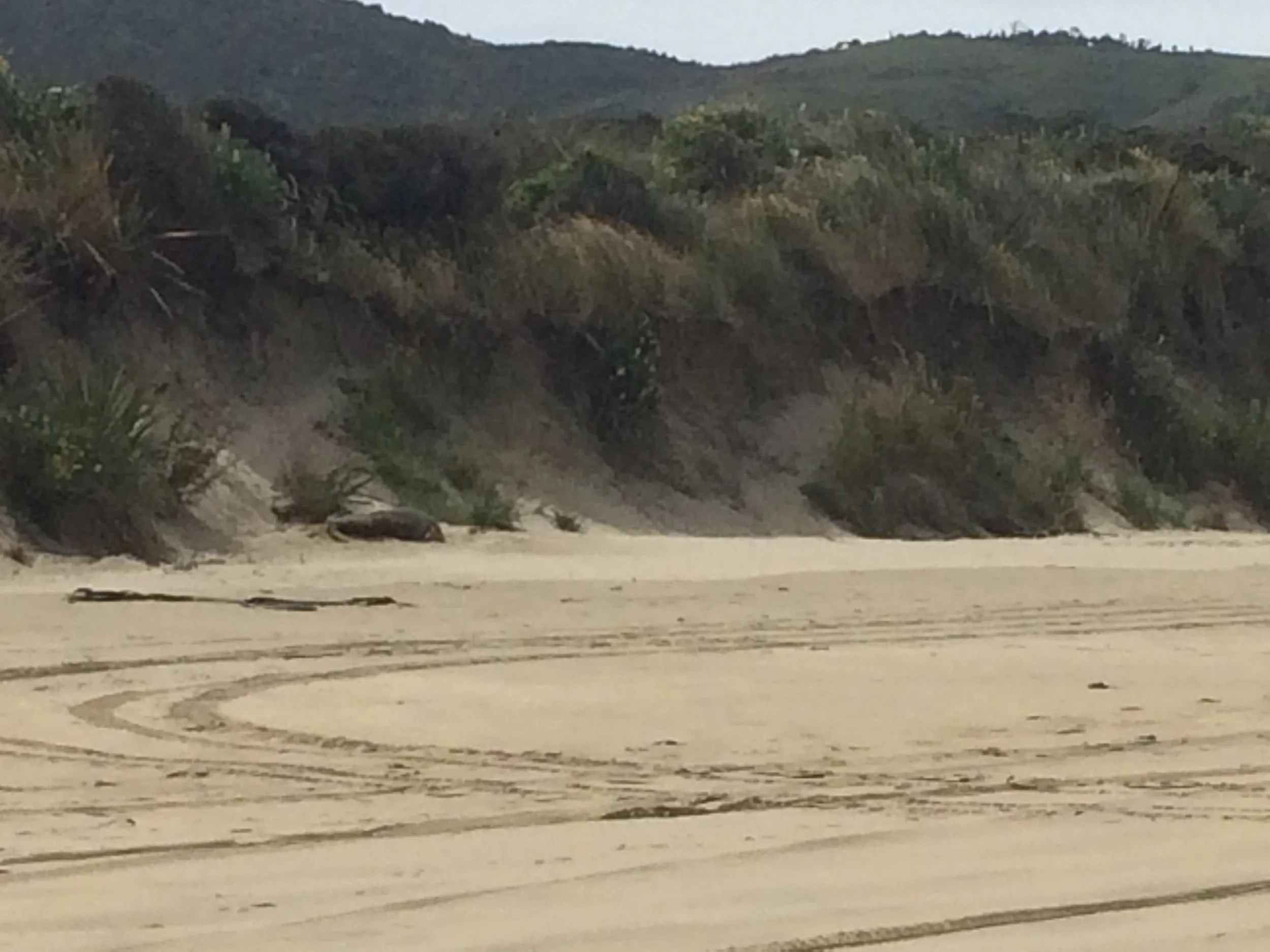
Cannibal Bay a beautiful spot with an unfortunate name
Spotting the snoozing New Zealand sealion on the beach
Further south down the coastline is Cannibal Bay which was named by an early explorer who mistakenly uncovered human bones here without realising at the time that they were from a local Maori burial site. The name does little justice to this gorgeous spot which is the local hang out of the New Zealand Sea Lion. These chaps, whilst scarce in number like nothing more than to loll around on the beach especially in summertime.
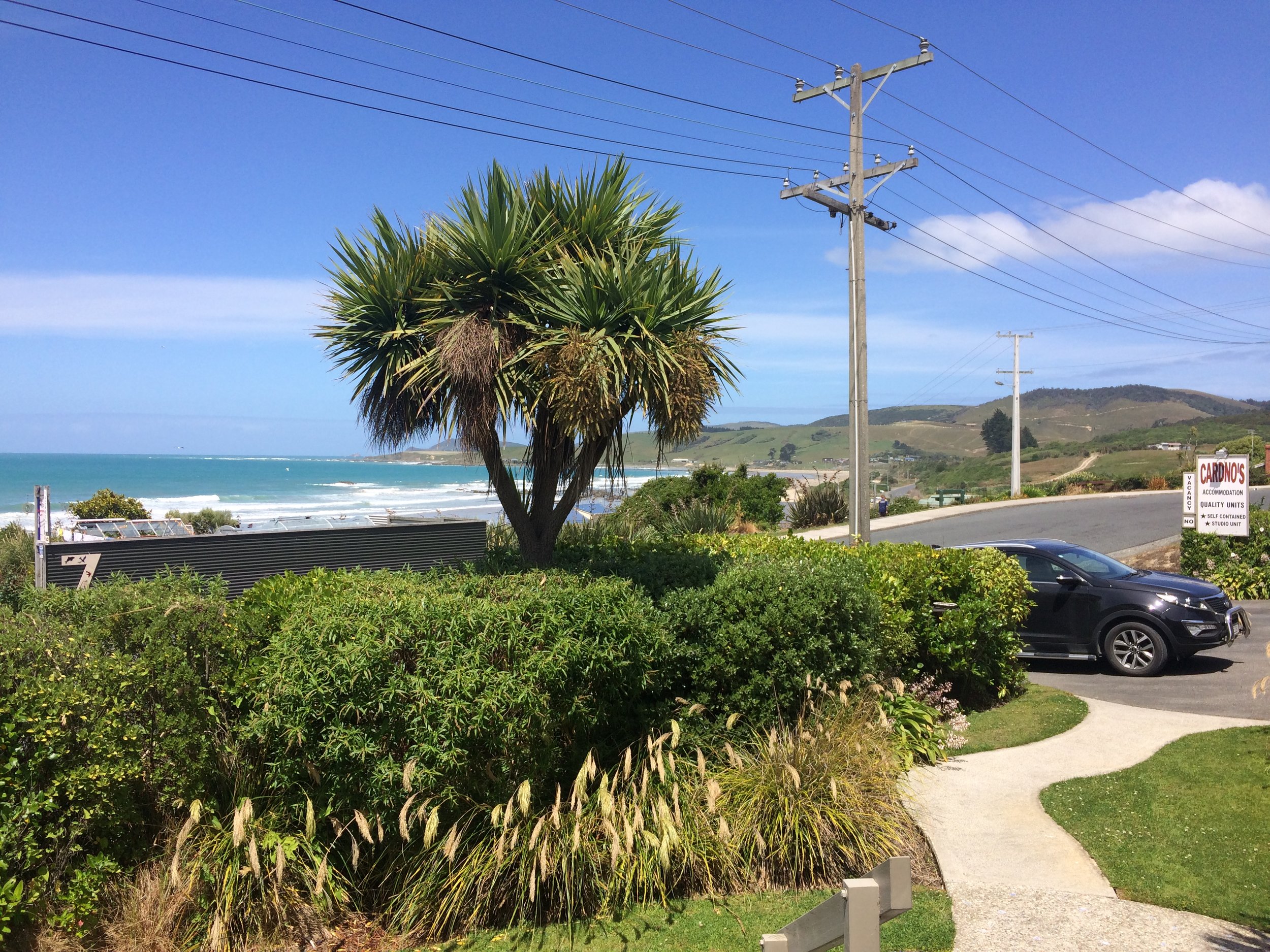
Nugget Point remote weather beaten coastline
Why do seals always choose the harshest spots to make a home?
From Roaring Bay, I ventured upwards reaching the narrow and jagged peninsula known as Nugget Point. The cliff face here dramatically protrudes 133 metres above the sea level. Nugget Point like so much of this coastline is suitably weather beaten from both time and tide and a well-formed pathway took me on a breath-taking walk (both in terms of the blustery conditions and the steep drops below –scared of heights as I am I must admit to some moments of jelly legs). At the tip of the point the pathway ends in a platform overlooking the ‘Nuggets’ themselves. These wave-eroded rocks have been aptly named due to their resemblance to gold nuggets. The lighthouse here towers over the back of the platform and was built in 1869. It’s continuous flashing light has undoubtedly prevented many a ship wreck on this hazardous coastline. The view is spectacular out across the endless Pacific Ocean and beyond. Nugget Point also happens to be home to a colony of New Zealand Fur Seal. In one way or another these guys always seem to choose the wildest least hospitable places to make their homes. They weren’t hard to spot and even less hard to hear as their barks blare in the wind. The babies were playfighting in the sheltered rock pools whilst the juveniles like all good teenagers, splashed around, charged about and generally showed off in the swell.
Roaring Bay home of the world's rarest penguins
Yellow Eyed Penguin spotting
I arrived at Roaring Bay a few hours before sunset when a certain exclusive resident starts to arrive home. The Yellow Eyed Penguin is one of the rarest types found and its future is seriously threatened with numbers rapidly declining. They are only found on New Zealand’s South Island and a couple of other remote sub-antarctic islands. In The Catlins a few hundred now remain. I grabbed my binoculars and headed down to the viewing hide set up to enable easy scanning of the rock-strewn beach so as not to not cause the penguins any disturbance. The Yellow Eyed Penguins living at Roaring Bay are undoubtedly exceptional little guys surviving such inhospitable habitat. As they arrive home on the tide they almost look like ducks on the water until they clumsily belly flop onto the shore. Exhausted after a long day at sea fishing they then begin their slow trundle up the challenging terrain to their nest in the coastal vegetation. I was fortunate to spot three arrive on the beach whilst two were cautiously shuffling their way homewards. Their name comes from their distinctive markings described to me as yellow painted eye liner – such an appropriate description.
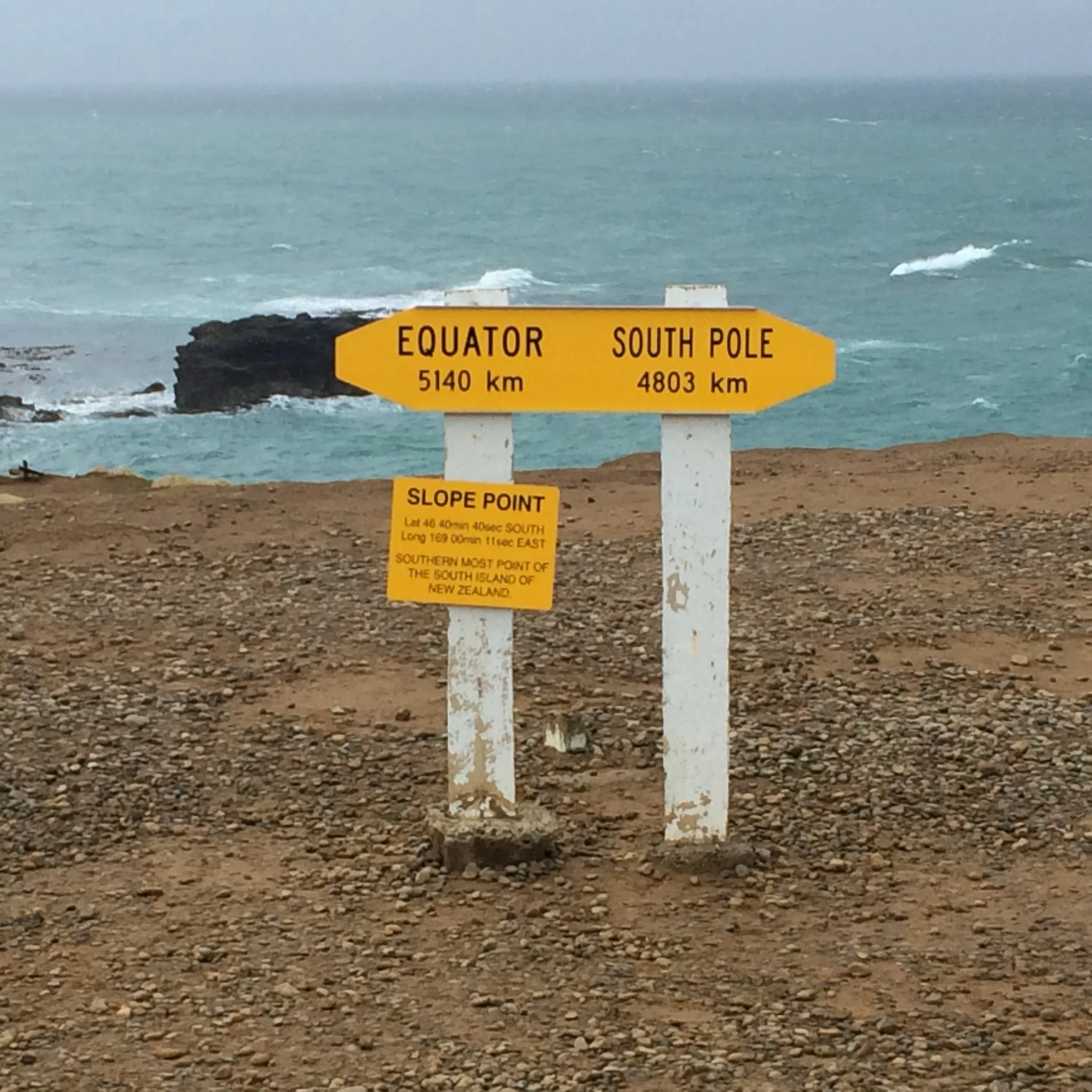
The most Southern point on the Southern Island at the bottom of the world
Nothing until Antarctica….
My destination was Slope Point the most Southern point of the South Island and officially actually further south than Bluff itself. A bracing 20-minute walk across exposed farmland brought me to the edge of the headland. Here a well photographed yellow sign indicated the next place south in 4803km was Antarctica and the South Pole. As I took in the picturesque views across the horizon I realised I was standing very nearly at the bottom of the earth. It was a bit of a struggle truth be told to stay standing upright at times as the wind battered the headland. This to me though was all part of the fun, The Catlins wouldn’t be so appealing without the blustery southerlies shaping its striking landscape. Testament to this power of nature is the row of trees just by Slope Point that have developed an oddly horizontal lean!
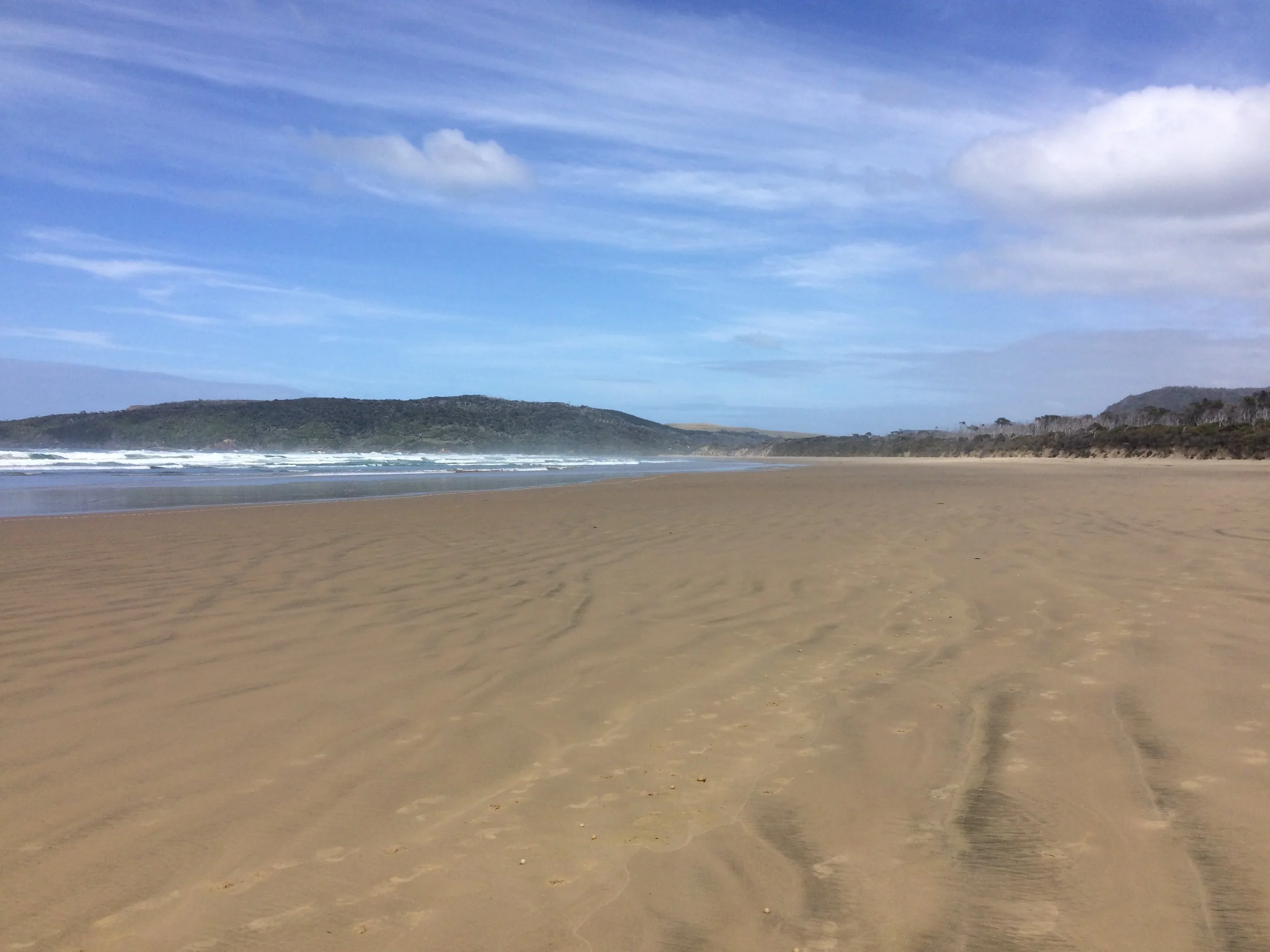
Blue cod, New Zealand's South Islands favourite battered fish
You can’t beat some ‘fush and chips’ on the beach, Kiwi style
Hungry after my morning excitement I headed back to the nearby settlement of Waikawa. I couldn’t let myself get too carried away as Waikawa is a very small fishing village offering a limited array of amenities. On my drive through though I spotted an interesting spot called Blue Cod Blues which caught my attention. An old converted caravan parked up at the side of the road is the local fish and chip joint. Blue Cod is a popular fish in these parts and is regularly dished up in take away outlets and restaurants throughout the country. I couldn’t resist dropping in for a freshly fried fillet of my own. Now sufficiently sustained I resumed my journey along the unsealed gravel roads, a common feature in The Catlins area, where there is never a traffic overload.
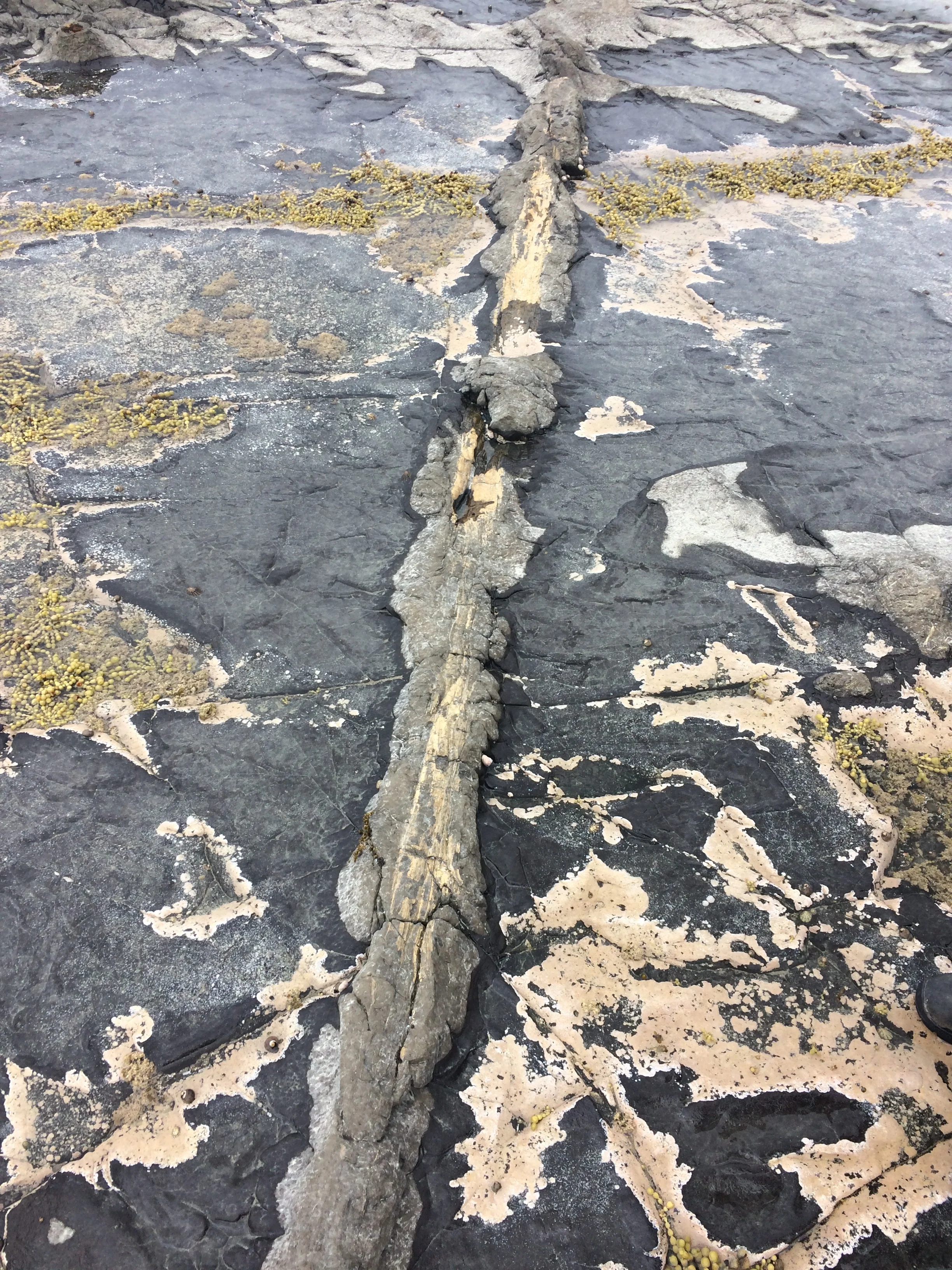
Curio Bay, a forest 180 million years old
Walk on trees over 180 million years old - this place is incredible
A short climb up along and across the headland from Porpoise Bay is the area known as Curio Bay. It is itself a stunning place but a total contrast when compared to its elegant neighbour. Checking tide times here is crucial as for two hours either side of low tide an ancient geological site becomes accessible. A Petrified Forest dating back an estimated 180 million years is revealed as the tide washes away. Buried over the centuries under volcanic mud and ash this place is quite simply amazing. A viewing platform looks out over the site and enabled me to take in the whole mind-boggling landscape from above. Steps lead down from here to the wave washed peninsula where I very delicately and tentatively literally stepped over history. The fossilized tree stumps and logs remain clearly visible to the naked eye. Some are bruised and battered by time, others are in much better shape and are almost intact, you can even see the ring markings in a few. It is remarkable at times what nature miraculously manages to preserve.
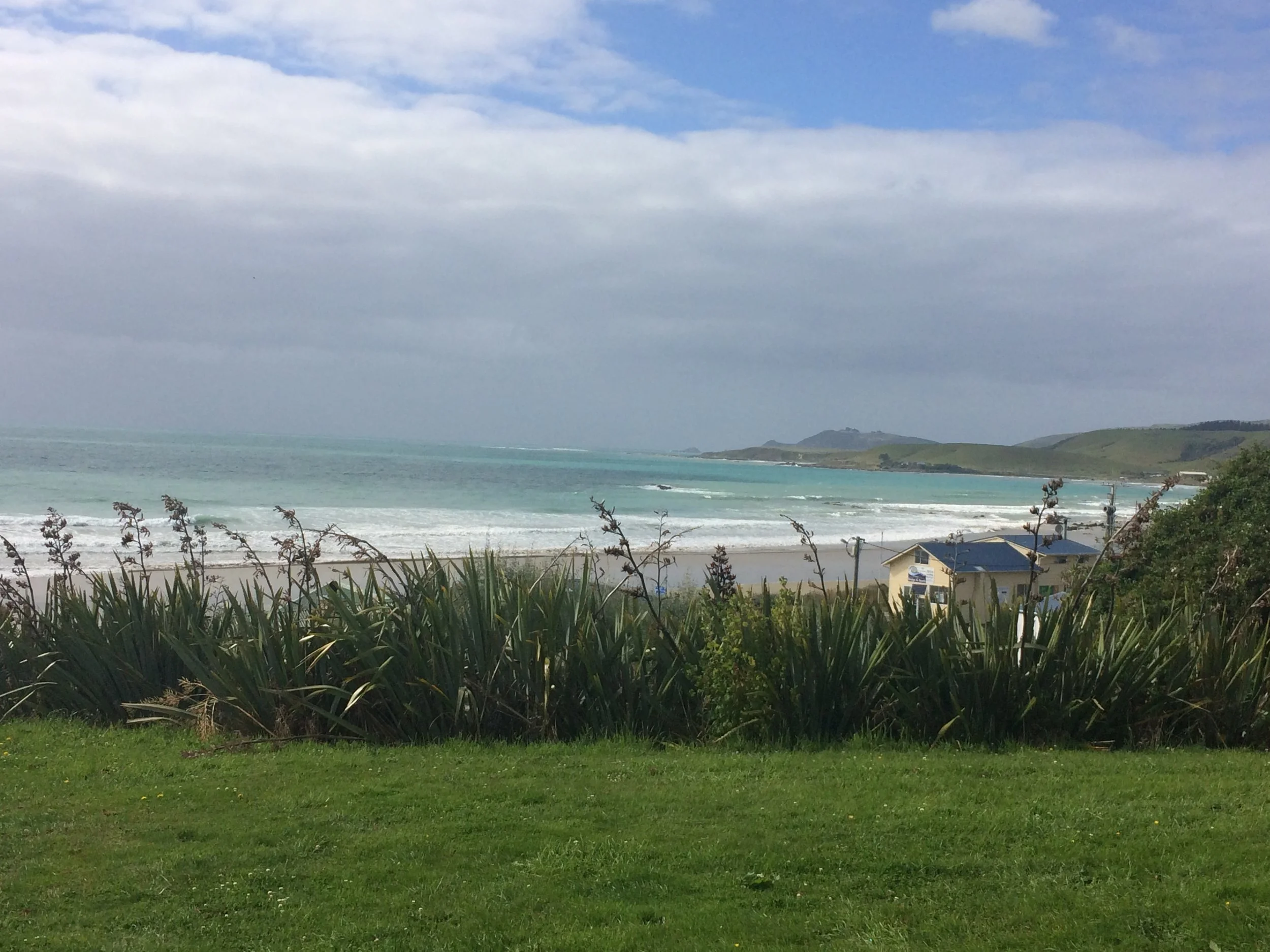
Porpoise Bay the place to spot Hector's Dolphins surfing the waves
The Catlins is a true wilderness, strolling a beach whilst dolpin’s surf metres away is one of life’s great experiences.
I began my exploration at the furthest end of The Catlins Coastal Rainforest Park. Here a small scattering of dwellings and holiday rentals border a lovely, secluded bay. On the morning of my visit the weather was calm and the beach enticing. It is known as Porpoise Bay, a broad golden crescent of sand which is so inviting you cannot help but stay and linger. As I strolled the scarcely populated beach I kept my eyes peeled across the horizon and out to sea. Usually Surfers ride the waves here but I had also been told that in summertime the very shy Hector’s Dolphin venture close to the shoreline. Hector’s are not only the world’s smallest dolphin they are also one of its rarest. They are only found in New Zealand waters and their numbers are limited. A resident pod love to frequent Porpoise Bay and have a fondness for splashing around and frolicking in the surf here. I began my search for them by scanning with my binoculars seeking their distinctive black and white markings and rounded dorsal fins. I soon realised though that I could ditch the binoculars altogether as just a few metres away from me not far from the beach were a couple of Hector’s dolphins playing in the sea. I am certain that they were pretty much unaware of their captivated audience as they rode the waves together. There is no need for boat trips out to sea in The Catlins, the dolphins happily meet you at the beach!
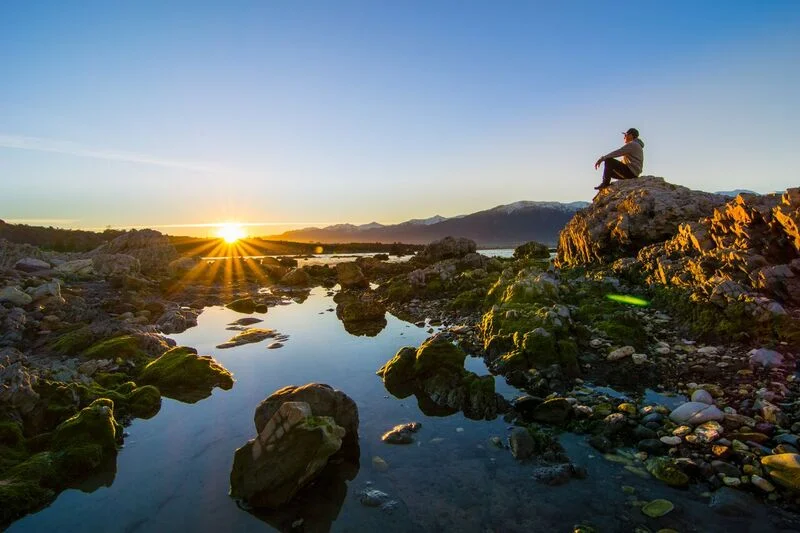
Quite simply Kaikoura
Make Kaikoura a place on your must visit list
‘Where the mountains meet the sea’ is the phrase often cited to describe the majesty of Kaikoura. An area of such outstanding beauty it cannot help but spellbind and captivate the visitor. Leading the way in eco-tourism and with so much going on in the area it has become an appealing year-round destination. A place where encounters with whales, seals and dolphins don’t remain just dreams on a ‘one day to be completed bucket list’ but become actual ‘pinch-me it is real’ moments.
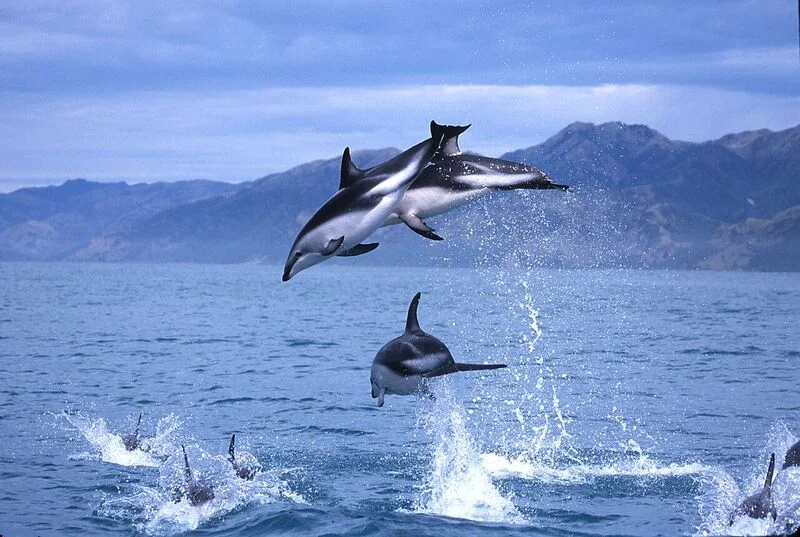
Dusky Dolphins everywhere - don't miss this.....
Don’t miss swimming with the dusky dolphins in Kaikoura
My final trip in Kaikoura enabled me to encounter what could well be the biggest draw card in the area, the huge pods of wild Dusky Dolphins that are resident here. The friendly folk at ‘Dolphin Encounter’ run several well-organized and eco-friendly trips each day to view and swim with these enchanting little fellows. They make it very clear from the outset that the dolphins are the number one priority and the ‘encounter’ you have is strictly on their terms. Kaikoura is universally recognized as one of the best places on the planet to witness these playful, gregarious and highly sociable little dolphins. As I maneuvered myself about the boats deck my first reaction was sheer amazement, where on earth should I look? There seemed to be hundreds of them and they appeared to be absolutely everywhere – soaring through the water at a rate of knots beneath and around our boat sometimes even spurting water up over me from the sides. The noise they made was incredible too with squeaks and dolphin chatter filling the air. It was almost as though the dolphins were as excited to see us as we were them. It felt as though there was so much charged energy all about and I couldn’t help but feel emotional and enlivened by their presence - and then they only went and put on a real show. I’m not sure if they were just showing off but it was remarkably humbling to witness close up their breathtaking jumps and acrobatic twists and turns. The imagery I had seen from watching episodes of ‘Blue Planet’ was happening live in front of me!
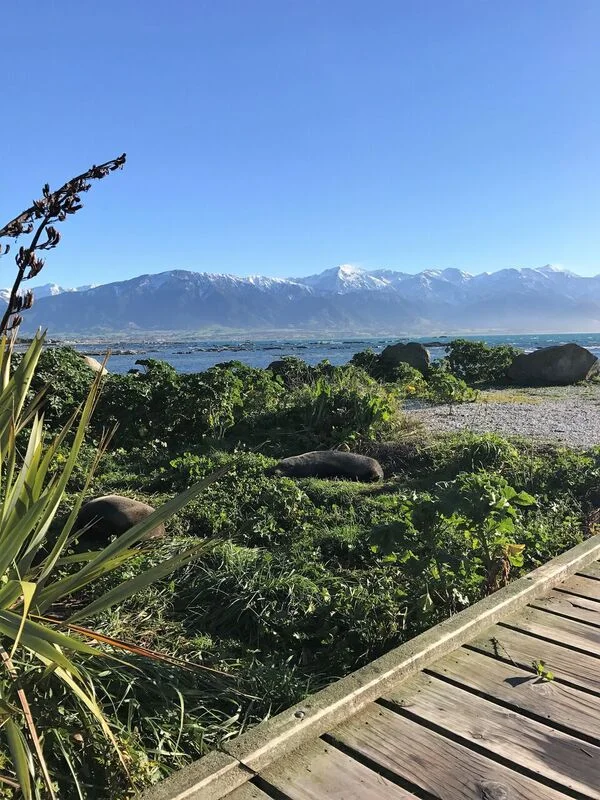
Cheese, cheese and more cheese, Kaikoura Cheese Company - a dream
The Kaikoura Cheese Company operates a retail outlet on Kaikoura’s main street. Here tastings and purchases can be made of the artisan award winning cheeses that have left New Zealand’s top chefs and restaurants lauding. Believing myself to be a cheese connoisseur – for the simple reason that I eat an awful lot of it – I dropped by the store and sampled their signature ‘Tenara’ - an ash coated goats cheese which apparently takes fifteen days to mature and quite honestly left me drooling for more.
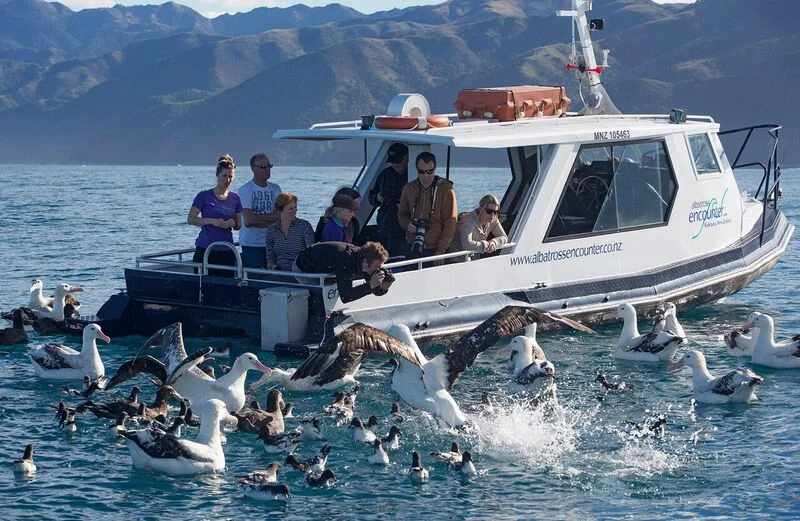
Seabirds galore on an Albatross Encounter Tour
A morning Albatross Encounter tour awaited and I eagerly met up with skipper Gary to head out on the hunt for the mightiest sea bird of them all. Our boat was small and open-sided which meant a perfect view was to be had on this gloriously sunny day. Gary explained that one of the best starting points was to seek out the local fishing boats as sea birds naturally pursue these chaps hoping for some of their scraps. It didn’t take very long to spot some activity up ahead and our little boat surfed and jumped the pacific waves rapidly to reach it. Almost immediately we began being circled by some rare and exciting sea birds – Mollymawks, Westland Petrels (who I personally thought had handsome faces), and boisterous Northern Giant Petrels who happily scrapped with each other right by our boat as they fought over the chunk of ham Gary had tossed into the ocean. After a short while and a lot of happy photo snaps later we headed off again. This time Gary told us we were going further out to sea all the way to the edge of the Kaikoura Canyon. As the engine stopped and we bobbed and swayed about it was mentioned that the sea floor beneath us was at least 1km deep! Our eyes were thankfully more focused on what was happening overhead. We all silently waited as more and more birds began to appear. Gary pointed several specific ones out for our attention – the Hutton’s Shearwater and Buller’s Shearwater, a Wandering Gibson’s Albatross and a New Zealand White-Capped Albatross. An awesome spectacle was on display but the show stopper and the bird we all instantly recognized with a collective gasp was the Southern Royal Albatross. It soared across in front of the boat, a very close distance above our heads! For a bird with such a large wingspan (about three metres) it was wondrously graceful. It felt awfully surreal drifting about out on the ocean with the only noise being a raucous squeal or flap of oversized wings. Gary informed us that many of the Albatross we were seeing nest down in the Campbell Islands, 700km south of New Zealand’s South Island. Several of these Albatross have been tracked using satellite transmitters which have showed them capable of travelling up to 1,000km per day!! Despite observing all these astounding over-sized seabirds my own personal favourite was the little Fluttering Shearwater – a tiny guy by comparison. They fly just above the water with a series of rapid wing beats – hence their endearing name.
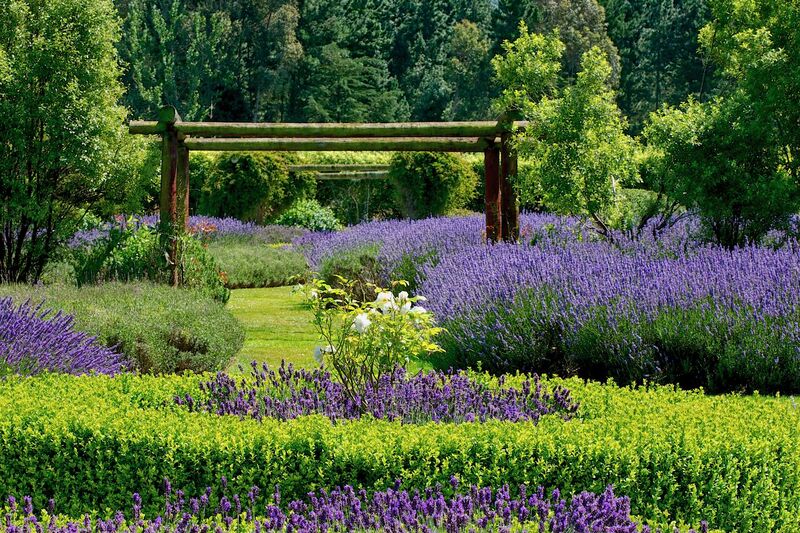
Spend the night on a lavender farm complete with outdoor bathroom
Just north of Kaikoura is Lavendyl Farm dreamily situated beneath the lofty peaks of the Kaikoura Mountain Range. A stroll around the farms gardens introduced me to so many different variations of lavender that personally I had no idea existed. My accommodation for the night was at one of their two on-site petite cottages. This allowed me to wander the lavender gardens on my own after all other visitors had departed which was a real pleasure. A delight also was the private outdoor bath and shower I had at my cottage. My very considerate host had kindly left me a bottle of lavender oil and it was a delicious luxury to soak in the peaceful outdoor tub surrounded only by birdsong and bush. The following morning, I woke to find some freshly made bread wrapped up and left by the cottage door, gratefully received as I had another early start.
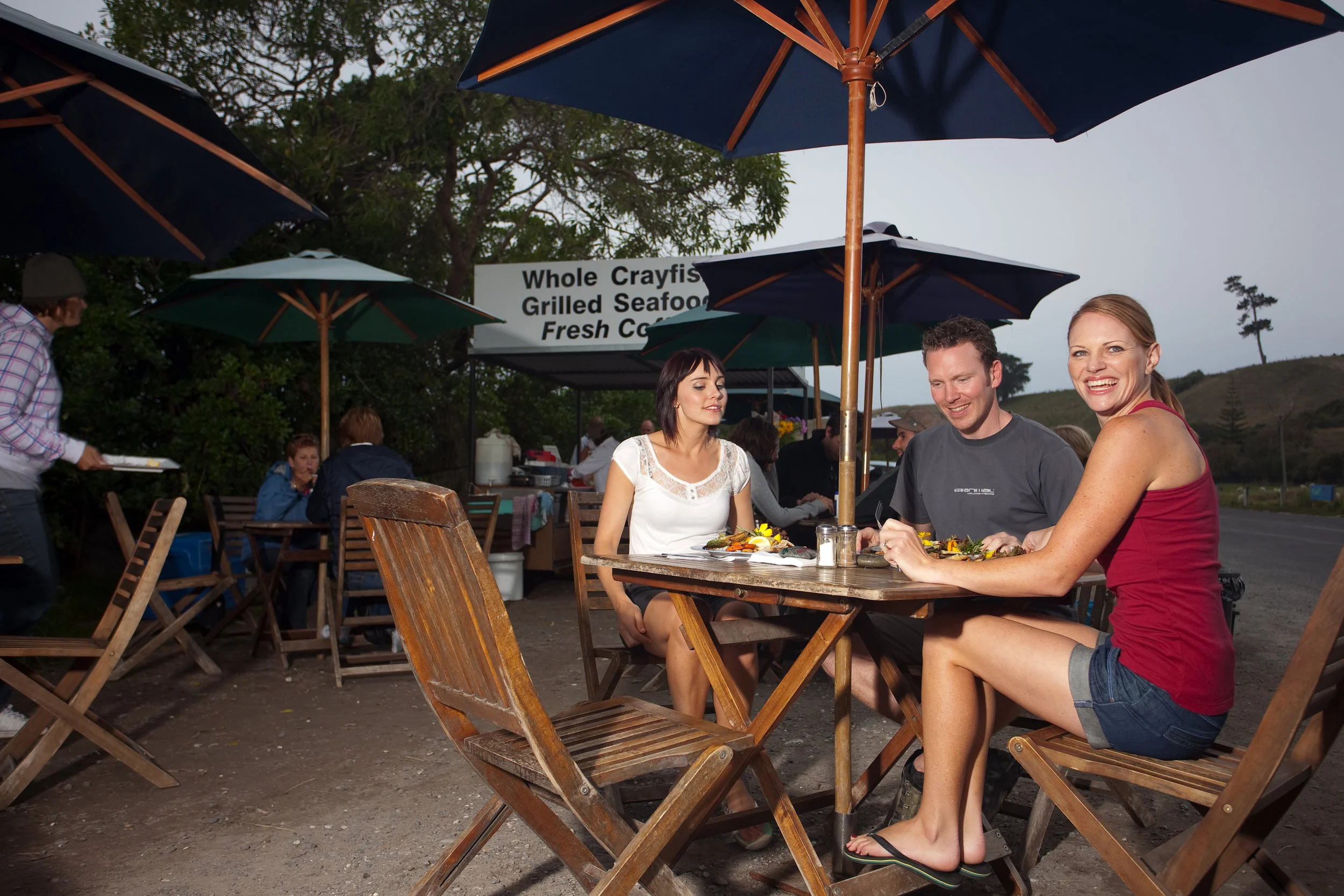
Crayfish by the beach galore in Kaikoura
The name Kaikoura itself means ‘meal of crayfish’. Kai being the Maori word for food with Koura meaning crayfish. This delicacy is famed throughout New Zealand and is fished in the waters around Kaikoura. Crayfish is a type of lobster found in abundance here with seemingly everywhere in the township selling it. The best place to sample it though must be the Kaikoura BBQ, a simple food cart set up by the beach. I was asked to choose my own crayfish from the chilly bin (ice box) and was given the tip that whilst size doesn’t matter so much price certainly does, the more expensive the crayfish the better the quality. My cray was then BBQed in front of me by the experts. Grabbing a table overlooking the beach I couldn’t imagine a more quintessential Kaikoura experience than this – sitting by the ocean, salty sea air drifting on the breeze, savoring the delicious flavours of the succulent melt in the mouth crayfish.
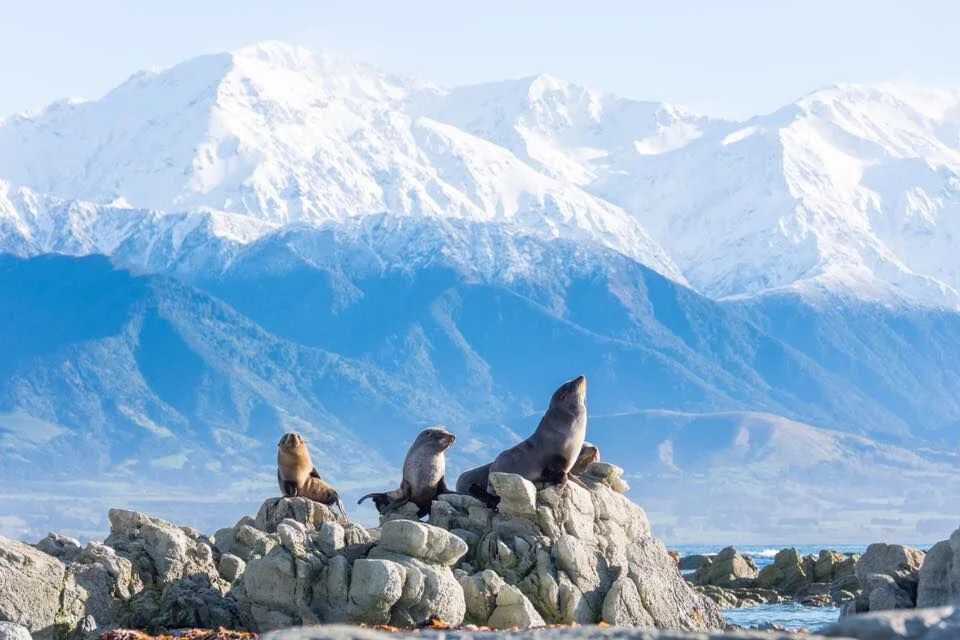
Swimming with the fur seals, in Kaikoura
Seal Swim Kaikoura afforded me the fantastic opportunity of mixing it up with the playful New Zealand fur seals. First though I needed to get dressed and geared-up for such an occasion, so I headed into the changing rooms at the back of their office in Kaikoura’s main street. Decked out in a snug fitting buoyant wet suit complete with snorkel and mask I was all set to trickily wade my way over to the distinctive yellow Seal Swim Bus. During our short journey our enthusiastic crew told us all about the seals and how the location chosen to swim in changed daily dependent on the clarity of the water and playfulness of the seals. I was reminded that any interaction was at their discretion and it was crucial to remember that this was a wild encounter. Luckily New Zealand fur seals are a naturally curious bunch and as we approached in the Seal Swim yellow zodiac boat – yes there is a lot of yellow going on - the younger pups were soon inquisitive, peering down at us eager to discover what these odd things were! Impatient to get in the water I donned my face mask, set up my snorkel and gently guided myself over the edge of the boat. The sea water instantly felt on the cold side – it was the Pacific Ocean after all – and the waves a little choppy, but this soon mattered not one iota as I began to see movement around me in the water. Clambering about on solid ground they were a clumsy bunch, but in the water, it was a different matter entirely as they twisted, turned, spun and weaved, gliding through the water uninhibited. All the time I got the impression though that they were still being mischievously inquisitive. I kicked against the tide putting my head down just in time to see a seal swim right up to my mask and peer direct at me. For a few precious seconds I literally was nose to nose with a fur seal! I struggled to think of an adequate word to help describe this amazing close-up encounter – perhaps honoured.