QT Queenstown is a memorable blend of style and comfort, go on treat yourself
QT Hotel in Queenstown smacks of sophistication and style
The QT Hotel is a stylish modern hotel that is part of the on trend Aussie group. They are the younger more cool version of the Rydges Hotel Group. The QT in Queenstown is actually sat just behind and above the Rydges and they share facilities. Don’t let this put you off though as the facilities here are good.
Okay so the swimming pool isn’t the best – but this is the mountains so really, how often will you be going for a dip? Yes Queenstown summers do get ridiculously hot at times, but I’ve also been there in February when there has been snow on those surrounding peaks and the heater has been zapped up.
The reception area is influenced by the neighbouring ski fields. There are lots of bright warm colours such as purple and red. There is even one of those drop down fires to warm the cockles on a chilly day.
Each floor has large windows so that those spectacular lake views are evident as soon as you step out of the lift. The rooms are cosy and cool. Lovely sofas, black and white bathrooms, complete with huge tubs and walk in showers. The bed is one of those you fall into and never seem to stop falling, it swallows you whole. There is even a lovely big blanket to wrap yourself it, a mini bar full of Kiwi favourites and luxurious robes. With these rooms you might never want to leave.

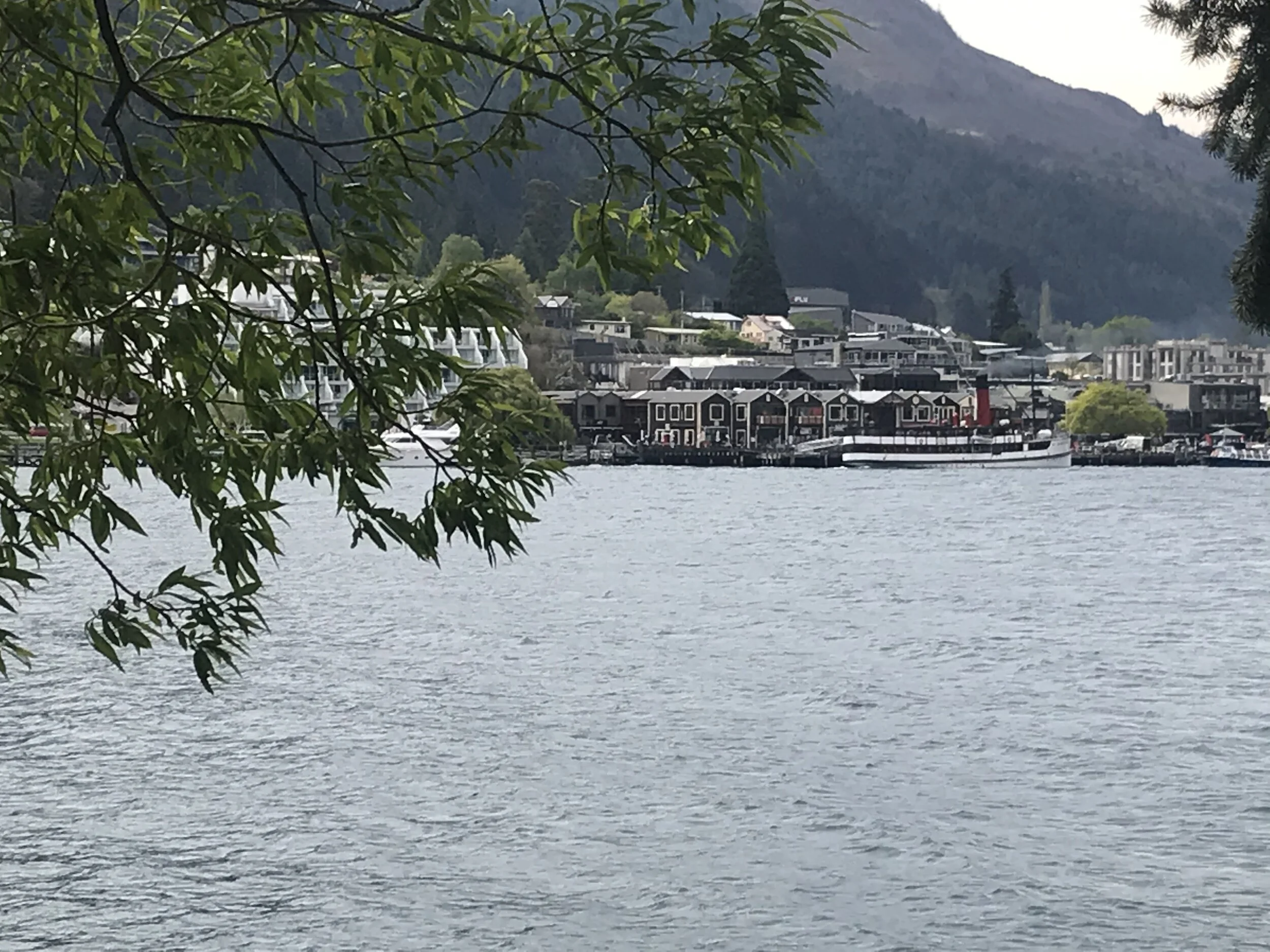
View across Queenstown
But please do, for the Red bar downstairs is so good. With it’s massive windows overlooking the mountain ranges and lake it’s a truly special place for a drink. The cocktail list has to be tried, it’s just awesome, as are the local wines that are showcased by the glass. Have one drink or several, and even better aim to be there around sunset to watch those natural colours changes before you, it’s a sight that will live long in the memory.
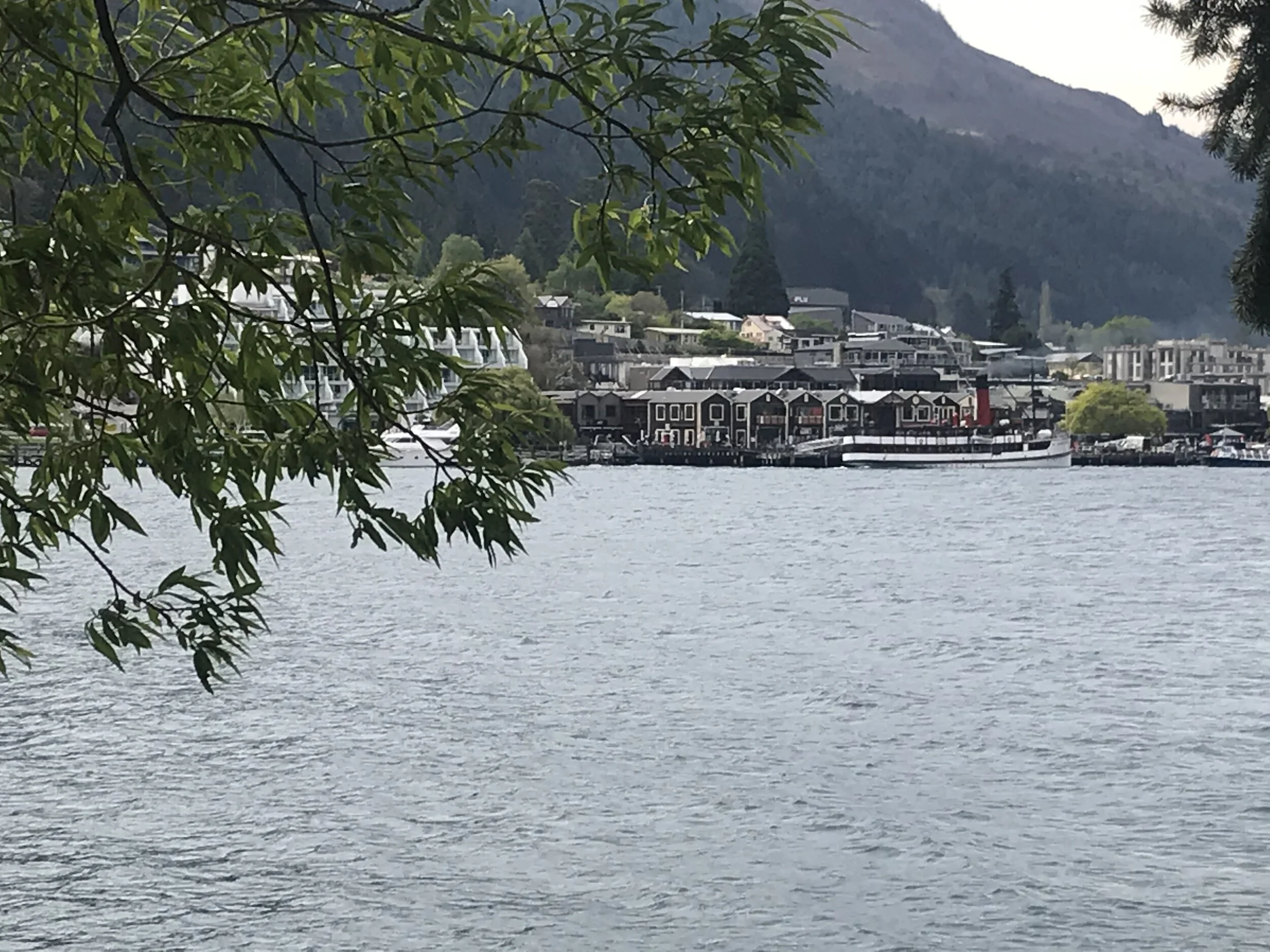
Looking back from the Queenstown gardens towards the town
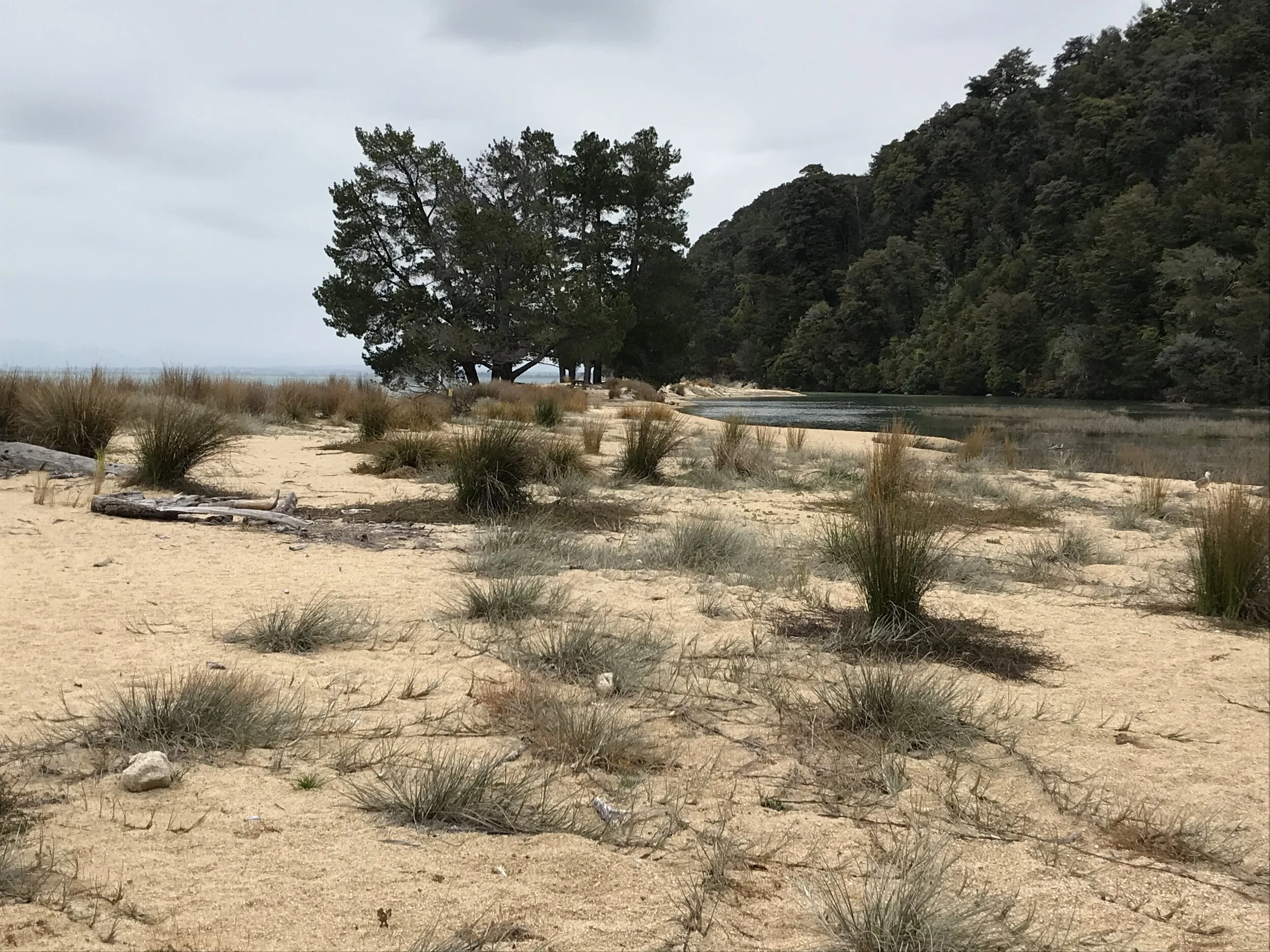
Abel Tasman National Park - hiking a New Zealand coastline
Hiking in the Abel Tasman National Park is never a dull moment
The walk begins at the end of town, not far from a large car parking area and a lovely eating/drinking spot known as The Park Café. Signs advise how long it is to the next part of the track so that you can gauge exactly how far too walk. If I was doing a multi-day walk I would probably arrange a water taxi from Mapua to take me out further into the park. This enables a walk back along the coast finishing at The Park Café with a large glass of wine – surely the best way to end an incredible adventure. Today though I am just going to walk a short way – to dip my toes into this expansive but rewarding New Zealand coastal park. The sign tells me the distance, walking at an average person pace, to various beaches dotted along the park. I decide to allow my legs carry me as far as I can get.

Starting point of the Abel Tasman Great Walk
At first the walk traverses a boardwalk over the estuary, the tide is out and various sea birds frequent the area scrummaging on the sandy banks for morsels of food. I enter the start of the bush with a long sandy beach to my right hand side. It looks inviting but I press onwards further into the forest. There is some replanting taking place alongside the pathway as never-ending work continues to ensure the Abel Tasman remains as it was always supposed to be. The path way is sandy but stable although I have to keep my eye out for losses rocks and tree routes that jut through. I continue climbing steadily upwards and into denser bush.

A sandy stretch of beach along the Abel Tasman Track
Tin Cup beach is on my right, a short walk down hill and up on my left is the campsite which is a grass clearing ready for use by tents. As I continue onwards a weka wanders down the pathway towards me. He looks up and we peer at one another, hello weka I say, the weka responds by plunging into the nearest bush for safety. As I climb higher the views of the coastline beneath me begin to peek into view.

One of the many bays you can walk down too from the track
The teal green colour of the sea, a marine reserve, is mesmerizing on a sunny day. Further out across the water are islands – Adele and Tonga, both protected sanctuaries for bird life and home to large colonies of the New Zealand Fur Seal. If you peer hard enough you can sometimes make out the seals bobbing and twisting around in the water. I hear a couple of fantails squeak around me, following me through the forest, a family of quail pop out onto the pathway and dart off again.

An ideal camping spot in summer with the sea lapping beside your tent
On my left hand side a baby bird pops its head out of the bush. It catches my eye and I notice a trio of fluffy baby wekas eagerly peering at me. Suddenly a large warning squawk tells me abruptly to go away – it’s mum or dad anxious to protect their little ones. I heed their advise and carry on. The track narrows in places, where waterfalls cascade down it’s sides. Dark patches of forest where the sun rays never quite reach a patchy underfoot.
Next instalment coming shortly…….. watch this space…..
Ideas for taking time out in lovely quaint Akaroa
Floating along on Akaroa Harbour
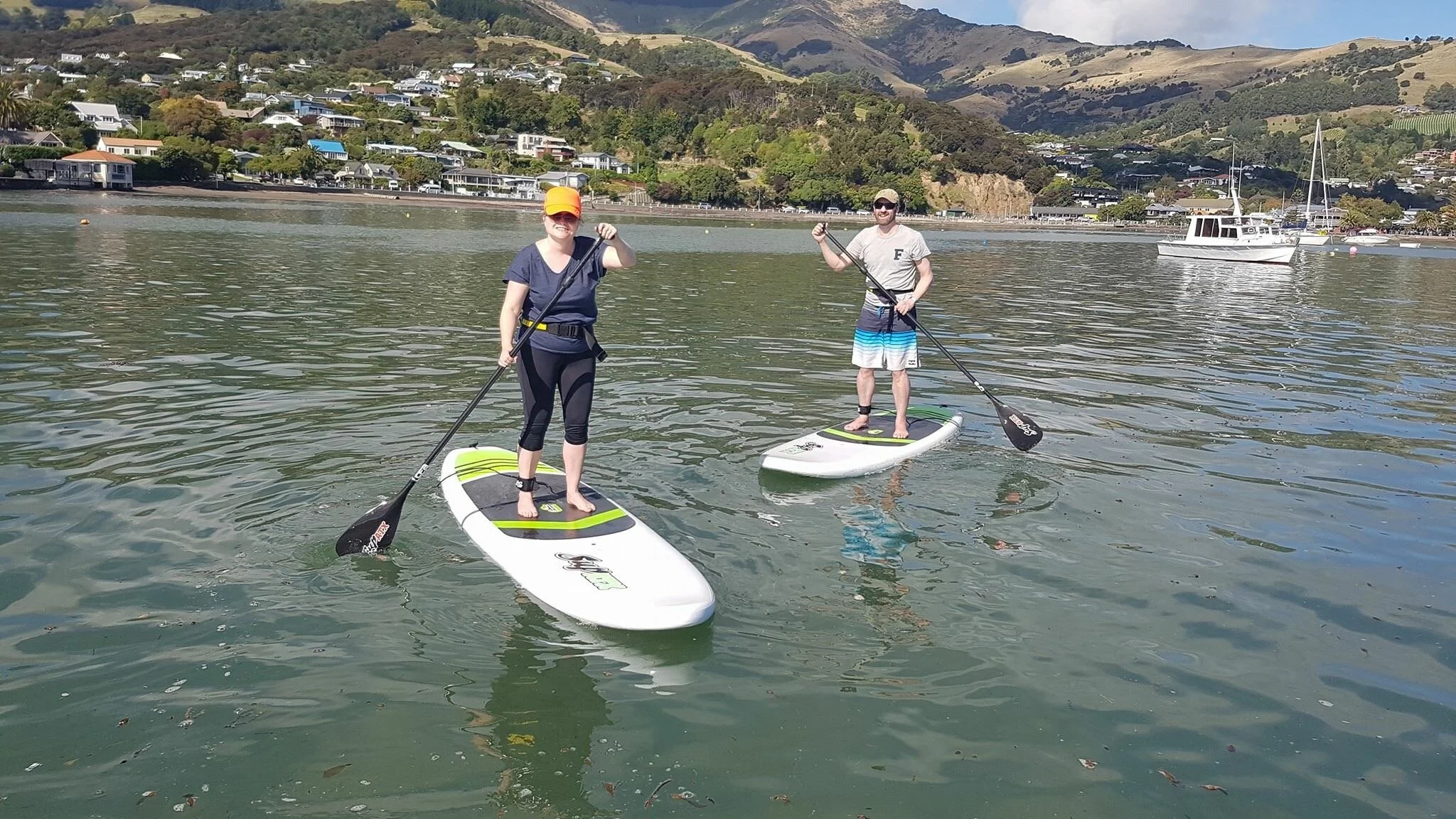
Akaroa is a seaside village on the Bank’s Peninsula. It’s name means long harbour and the water is definitely the prime reason for most peoples visits here. Whether this is to get out on the water to boat and fish, in the water to swim with the local pod of dolphins or literally just paddle by the beach or on a paddle board.

Paddle boarding in Akaroa Harbour
Akaroa was partially settled by the French (after some confusion and agreement with the British) and their influence is visible in the town still today. Street signs and lighting is in the French style, lots of place names are French and there is even a French cemetery to visit. For a small place it has a lot going for it, with a lovely waterfront promenade to enjoy, a small yet attractive beach and numerous jetties from which to launch boats. Trips leave daily for nature tours, swimming with the world’s smallest Hectors Dolphins (a pod live within and around the harbour), fishing and sailing. There are kayaks to hire which I highly recommend. On a warm day there is nothing better than making your way around the harbour edges, spotting local seabirds.
The town itself has an array of accommodation options, some waterside whilst others offer bush or sea views. The café / restaurant / bar options in town are numerous, including a former toilet block that has been converted into a bar overlooking the beach.

There are plenty of balconies from which to take in the views in Akaroa
he town butchers is one of the very best in New Zealand – it has an array of options if you are looking to self-cater – choose from some award winning sausages, local Akaroa salmon or even homemade lasagna. Whatever you do though don’t miss out on the fish and chips – there are two outlets in Akaroa, both being excellent. The one on the waterfront is a top spot as proven by the queue often stretching outside the door. Whilst Murphy’s positioned just behind the main through fare on a corner serves up only fish caught that morning.
There is a cooking school that offers regular classes with cuisine choices from around the world and a small native bush area to stroll through and if you are lucky listen to the bellbirds and tui chorus. A short walk further up from the town is the Akaroa lighthouse. It is open on Sunday afternoons to explore, but otherwise the views across the harbour are reward enough for the short stroll around to it – I’ve even spotted a couple of dolphins from this spot making their way across the harbour.

The views are equally splendid from the water too….
Journey into the Abel Tasman National Park
The road journey to the Abel Tasman involves coastline, wineries, and cute townships
he Abel Tasman National Park, a short drive from Nelson at the top of the South Island is an ideal spot for hiking or kayaking.
The coastal track here is classed as one of the countries great walks. It can be walked over a number of days or in shorter periods.
Water taxis buzz along the coastline servicing all the various drop off points for hikers, day trippers and kayakers. There are a number of idyllic camping spots to spend an unforgettable night. Some only accessible by water.
I’ll be writing another blog shortly all about hiking the track over a few days. It’s one of the most easy and accessible multi day walks in New Zealand and recommended for beginners to overnight hiking who might be slightly nervous about a first adventure into the bush alone.

The estuary at low tide at Marahau, gateway to the Abel Tasman
My weekend started with a drive from Nelson through to Motueka. Motueka is a service town for the neighbouring areas but it’s also fast becoming a top spot to spend a couple of days. As well as splendid scenery it also has a number of wineries dotted around it’s outer reaches. There are some great eateries as well – T.O.A.D Hall is a popular spot on the outskirts of town catering for an array of needs. They have their own juice bar and ice creamery. They serve great breakfasts and even open on an evening for pizza. The place is huge with a fantastic beer garden out the back. The Smoking Barrel is becoming famous for its donuts, which are apparently incredibly creative. Elevation is a top coffee house but my favourite is Patisserie Royale. Stock up early morning for both breakfast and lunch and you can’t go wrong. The house-made pies and quiches are divine. They have a great choice of sandwiches, including exciting vegetarian versions. However as you’d expect from a French bakery it’s the patisseries that win out. A massive array of pain au chocolat, pain au raison, almond tarts, the list is endless. Choosing which one to sample is the hardest part. But trust me when I say, you cannot go wrong.

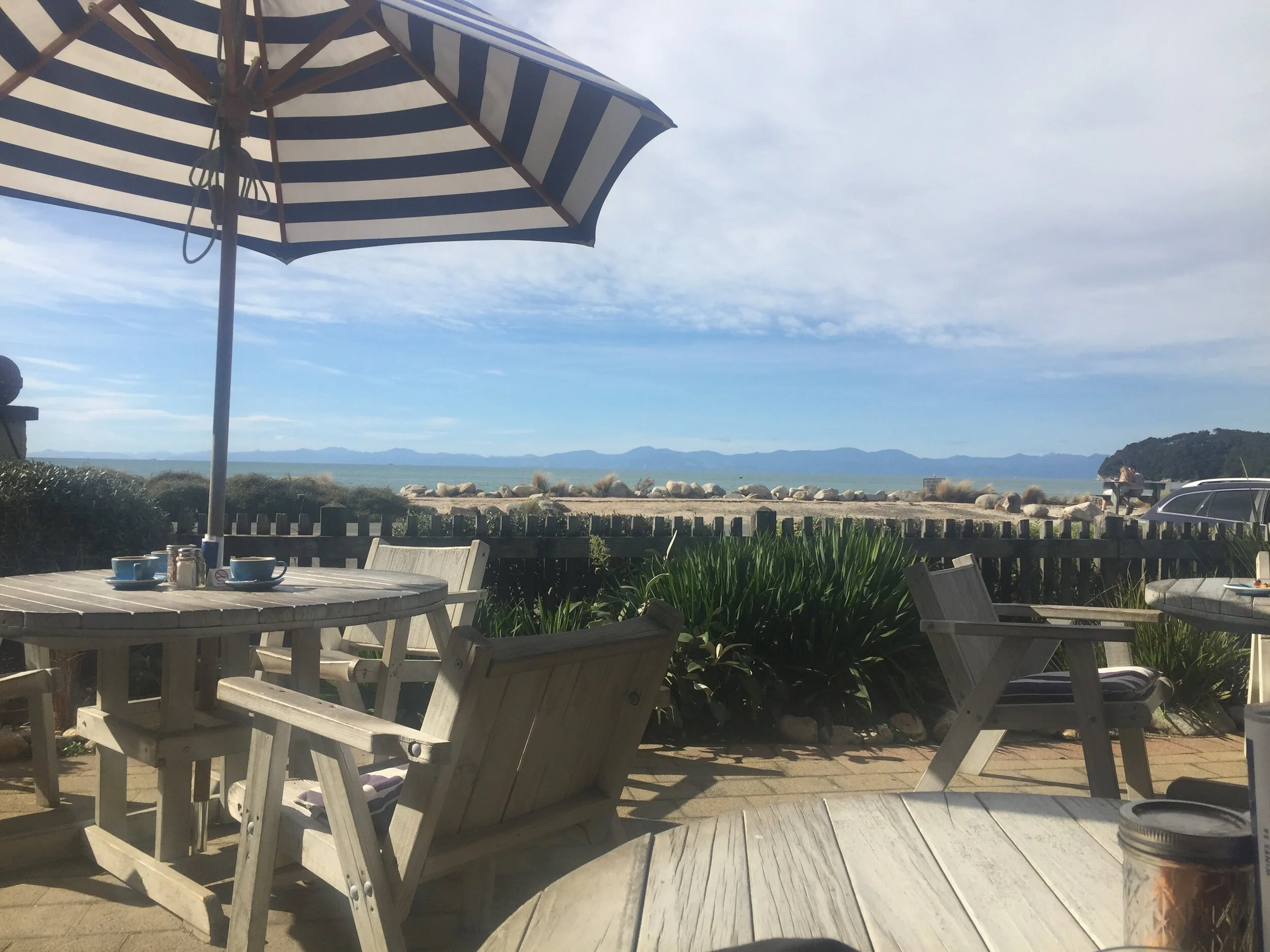
Overlooking the beach at Marahau
Leaving Motueka the road snakes through farmland and through small settlements that are present mainly to support the fruits and hops that grow prolifically in this area. As you turn off towards Mapua the landscape alters once again to dense bush and pine forest. This part of the country suffered from some devastating flooding a few years ago and the road is only just back to one piece again. The approach into Mapua itself is through coastal wetlands. The road curves around an estuary that is popular with fishermen when the tide is right. Mapua is small, spread out along the coastline. As you would expect there are a number of kayaking and water taxi operators here. There are motels and campsites and a couple of worth café/restaurants. I will talk about accommodation and food options in the area in another blog shortly.
At the far end of Mapua as you follow the coastline – which can’t be missed as it runs alongside the roadway the bush strewn landscape of the Abel Tasman National Park looms up above. Coming next, the Abel Tasman National Park
The weekend road trip through the middle of the South Island
Road tripping across the Mackenzie, a truly unique New Zealand experience not to be missed
They say life is about the journey not just the destination and to be honest this could also be said about the drive through the centre of New Zealand’s south Island.
Beginning on the long straight plains through Canterbury you pass endless farmland complete with sheep, cattle and water pivots as you head across to the lofty heights of the Southern Alps, the mountain range that splits the island into two. The Southern Alps stretch most of the length of the South Island and divide it into separate parts, the east which tends to be on the dry side, and the west which is to say the least is very wet. It’s quite a distinction.

Who doesn’t love a road trip when the sun’s out…
The small town of Geraldine is the first noticeable stopping point on this epic adventure. It’s a great little place, a service town for all the neighbouring farms, a tourist stopping off point on the journey from Christchurch through to the mountains, and yet still manages to maintain its own vibrant personality. Barkers, the New Zealand jam and sauce manufacturers, are based here (you will see their products in every supermarket) and have a lively café to enjoy a coffee and a few treats. It’s light and airy with windows opening up to a garden area at the back. There is also my personal favourite, Verde, a local café which never fails to offer great breakfast and lunch options whether from the menu or the counter. In summertime perch yourself in one of their garden seats or on the sunny veranda.
As you journey onwards from Geraldine the scenery begins to change, you will notice more hills and slopes appearing. The road changes from long and straight to more winding, climbing up over forest areas and past mountain streams. After a while you reach Fairlie, the gateway to the Mackenzie country. It’s also the home to one of New Zealand’s favourite pie shops – and that is saying a lot as pies are a big deal over here. Fairlie Bakehouse is always busy – they have a daily selection of pies written up on their blackboard – all our good but the most popular are probably their salmon and back and the pork with apple scratching.
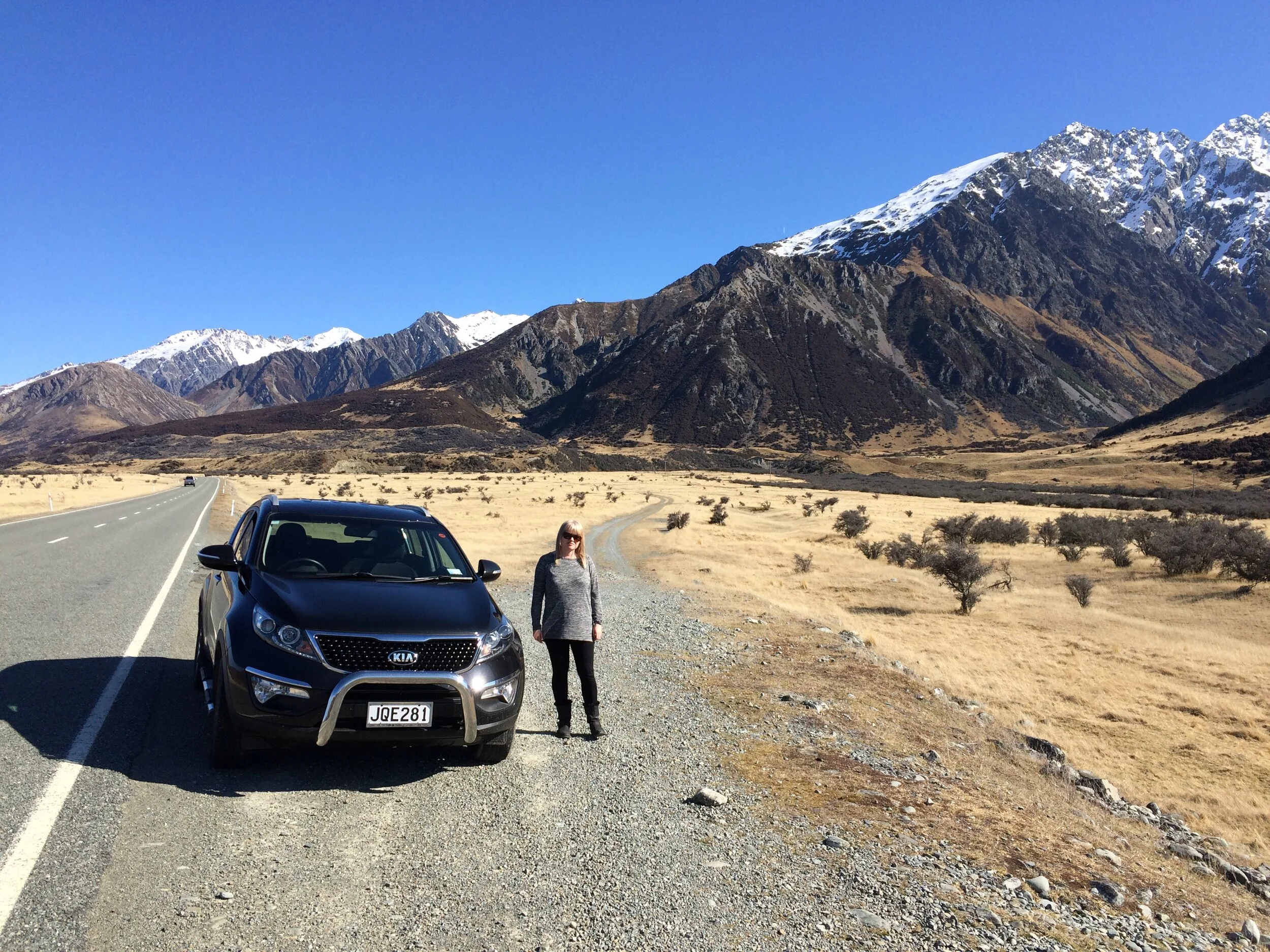
Suitably sauted from your Fairlie pie it’s best to be on your way down the road, passing small settlements such as Burkes Pass, which has a quirky feel to it, complete with wild west style shops. Unknowingly you are slowly climbing upwards towards those mountains. At the side of the road there are signs indicating turn offs for ski areas. Pull offs are available along straight stretches of the highway to take much south after snaps of the snowy peaks ahead on a clear day.

The Mackenzie Region, the scenery becomes more dramatic as you approach the Southern Alps
The next highlight is Lake Tekapo which will follow soon…….
The Road to Milford Sound, continued....
Nature at it’s wildest on the Milford Road
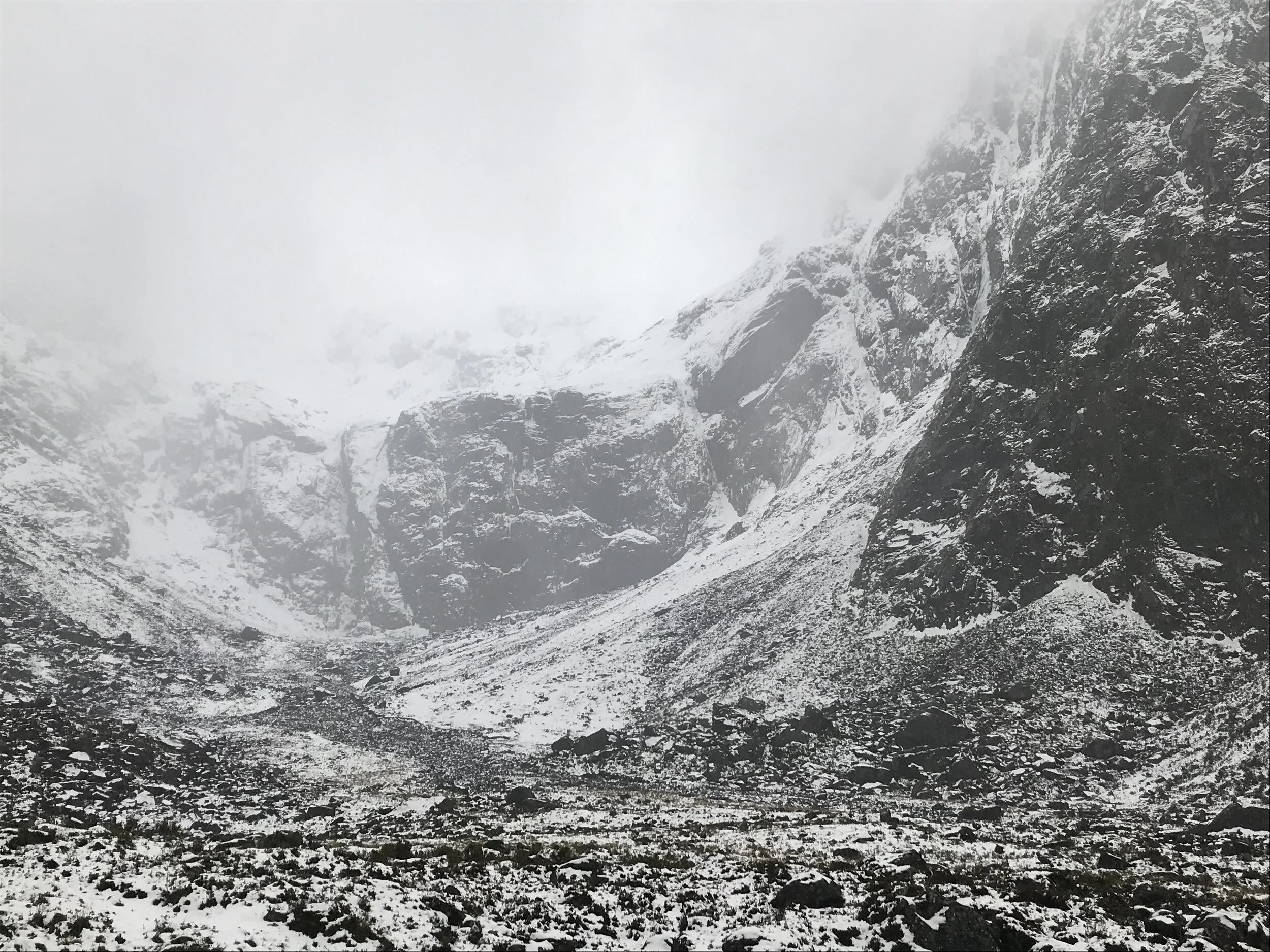
Leaving the Hollyford Valley behind the road met up with a river which seemed to be fed by the imposing mountains now towering above me. As the rain fell waterfalls appeared cascading down from the mountain peaks high above. Warning signs alerted me to the fact that I was now in an avalanche risk area and was unable to stop. This went on for over 30km - such are the perils in this area. The snow now blanketed the sides of the road and as I climbed higher the rain itself actually turned to snow.

Snow lines the road up towards Homer Tunnel
Approaching Homer Tunnel – which was famously cut out through the mountainside to provide much needed manual labour after the war years, the mountains seem to move closer to the roadside and gigantic boulders and lumps of rock lay scattered about. No wonder it was a no stopping area I thought to myself! I had to stop a little further however as the lights for the tunnel were red. It is run on a one way system and the waiting time on the big board in front of me advised 10 minutes. Just enough time to jump out of the car, pull on the waterproofs, and take some essential photographs. Snapping the shots was so easy as there were epic views in every direction. Trying to take in the colossal might of the place and it's sheer wonderment was though another matter. No picture could ever do it justice. Sometimes nature just wins hands down, leaving you with the impression that you are both small and insignificant in her immense scheme of things.

The waiting sign at the entrance to Homer Tunnel
Eventually the lights turned to green and I drove carefully through the tiny hole in the mountainside - no Homer Tunnel isn't small, but it does look like a dot on the mountainside when you are in such a place. Driving through I counted the markings, 600km, 800km etc until I reached the light at the end. It was quite a relief Homer Tunnel is not for the faint hearted, once you've experienced it you will understand my statement. I've been through it in fog once before which was quite an ordeal, a case of clinging on for sheer will if I'm honest. Finally emerging into the Cleddau Valley on the other-side of the mountain range my breath nearly left my body and my hands tightened ever so more on that steering wheel. The drop into Cleddau Valley is impressive, it’s also slightly scary as you corkscrew around the tight bends in the road plummeting you down into the valley. There used to be a great stopping point in this area known as The Chasm but sadly it’s closed at the moment due to the storms earlier in 2020 that caused significant damage in this area. After driving through the avalanche zone for so long I breathed a huge sigh as the signs indicated I was finely free of such risks. Yes, these days the road is controlled and monitored well, with hazardous snow build ups reduced by detonator when the road is closed, to try to prevent any unforeseen avalanche. Nothing is certain though and we all know that nature is a force to be reckoned with.

Nature rules in such a place
I continued weaving my way around the valley floor through dense New Zealand Fiordland rainforest before eventually I reaching my destination, Milford Sound. The drive had been one of amazement, bewilderment, gob smacking scenery and a small bit of terror – colossal in every respect and one that lives in the memory forever afterwards.

The seating area in the Milford Lodge, a welcome escape from the weather

Rain pours down the window panes at Milford Lodge which is surrounded by native rainforest
Milford Lodge was my first port of call as I parked up and purchased a well earnt coffee to relax the nerves and enjoy in their freshly decorated café. The fur coverings on my seat warming me as I watched the rain tumble through the bush and wash down the window outside – this is the Fiordlands after all and to make it this incredible it needs all that rain…..

The departure point for boat trips at Milford Sound
a big sigh, the Road to Milford Sound
The brilliant greens of the Lake Gunn nature walk on the Milford Sound road.
They say the journey is sometimes as good as the destination. And on occasions it can actually be better.
The whole aim of this blog is to encourage everyone to get out there are try things and sometimes that involves a long drive, sometimes it’s just down the road.
Milford Road is one of those journeys that transcends your everyday – it is something unforgettable and is worthy of the drive even if there was nothing worthwhile to see at the end. The end of this road though is Milford Sound – reckoned by many to be possibly the eighth wonder of the world. (please see my earlier blog about Milford Sounds boat cruises).

Taking a boat cruise at Milford Sound is a must do…
Milford Road leaves the township of Te Anau behind and follows the side of it’s namesakes lake for quite some time. Rolling hillside and lakeside accommodation passes by. In the distance large mountains loom their lofty peaks covered in snow. On the left hand side you pass the docking point for the boat ferrying hikers to the start of the legendary Milford Track, and then the road suddenly turns left and those mountains lie ahead of you. The farmland continues with fields full of hardy sheep, paradise shell ducks and some resilient cattle. This continues until you reach Etherington Valley, a long road takes you through the its heart alongside a braided river which roars through the valley.

Ethrington Valley on the road to MIlford
There are viewing points along the road to take photographs of the oncoming wilderness. A short drive further down the road reaches knobs flat, an accommodation and information point with an essential bathroom stop if one is needed. You then venture onwards until the landscape turns to bush and several Department of Conservation campsites hidden a short distance away. The next stopping point is on the left hand side with long pull off for Mirror Lakes.

A South Island Robin is a reluctant poser for photographs at Mirror Lakes, Milford Road
A boardwalk takes you above these small lakes to allow you a good vantage point to see the reflection in the water of the towering mountains looming above. They have even kindly left a sign above the lake reflecting the name of the place, very clever. On my visit I was alone for much of the time and that ensured lots of wildlife viewing – a grey duck, native to New Zealand was nearby pecking at insects floating on the water. I also spied a rare South Island Robin, which pirouetted a few times around me but didn’t seem to keen to pose for it’s photograph for some bizarre reason….

A rare ‘grey duck’ samples some insect life on the Mirror Lake surface. The reflection from the mountains above is also clear
As I drove onwards the bush became thicker and darker, creeping up alongside the roadway as if trying to reclaim it as its own. After a small one lane bridge a sign pointed towards a campsite and a nature walk. Intrigued I drove a short distance and parked up. An information board advised me that there was a 45 minute loop walk to enjoy down to the shore line of Lake Gunn.
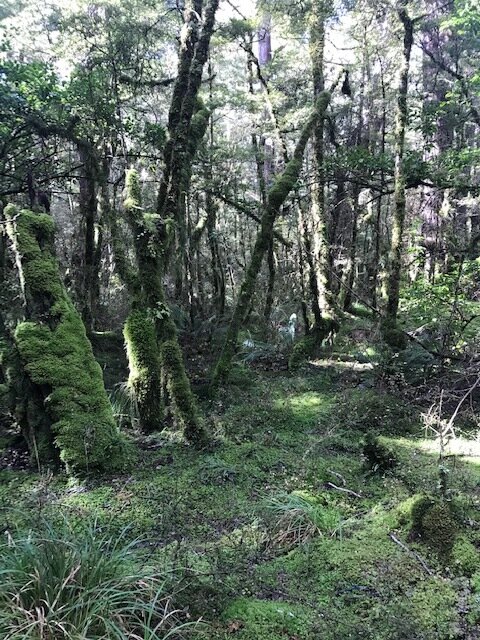
The green moss floor that greets you in the Milford Road bush
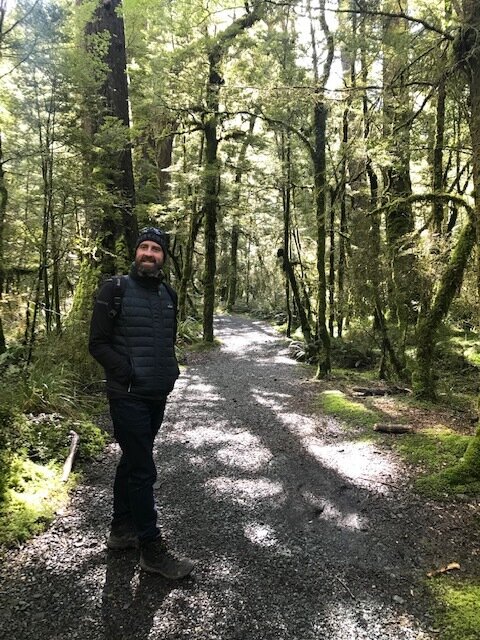
What struck me first was how green everything was. It was a shade of emerald bright and dazzling in the sunlight but dark and unnerving in the gloom. Everything was smothered in a moss of some sort. Trees grew out of other trees and hardy ferns covered the forest floor.
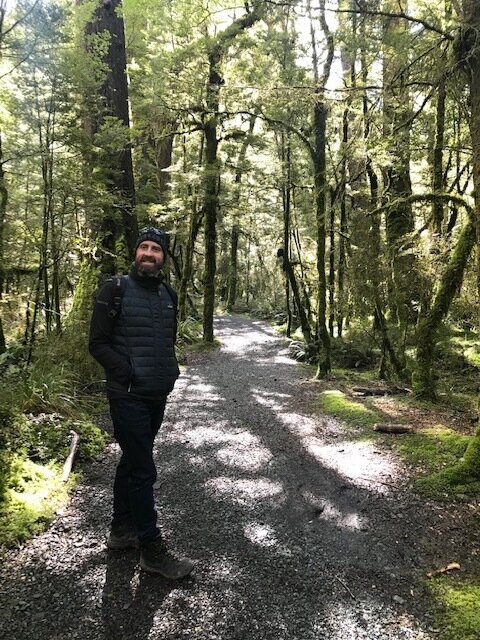
Dan at the start of the Nature Walk through native forest to the shoreline of Lake Gunn
An opening in the bush bought me to Lake Gunn, a lake surrounded on all sides by dense native bush. The water lapped at the small stones at my feet as I stood and admired the view. There wasn’t a sound to be heard except the lapping of the shallow clear water. I learnt that the lake stretched over 3km’s and I was only looking out at a small part of it. I continued on the loop walk back to my car listening to the local bird song echoing from the branches up above.

Trees growing up and around and out of other trees are common sights in this damp forest
The road as I drove onwards was now becoming narrower and windier. I passed a sign informing me that it was the last campsite available to Milford Sound, I was entering the true wilderness area.
I started climbing upwards noticing how the bush appeared to be getting thicker in places. The road now seemed to be cut out of the cliffside with a steep slope to the side of me along which waterfalls plummeted down. At least that’s what I think they did, as at this point my knuckles were white from the grip on my steering wheel.
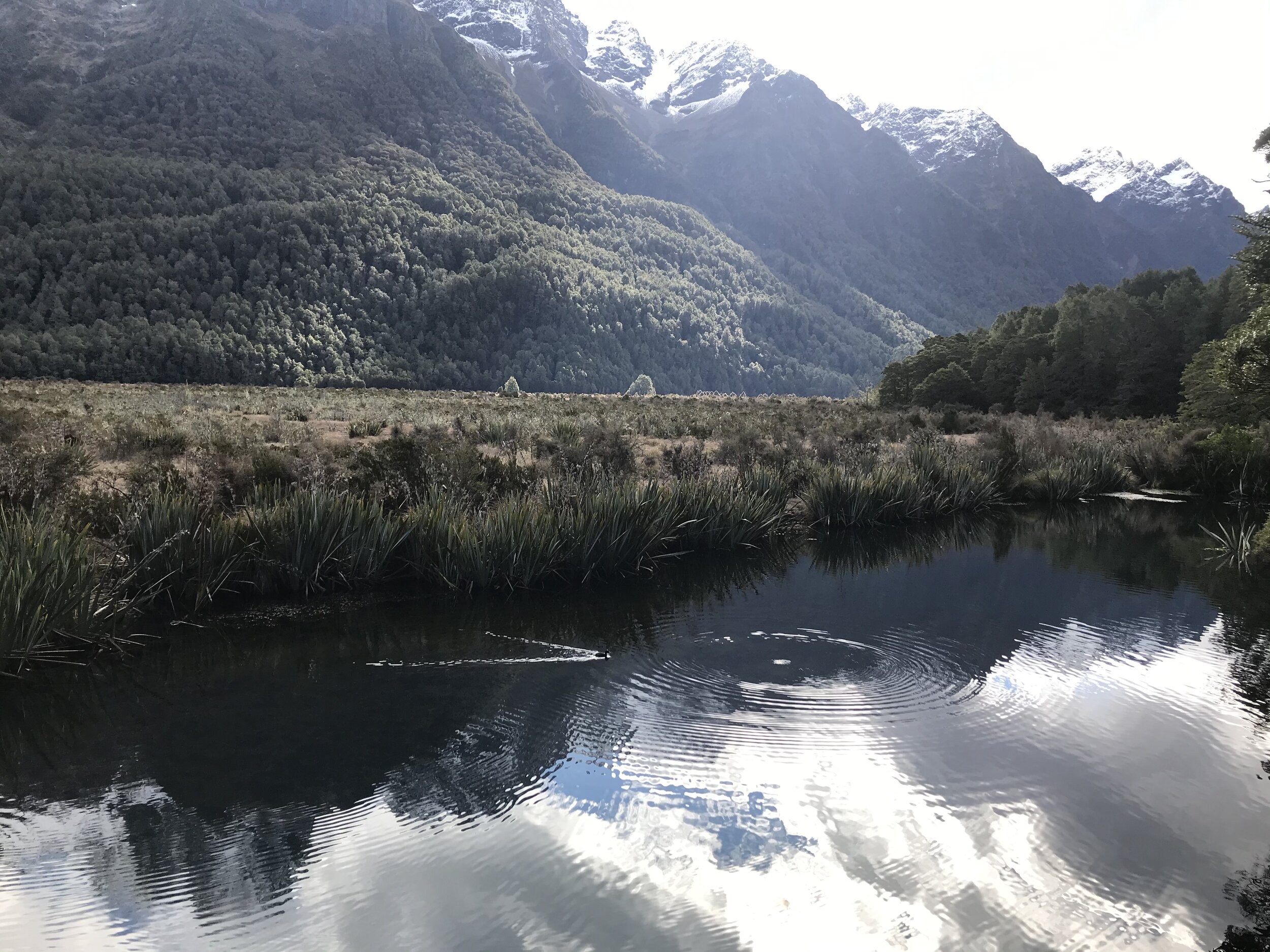
Mountains surround you on all sides on Milford Road
On the way up to Milford the cloud was low and a fog had settled across the valley obscuring the views. On my way back however the sun had burnt it all away exposing the vast valley below. The pull off at the viewing point overlooking Hollyford Valley is named pops point after one of the original caretakers who sadly got swept away in an avalanche whilst trying to clear the road.
Coming next, the giant boulders, unfathomable terrain and Homer Tunnel
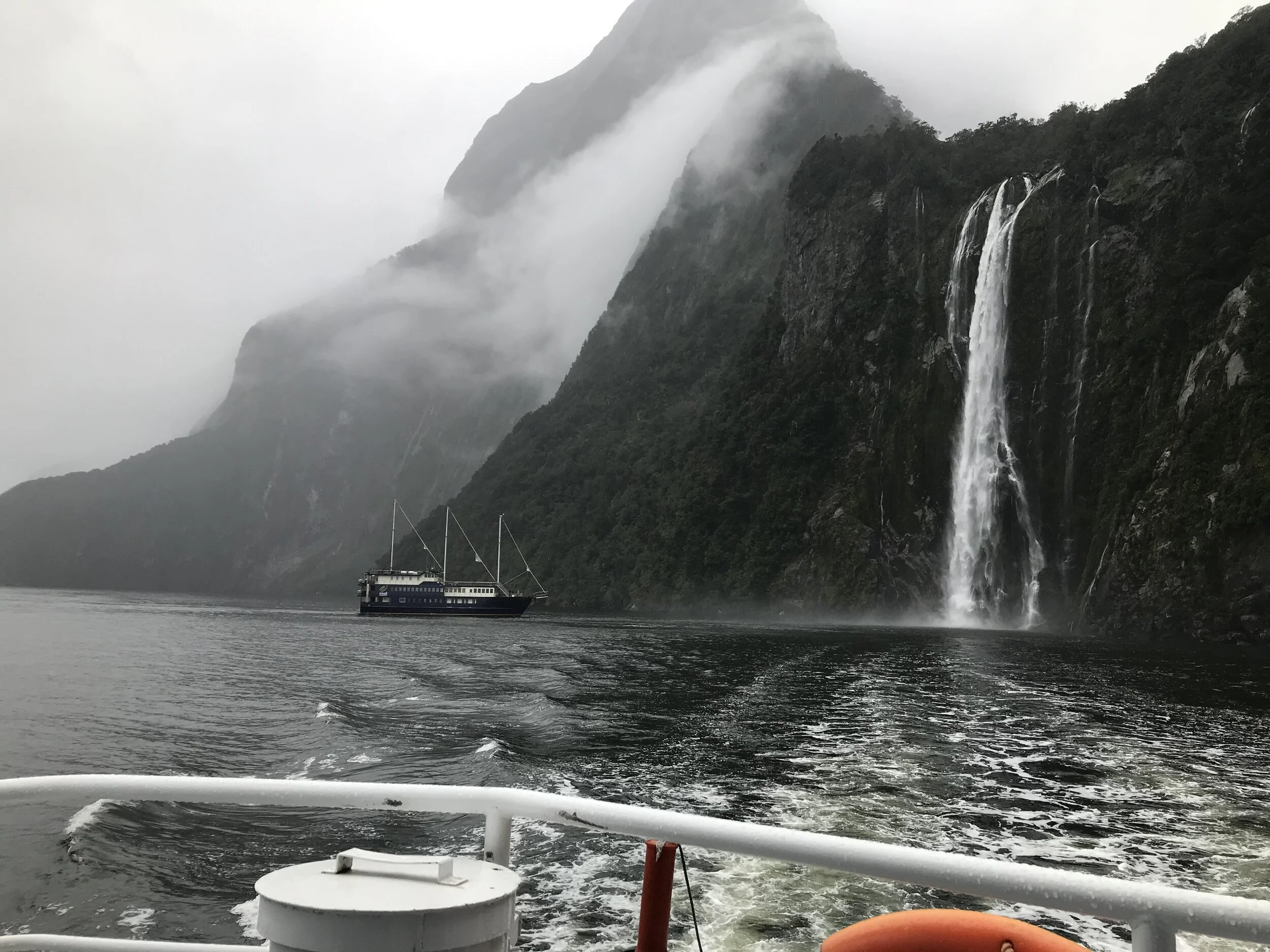
Milford Sound, a nature cruise on the wild side
Stirling Falls at Milford Sound, grasping the scale and majestity of this place is virtually impossible…..
Although it cannot be overstated enough that any visit to Milford Sound is as much about the drive as it is about the destination, please don’t underestimate the destination. Milford Sound was claimed to be the 8th wonder of the world and after any visit it’s very difficult to argue with this. I’ve been to this incredible place three times now and still feel overwhelmed by its splendour on every visit.

Magnificent, yet moody, Milford Sound is an epic experience
At first glance on arrival, after you have ventured through so much epic scenery on the road, it is easy to feel a little underwhelmed. The village at Milford has little to show for it, with a few buildings and an oversized car park. There is also the boat terminal which is on the large side to accommodate all the tours that depart from here. But if you take a moment and peer out towards the water your breath can be quite literally taken from you – Mitre Peak rising out of any lingering cloud dominates the scene and is the picture postcard image for Milford Sound.
If you journey all the way to Milford you must head out on the water. A boat trip is a necessity to grasp the sheer length of the sound itself but there is also a great kayaking trip to experience. I will come to this option in a later blog as the sunrise kayak is a special day out. This blog will focus only on the cruise. With several options to choose from (all largely following the same route) I joined a Nature Cruise with Southern Discoveries onboard one of their catamarans. I decided on this as the cruise left at 10.30am before any of the day trips and coach parties travelling down from Queenstown could arrive. It had been raining hard that morning but was only drizzling once we boarded the boat itself which was a good thing – you need water at Milford to get a glimpse of all those majestic waterfalls that plunge down from the huge cliff faces all around, but it’s not too much fun getting soaked to the skin as you try to photograph them. You also don’t want too much low cloud hanging around as this obscures the tops of the mighty peaks and prevents you from grasping the sheer scale of the place.

The boat terminal at Milford Sound
Trying to grasp this size is so difficult until you spot another tour boat out on the water (there was a grand total of three throughout the whole Sound on my visit) and can take that magical shot of the boat looking so small up against the waterfall and the mountain – nature is mega here.

The Milford Mariner just below Sterling Falls, one of the waterfalls at Milford Sound
The journey out through the length of the Sound enabled us to absorb it’s length and awe inspiring beauty. In some parts trees and shrubs grow out of the sheer rock face and there are a couple of waterfalls that continue to plunge down even when it hasn’t rained. The Sound is home to a pod of bottlenose dolphins that we didn’t spot on my cruise, but we were fortunate to spy some New Zealand fur seals – young males who hang out on the rocks and peer at you with mild curiosity. I also witnessed a very rare Fiordland penguin leaping through the glassy smooth waters surface. At Harrison Cove, the site for the first ever settlement in these parts, and now the spot for the overnight trips to berth, we paused for a moment to appreciate the peace – a place hardly touch by humanity, with little sound except the ripple of the water and the breath of wind through the trees.
As our boat made it’s slow journey back to the Milford Sound terminal I took one last look around – there are some special places out there, to be left as nature intended.


Coming shortly, the amazing drive to Milford Sound…….
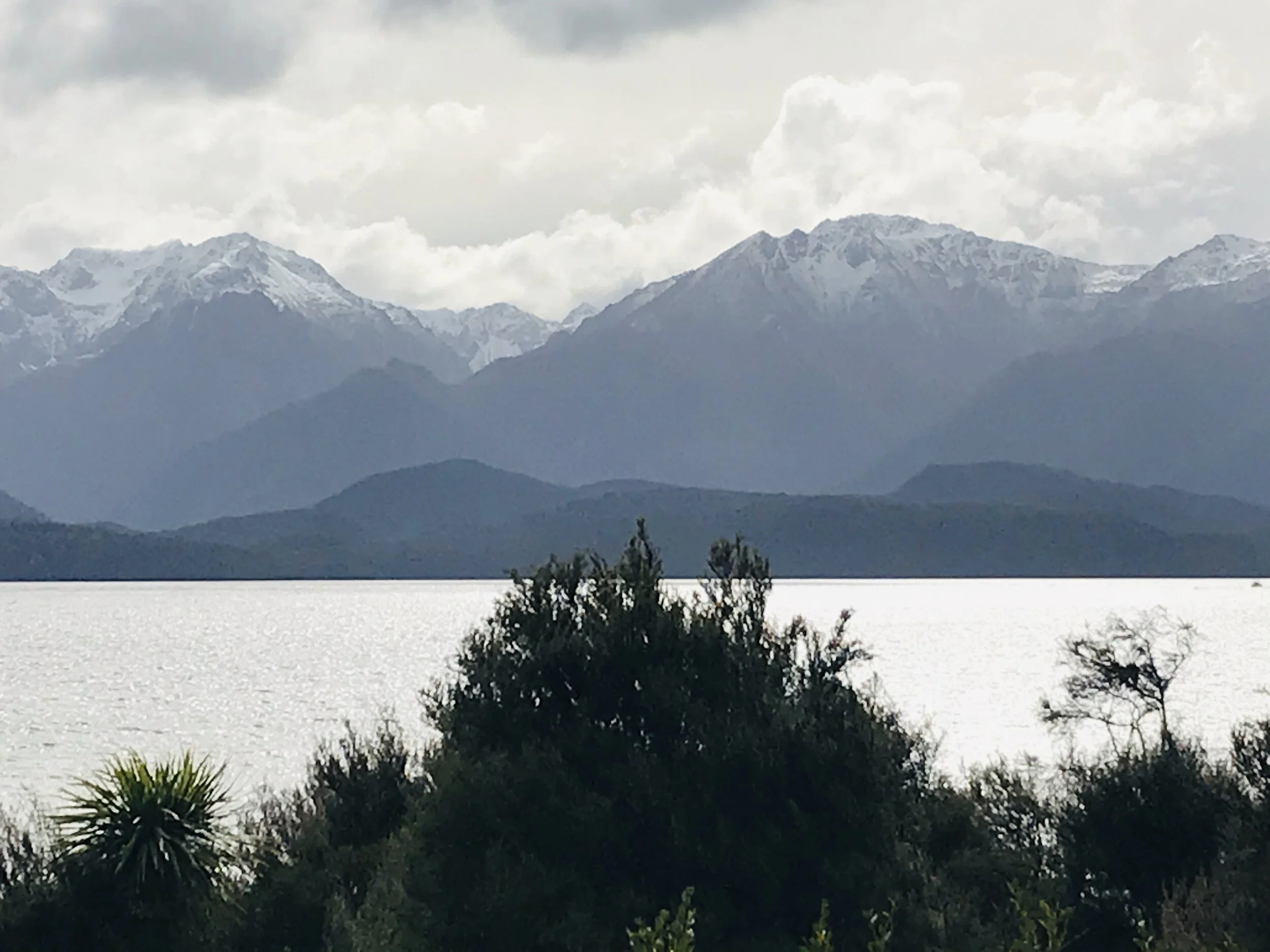
Resting up in Te Anau, gateway to Fiordland National Park
Te Anau is a lovely spot in it’s own right but it’s the outdoors here that gets the juices flowing.
Te Anau is essentially a service town, for all the local farmers and tourist operators in the surrounding area. It’s also an excellent base for visitors keen to explore the Fiordlands. It's the gateway to several of New Zealand's Great Walks, Kepler, Milford and Routeburn.

The lake front at Te Anau
The town is attractive, situated alongside the lake front, with a wide high street offering an array of shops, bars and restaurants. The lakeside itself is awash with motels, backpackers and hotel accommodations. There are wharfs for boat trips (there are sightseeing trips along the lake, water taxis that take you to drop off points for accessing the Great Walks, such as Kepler and Milford, and even a boat that takes you over the lake to spy some glow worms hidden in a cave only accessible by water - check out the Real Journey's website). There are also helicopter and seaplane trips departing from this area offering unforgettable trips over the Fiordland National Park - check out Southern Lakes Helicopters and Wings & Water.

Te Anau is the perfect stop over point for access to Fiordland National Park, the views aren’t too bad either….
The town is home to a couple of useful supermarkets. The bakery offers good sandwiches and tasty slices to tide you over on one of your many excursions into the great outdoors. My favourite coffee spot in town is Sandfly café, it’s usually packed full of locals which is always a good sign. There are tables out on the front lawn under some shady tree branches. The coffee is great, as are the Southland cheese rolls (a south island speciality and essential to try) and the homemade venison pies. Don’t miss out on a tasty treat from the counter for afters., you won't regret it.
On an evening there are several bars and restaurants buzzing with people returning from a great adventure. My favourites are The Fat Duck and The Redcliff. The Black Dog Bar is the most sophisticated spot for a drink, they even serve their own wine and beer, and be sure to check out the cinema next door.
Look out for my guide to the Te Anau Bird Sanctuary and Manapouri coming very soon….

Accommodation
options for places to stay in Te Anau coming shortly….
Havelock, home of the delicious green lipped mussel and gateway to Marlborough
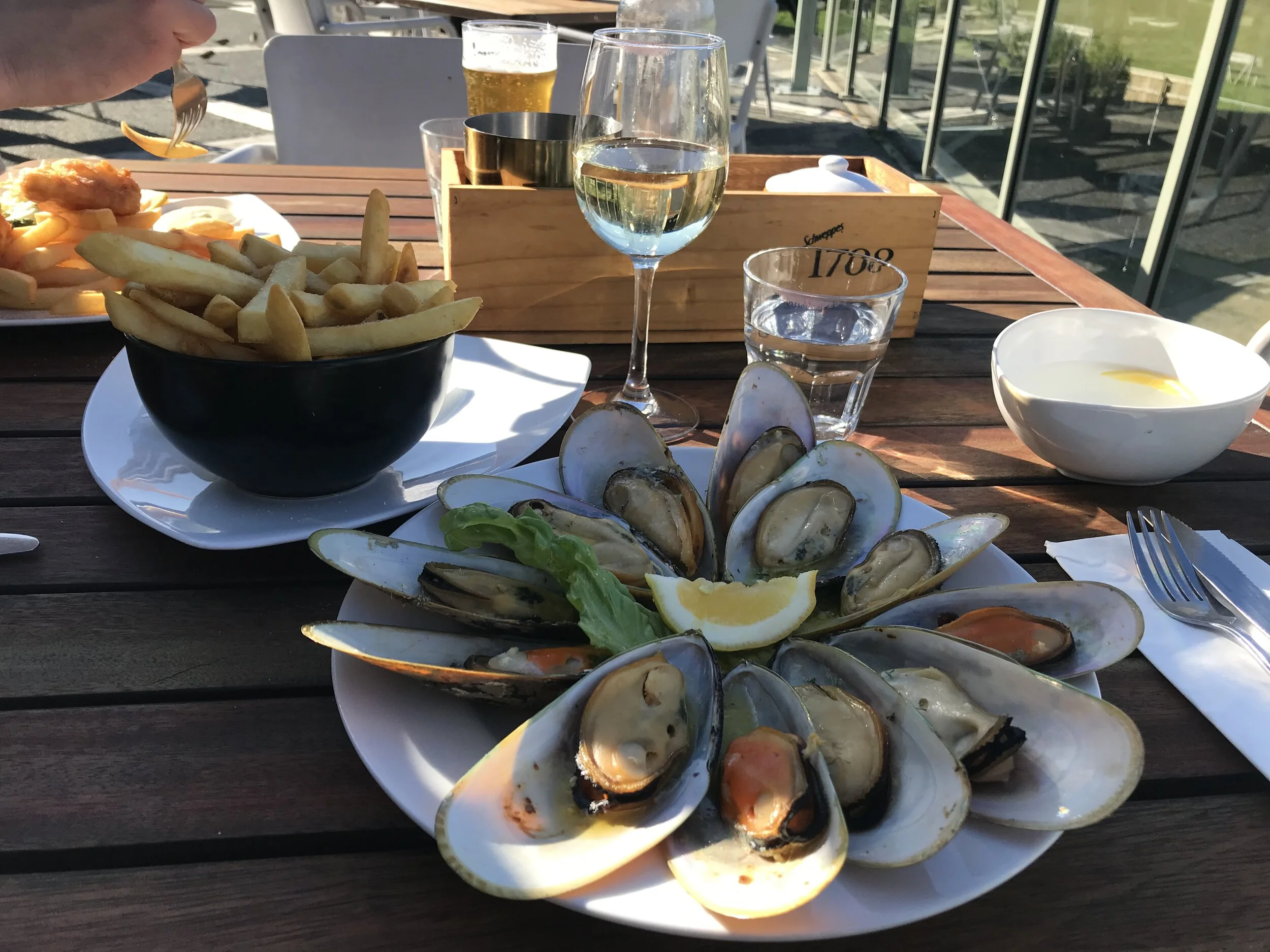
Mussels are fresh as a daisy in Havelock, and pretty tasty too!
Havelock is known as the gateway to the Marlbourgh Sounds. It’s also the mussel capital of New Zealand – and that’s quite a claim given how well renowned the green lipped mussels are in this area.
The town itself is neat and compact postioned at the end of one of the sounds. Like many people I had only previously ever driven through it on my way to places. I was always tempted to pull over and try out one of the many eateries along the main highway which offered lunches of the local mussels amongst other temptations. I’d never got around to it though until I hired a campervan to spend the weekend touring the local area. Havelock has a friendly, efficient camp site situated right in the centre of the township. It’s so easy to park up and then get out and explore. The marina is just behind the site and it was much bigger than I imagined. The gateway out into the Sounds it’s a popular spot to launch a boat. The mussel barges also berth here servicing the farms growing in the vast clean waters. You can be absolutely certain that any mussel served here is as fresh as it comes given they are grown just out across the bay.

Havelock Marina, a popular spot on a sunny afternoon
A circuit around the marina and onto the main high street brought me to a number of pubs and cafes offering mussel creations. I opted for the Captains Daughter, a pub built in a traditional manner, the type you would expect to find in an English village with a real fire glowing in the centre to warm the coggles. It wasn’t too chilly though on the winters day I visited and the deck outside was inviting. A large area it was warmed by the weak winters sun. I ordered a glass of local Marlborough sav and the toughest decision was to decide between the steamed or grilled mussels. I opted for grilled in garlic butter and a side portion of chips to complete the meal. It sure was heaven..

Locally caught green lipped mussels served grills from the Captain’s Daughter in Havelock
Havelock is surrounded by bush lined hills rising to meets the sounds, and although the main road to Nelson was just outside the door I failed to notice it.
Just down the road from Havelock is Pelorus. A pull off just before the small one lane bridge takes you into a carpark surrounded by bush. There is access to a campsite and café here. The café is an excellent spot to call off at – their cakes and pies are top notch (yes okay I’ve sampled a few, I confess). To make up for said calorie count are several walks leading off from here that range in lengths - I will discuss all about the local walks in this area in a later blog…..
Coming up – great camping spots around the South Island

The bush smothered hills surrounding the town of Havelock, gateway to the Marlborough Sounds
Take a walk on the wild side, with the New Zealand Fur Seals of Kaikoura
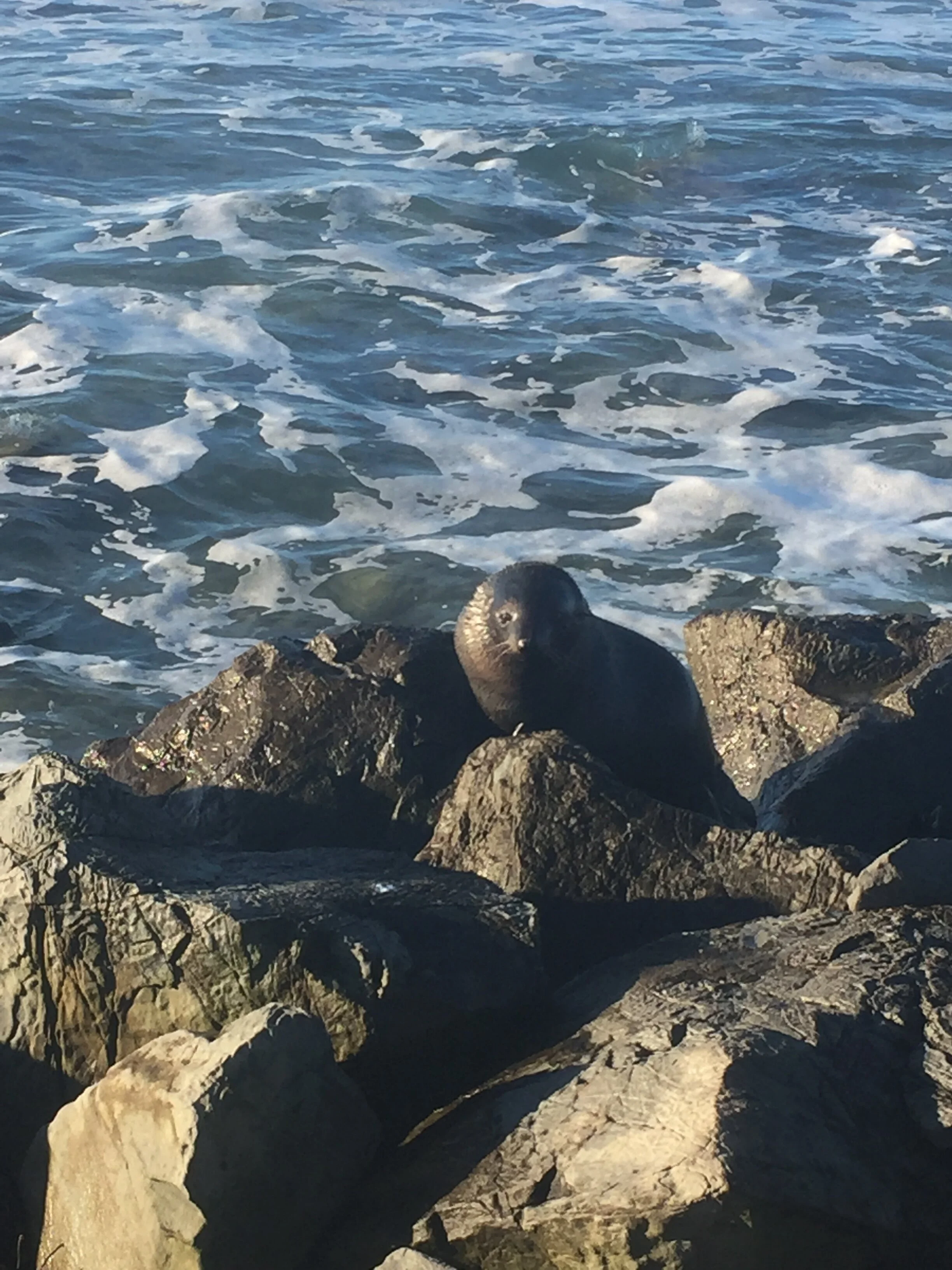
Seals can be found everywhere around Point Kean at Kaikoura
Kaikoura is home to one of the largest populations of New Zealand Fur Seals in the country. It’s also one of the easiest and most accessible places to spot and observe seals given they are found in numerous places up and down it’s rocky coastline. Once hunted nearly to extinction the New Zealand Fur Seal is now legally protected and has made a miraculous recovery. Numbers are booming which means more seal encounters for everyone to enjoy.
There are several ways to interact with seals in the Kaikoura area and I will start with the most obvious and simple one – walking.

A local wandering along the track near the Point Kean Seal Sanctuary at Kaikoura
Point Kean Seal Sanctuary is found at the end of the road leading from the main centre of Kaikoura Township. If in doubt, follow the road alongside the coast and you will end up at the car park with no were else to go. The seals here used to be spotted in the car park itself, under cars and snoozing on the boardwalk. I have even encountered several plucky youngsters half way up the grassy cliff side. Since the 2016 earthquake that caused so much damage around these parts the land has changed. Point Kean itself has extended further out along the peninsula meaning that the seals have also spread out. Although you will always find a couple snoozing on the board walk by the car parks entrance as no matter what time of day they always seem to be there. Sometimes too you will hear a couple snorting underneath the wooden boardwalk panels as you walk over them. If you want to see the seals in larger numbers though, or indeed have closer encounters with some of the braver, more inquisitive babies continue to walk around Point Kean and under the large protruding cliff face. You may have to scramble over the jagged rocks around here being careful not to slip on some of the greasy seaweed (Kaikoura is famous for this and indeed the pungent smell regularly greets you on arrival, especially in summertime). Once around this headland you will come upon a well-formed stony path alongside which are many snoozing seals. Trying to avoid the ones laying over the path itself is another matter – but they will snarl to warn you of their presence if you dare to get too close. – don’t, there will only be one winner and it won’t be you! Just about every rock and smooth surface around this headland is covered by the bulk of a seal, both big and small. The mothers are usually snoozing in between weaning their youngsters whilst the little ones wander about, play fighting with one another and looking for a sheltered rock pool in which to practice their swimming with twists and turns. I was merrily observing all the seals when I suddenly heard a heap of snorting and rustling behind me – I turned around anxious to not be in the way of a seal heading back to sea, when I spotted two babies chasing one another in and out of the long grasses up on the sloping hillside. They can be quite fearless these littlies.

Young seals can be found everywhere around these parts…..
Coming next, some more great wildlife walks around Kaikoura…..
Glacier Express
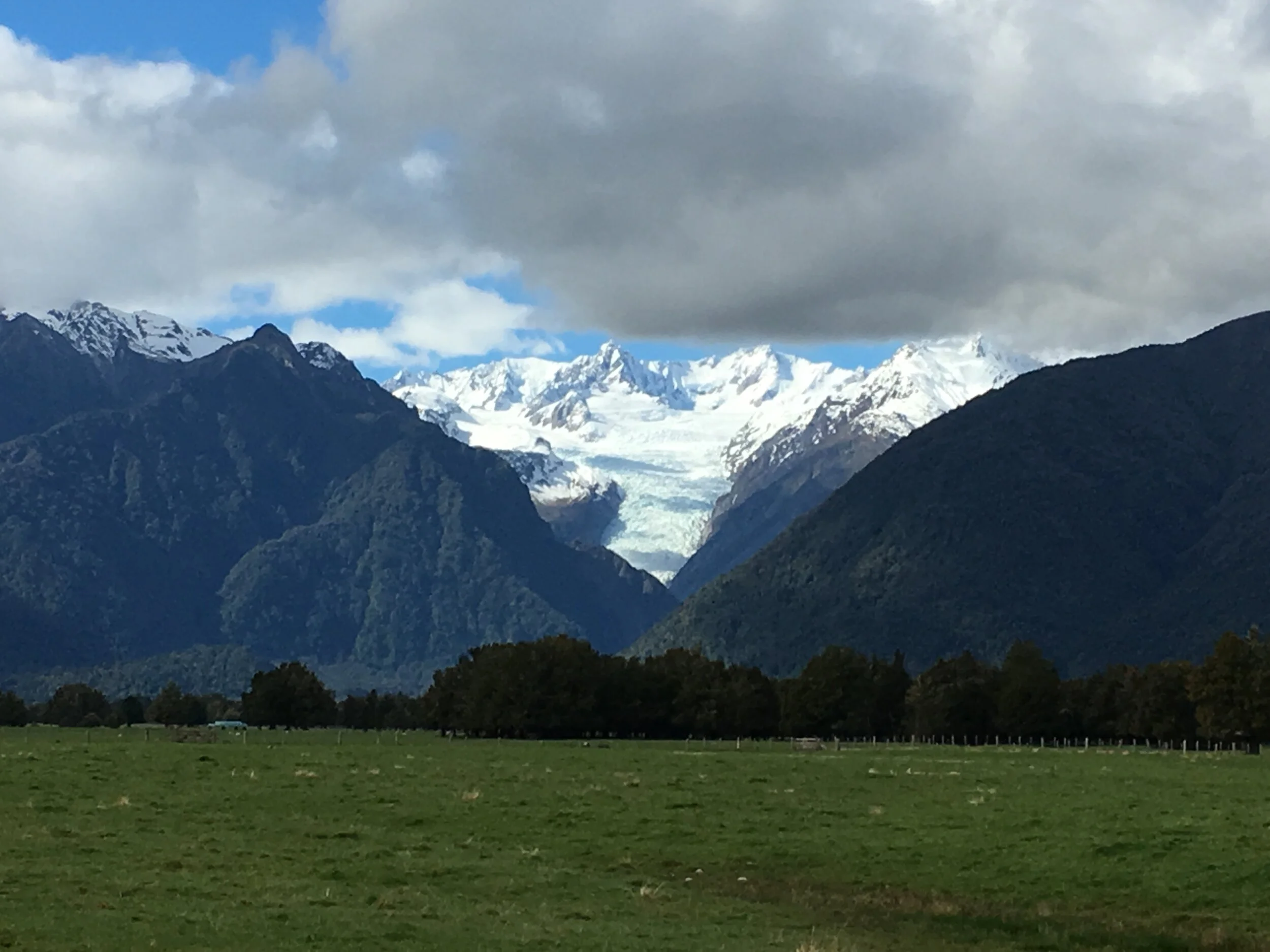
Fox and Franz Josef, the two glaciers on the West Coast of New Zealand’s South Island
Well not exactly glacier express, but these two, Franz Josef and Fox, are amongst the most easily accessible glaciers to be found throughout the world. They are also the only glaciers that descend so closely to the sea. Although steadily retreating it is still possible to take Heli hikes to traverse the glacier surface at both
Franz Josef and Fox Glaciers. Only a short ten years ago I followed a pathway up through bush and climbed onto the surface of Fox Glacier, my crampons in place as I carefully followed my guide and wandered across the ice. I was lucky enough to explore crevasses and large ice caves. Alas the glacier has receded a fair distance since that time and can only now be walked on from the said helicopter tours. The same applies at Franz Josef which is the most popular of both the glaciers apparently due it being slightly steeper than Fox and with larger ice caves, although I suspect that it might be just the fact that is it the first glacier you come to as you make your way down the West Coast. None of this should put you off a visit to the longer Fox Glacier though – enjoy the fewer visitors.

Walking through a glacial valley to the terminal for Franz Josef
Both glaciers are home to small townships bearing their names. Alike the Glaciers both are quite different in personality – Franz is lively and bustling (well as close to bustling as you can get on the West Coast) whilst Fox is its lazier, sleepier little brother. They both have some excellent outdoor activities to enjoy though and some good accommodation options.
At Franz Josef you can still take a hike to the glacier terminal. I’ve taken a guided walk through the valley to the glacier and been fortunate enough to learn all about the landscape and geology of the glacier. The pathway takes you beside and across an old river bed that was formed as the ice melted and the glacier resided. The geology of the area is quite remarkable and although you can walk from the car park on your own it is worth taking a guided trip to discover and learn so much more.


Back at Franz Josef village you have the option off an adrenaline rush or some much deserved R&R. Quad Biking here is awesome as you are guided across a dried-up river bed and glimpse some epic views of the glacial valley all around - be prepared though to get very muddy. The Glacier Hot Pools offer a more tranquil alternative after a busy day. The steaming pools positioned within the rainforest are just the tonic to revive weary limbs. For an even more relaxing experience book one of their private pools which will not disappoint.

Fox Glacier Village
Further down the road in Fox Village (the drive alone down the highway is worthy of a trip) the attractions are more natural and further spread out. Take a trip to Lake Matheson about 6km out of town. It takes about 1 ½ hours to circuit the lake and on a clear day you are rewarded with some incredible views of the Southern Alps reflected in the lake’s clear waters. There is also an excellent café by the car park that offers some great kiwi fare – make sure you call in for at least a coffee and slice, and I highly recommend the breakfasts.
Continue down the same road you have traversed for Lake Matheson (it’s not hard there aren’t many roads in this area), and you will eventually come to the coast and Gillespie’s Beach. This used to be an old mining settlement but now is a windswept sandy retreat. You can camp here but watch out for those sand-flies that are venomous in this area. The best reason to call here though is to follow the 3 ½ hour return walk to even remoter Galway Beach – the walk is great, the beach even better. Seals have adopted this sandy stretch as their own and you will spot several hanging out as you make your way along.
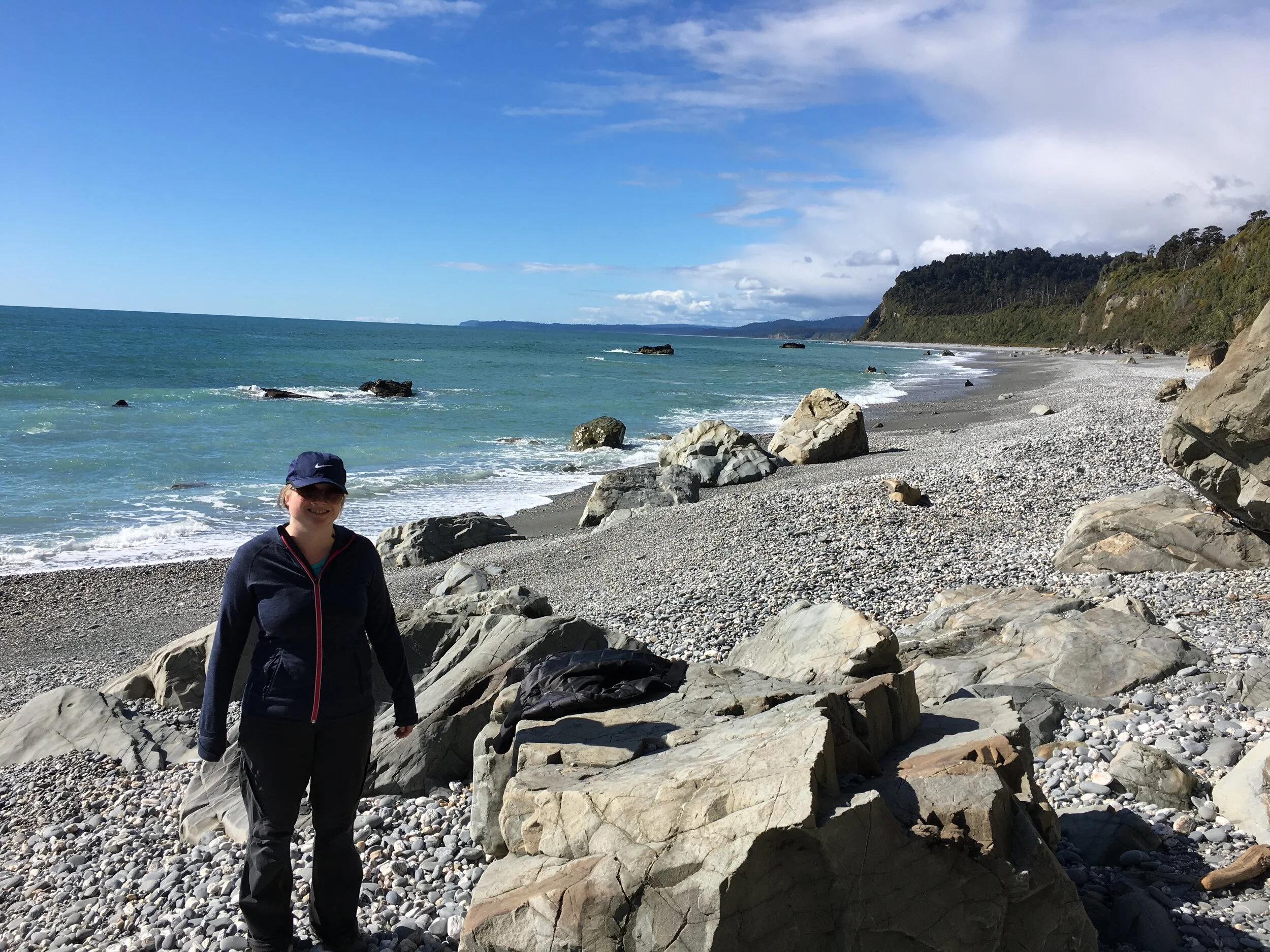
Seal beach on the West Coast
Fox Glacier township offers many motel style options and the Last Kitchen is a worthy spot to spend an evening. Franz Josef though does win the overnight battle. There are some top spots to stay at including 58 on Cron, a stylish motel and the Rainforest Retreat which has a terrific bar called Monsoon on site that is generally packed to the rafters.
My next blog will uncover Okarito and its amazing Kiwi spotting tours just a short drive north of Franz Josef.


A morning driving a sled dog team - dreams do come true
Spending a morning with these eager friends is the stuff of dreams
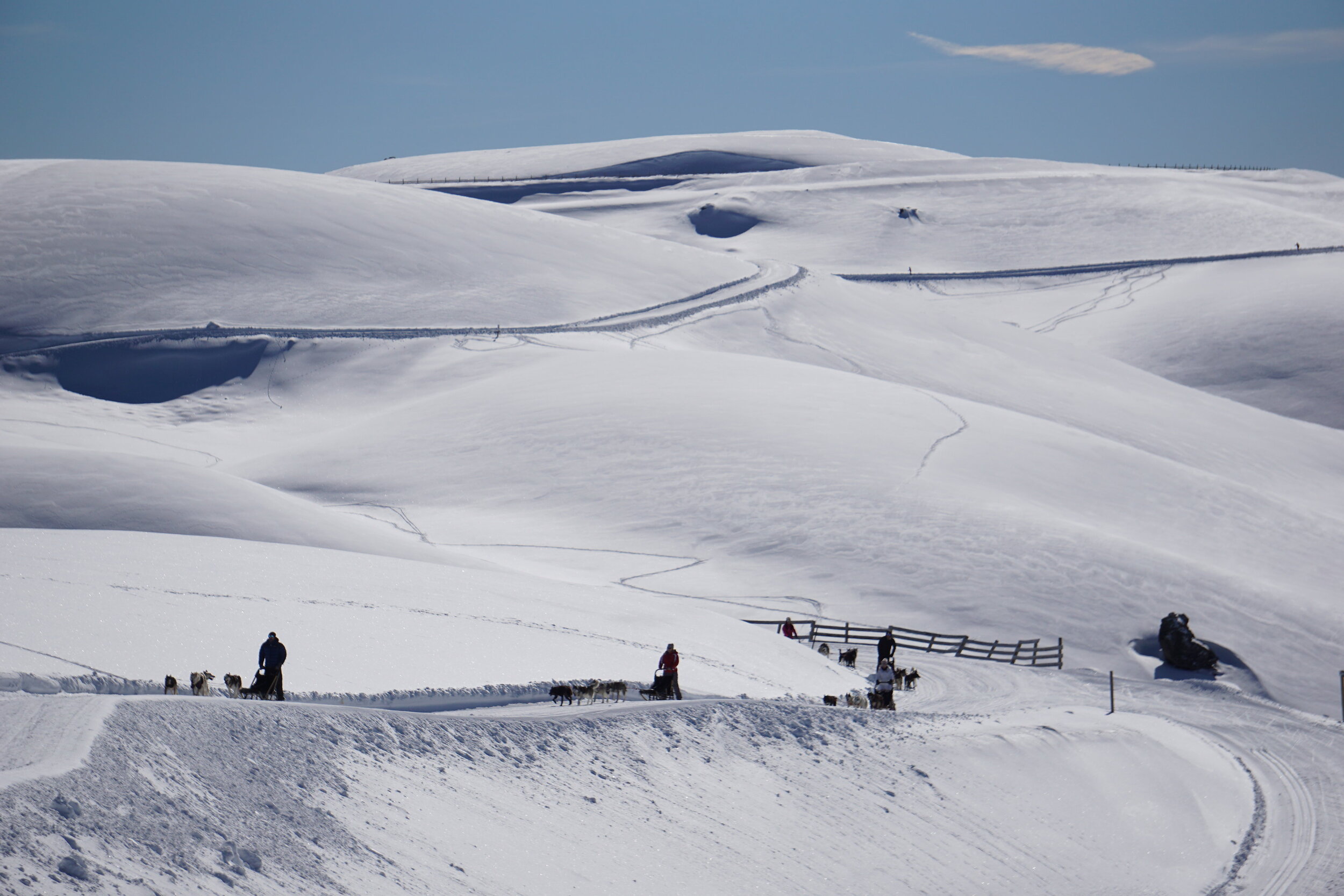
I’d arranged to meet up with Underdog NZ at 10.30am at the Snow Farm to start my tour. After a brief talk about what to expect I was taken across to meet the dogs, and what a greeting it was. It seems the dogs absolutely love these tours and get incredibly excited about it all. I was smothered in doggy loves very quickly. There were a mixture of Alaskan Huskies, Siberian Huskies and Alaskan Malamutes all keen to get started. My human guide gave me a brief outline on how to use the kart and a demonstration on how to control the dogs – yeah right, it was more the dogs controlling me I think, and we were all set up and ready to go. I started off cautious, pressing the break to check it was working and trying my hardest not to tangle up the reigns. Four animated and eager dogs were ready to pull me along and I was a bit nervous at first in case I fell off!!! The snow was smooth but compacted and I had visions of being dragged along on my stomach by four excited animals. My concerns didn’t last for long, well only until my hands could no longer cope with the discomfort of gripping on so tightly! Within a few minutes I was riding the cart like a professional – well in my opinion anyway - and we were off soaring across the snow-covered landscape as one. Well maybe not quite. I had to get off on any upwards slope to take the pressure off my four-legged friends and help push the cart. I also spent a significant amount of time trying not to get them all tangled together so that the back two didn’t trip over the front twos’ reigns – there was a lot of responsibility looking after these keen racers! None of this distracted from the sheer joy of directing my dogs as we ploughed across the snow. The setting was majestic with the perfect clear blue skies reflecting off the brilliant white of our snow-covered carpet. It was a truly memorable moment in time.
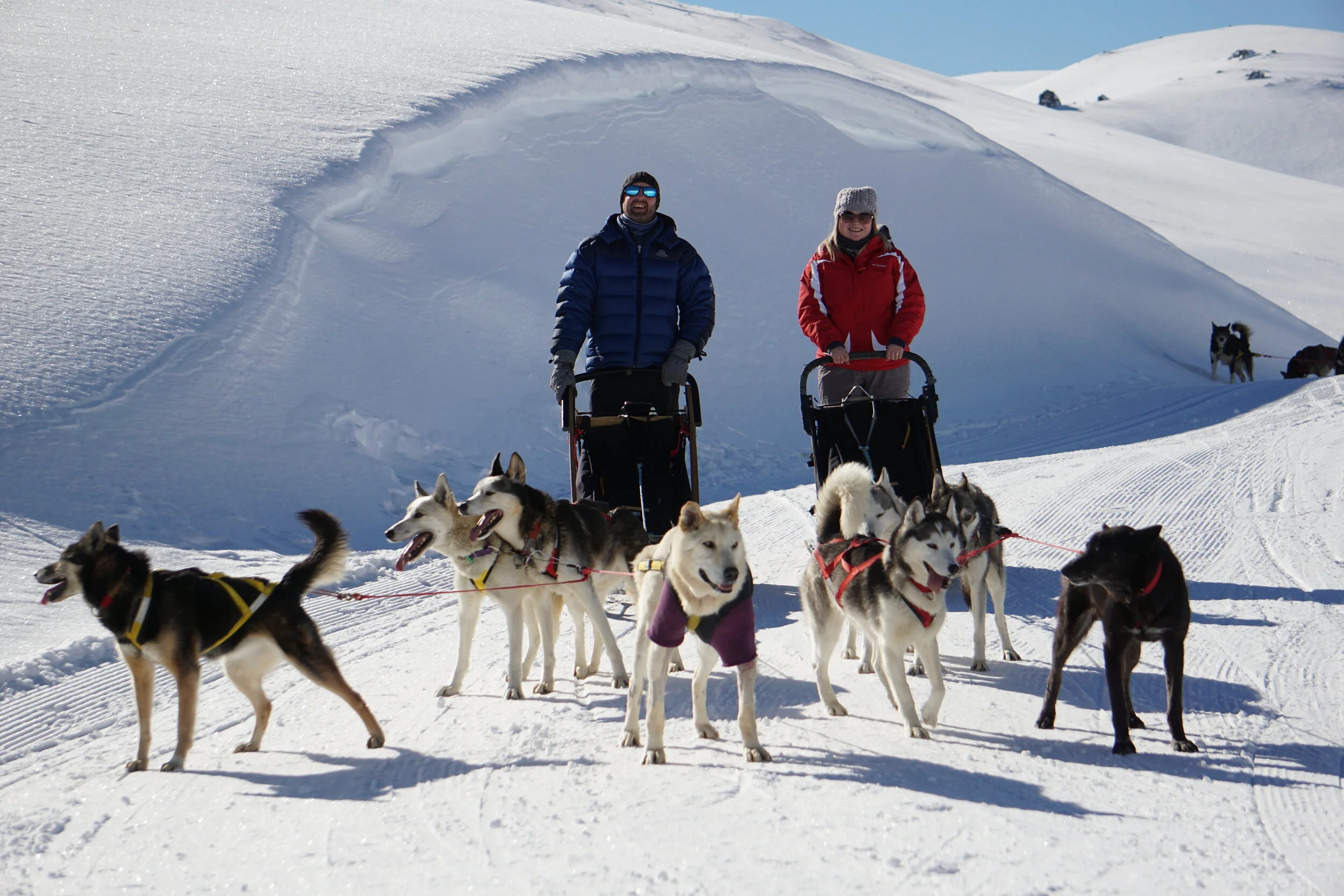
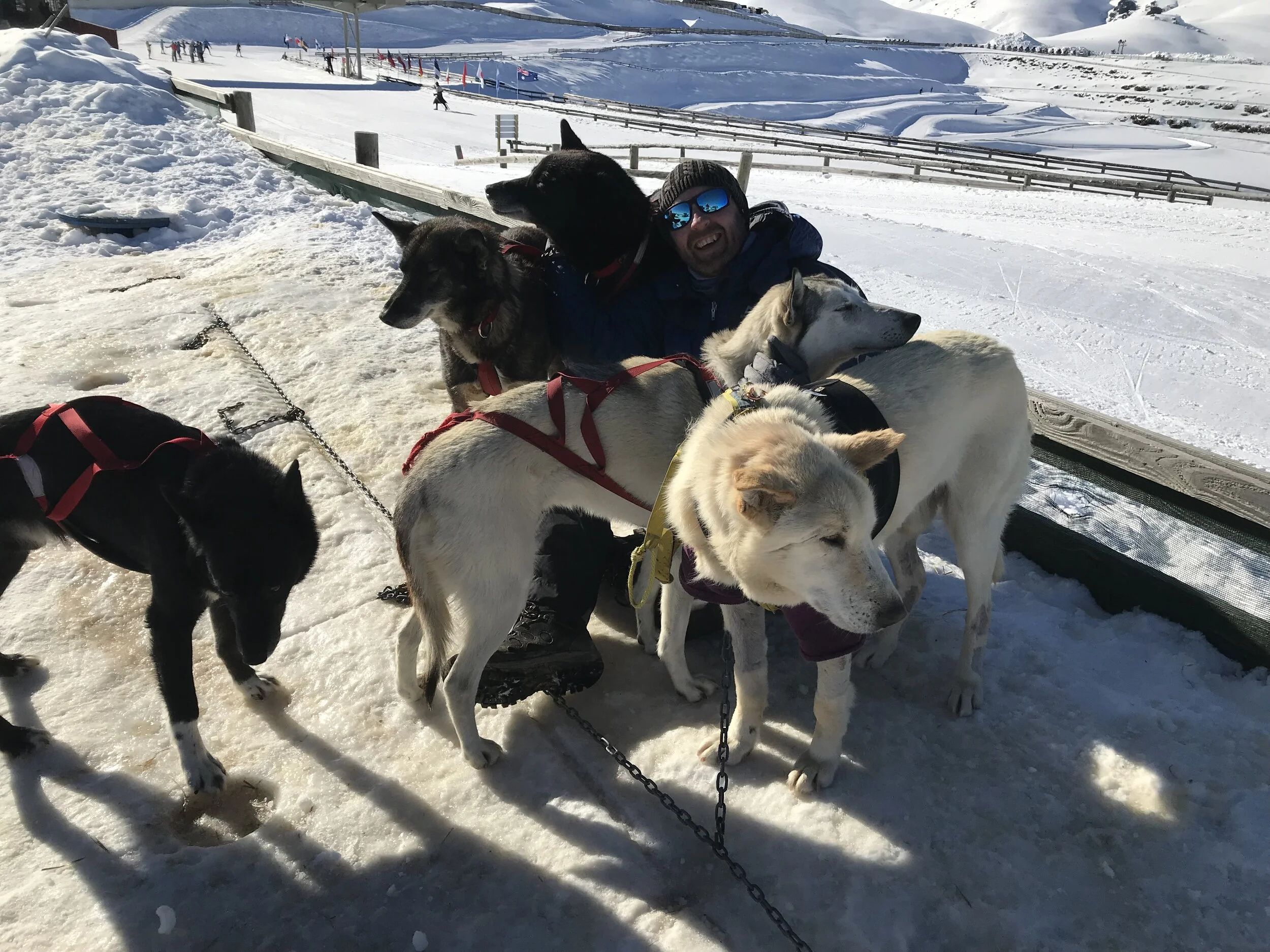
Dan and I attempting to be in charge of 4 four legged bosses! Yeah right…..
Reluctantly I drew up to where I had started and had to discard our cart. The fun didn’t stop there though as now it was time for doggy pats and treats as my new best friends were rewarded for their endeavours and sheer hard work in dragging someone as clumsy as me along. I was allowed to spend as much time as I wanted with my new mates and soon learnt the names and mannerisms of most of them. I was also rewarded with puppy cuddles as two new members of the team were taken out of their kennels and introduced to me.

Dan enjoying lots of cuddles after the race.
I returned to the lodge brimmed with enthusiasm and chuffed to bits. There are lots of other options to take in here with snow shoe routes laid out and cross-country ski-ing lessons available. I was personally exhausted so settled for a warming hot chocolate from the bar upstairs with great views across the ski field and
beyond. Underdog offer night runs and even overnight stays – I will undoubtedly be back…


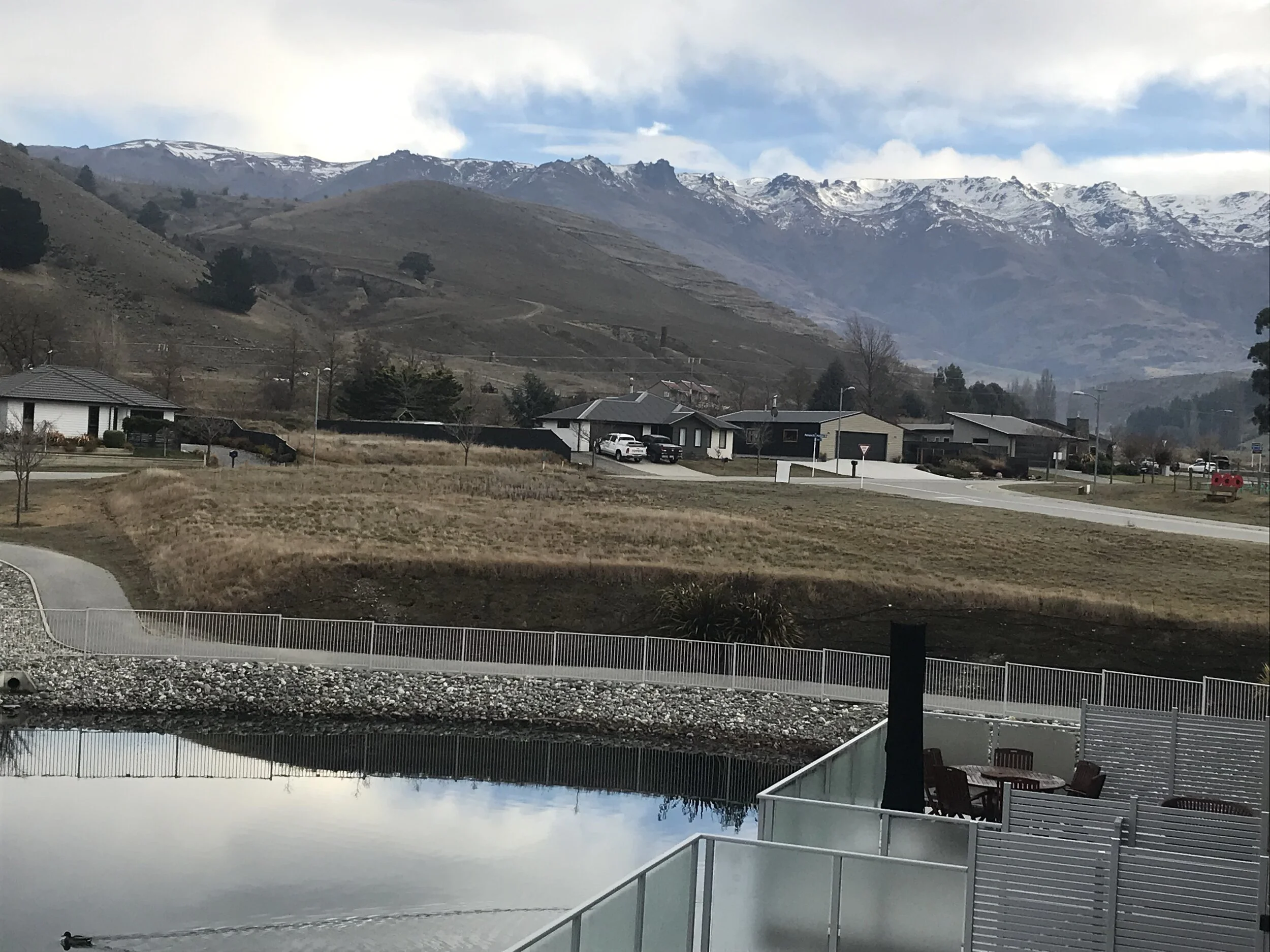
Cruising in Cromwell, home to the gold rush of wineries
The lake and mountains surrounding Cromwell Basin are as noticeable as the wineries here.
Cromwell sits in the heart of the Central Otago region. It’s an area synomonous with excellent wines and mouth watering stone fruits. The town was established by gold miners and originally named The Junction. In 1992 the Clyde Dam Power Station was completed and the valley in which Cromwell sits was flooded to create the picturesque Lake Dunston. The original old town of Cromwell now sits under this lake. However some of the buildings were removed prior to the lake being created and have been lovingly restored and are now situated within the Historic Precinct.
Any trip to Cromwell begins with a drive around the lake and past the numerous vineyards that climb the valley walls on each side. Names such as Lowburn, Bannockburn, Bendigo are familiar to anyone with a love of New Zealand’s famous Pinot Noir. The Cromwell Valley is lovely with views everywhere you look. A cycle/walking trail follows the lakeside from the township to Pisa Moorings a settlement a few kilometres away which is home to the Heritage Lakeside Resort - a great place to stay if you desire peace and tranquillity. The rooms here are positioned over the water and you are greeted each morning to the quack of the ducks. The resort has it’s own onsite restaurant and bar and the newly opened ‘Bunker’ is ideal for a pre- dinner drink. It’s just a shame it’s so difficult to find but ask the hotel staff for directions and they will happily guide you there. The room is furnished with saddles and woodworking features with a large open fire place dominating. It’s both cosy and curious in equal measures.
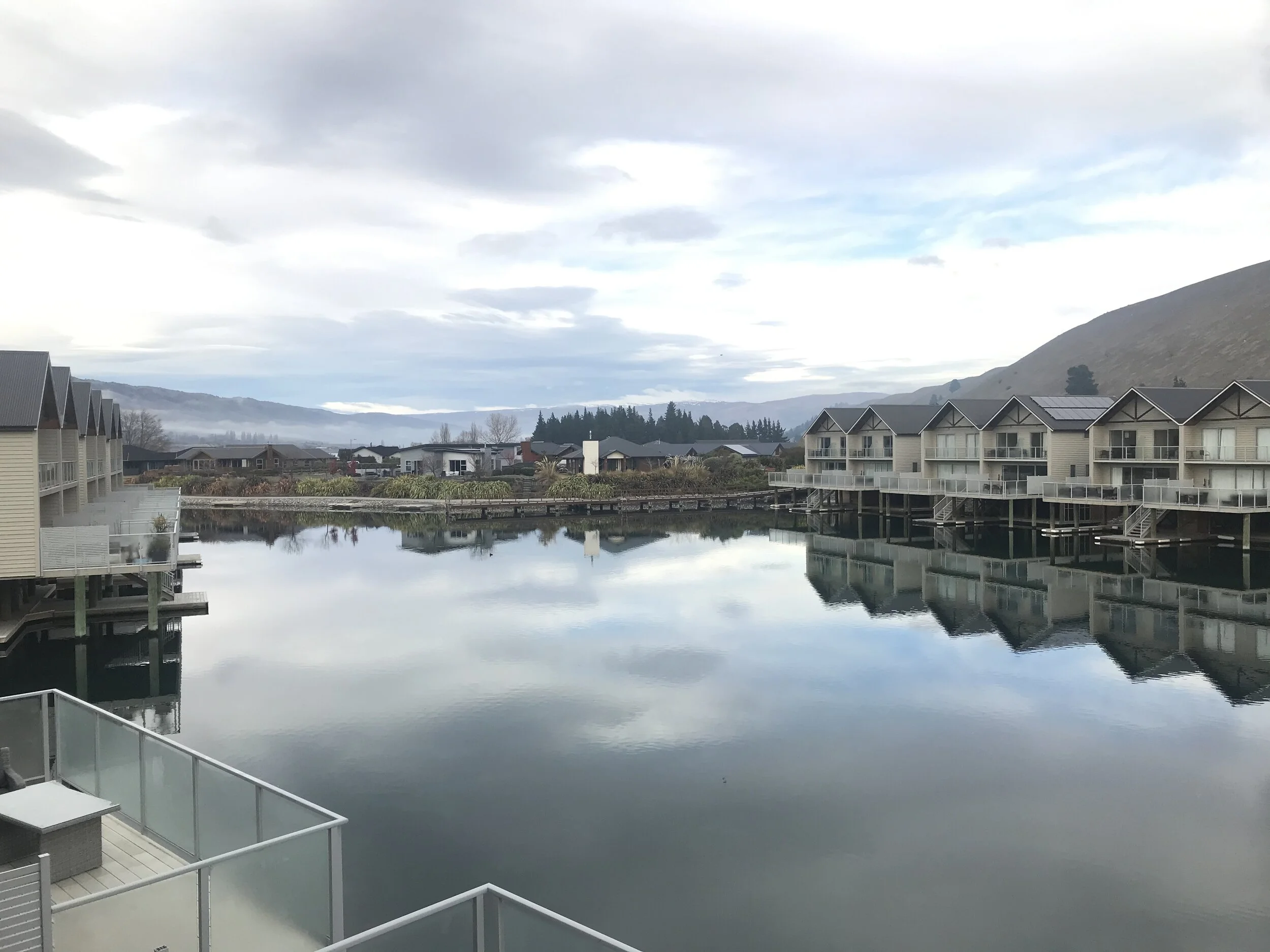
Heritage Lakeside Resort near Cromwell, experience and overwater villa
Cromwell itself seems somewhat light weight on first appearances. Take this with a pinch of salt though. Yes the large plastic fruit are somewhat tacky and the sterile town-centre perhaps lacks the atmosphere of nearby Wanaka or Queenstown, but underneath Cromwell packs a vibe. The nearby Swimming and Fitness centre is the envy of other towns. The sports fields are always buzzing with competitors. The stream flowing through the middle of the pedestrian area gurgles away as shoppers browse the local bookstore, deli and bakery. With fruit trees and vines surrounding the township, and it’s setting alongside the lake-front in the heart of a mountainous valley, Cromwell is truly a wonderful place to while away a few days. There are numerous walking trails and even the opportunity to hire an e-bike from the local visitor centre. A day ride will take you through the valley to neighbouring Clyde – it is on my list to do this summer.
Any trip to the Otago area though must involve visits to wineries. Put simply this is a food and wine lovers paradise. I’ve already mentioned the Pinot Noir but the wineries here are creative and have some excellent sparkling’s, roses and chardonnays to sample. Cromwell itself is home to several wineries. The Four Barrels Walking Trail is a must do. It involves a short walk between 4 of the local wineries, Misha’s, Scott Base, Aurum and Wooing Tree. All offer platters or snacks of some type and each, of course, offers impeccable tastings. Misha’s is in the town surrounded by orchards, perch on one of the stools and allow one of the cellar door staff to talk you though the tastings. Nearby the Wooing Tree is set by a small lake within their own vines. They have seating outside under shady canopies and their platters have to be tried. As does a glass of their legendary ‘blondie’ wine – the ideal sunny summer afternoon tipple. Scott Basin sits up above the valley on its own little platform, again the cellar door is rustic with indoor and outdoor seating. The wine tasting is excellent and they are even the wine providers to the Antarctica Scott Base!
After a couple of wine induced days in Cromwell it’s time to discover it’s partner in crime Bannockburn…. Uncovered in another blog coming very soon……

Following the pathway alongside Lake Dunston
Hanging out in history in the old gold town of Cardrona
Snow Farm Cardrona is a paradise of snow……..
The Cardrona Hotel is one of the oldest in New Zealand and reckoned to be the most photographed. It’s not hard to understand why. The grand old dame dates to 1863 when the area was in the midst of a gold rush. At the time there where four hotels in Cardrona and it was a bustling prosperous hub for the area. Visiting the sleepy settlement now it’s hard in all honesty to imagine it. Today it’s a quiet place with just a few properties remaining. The Cardrona Hotel still stands due to the endeavours of previous owners who were keen to preserve this slice of New Zealand history. It is now a popular spot for après ski drinks (there are a couple of excellent ski fields just down the road) an excellent restaurant and even has a few comfortable hotel rooms at the back. I decided to stay the night to experience this unique spot for myself. It was a cold blustery evening, but the bar was cosy with its real log fires and huge comfy sofas. There were crowds of people both inside and outside – the back garden is home to an appealing fire pit which lets off a lot of heat to warm the chilly cockles. After a day on the ski fields there is probably no better place to hang out.
My room was at the back of the hotel, thankfully not overlooking the raucous beer garden, which meant I could enjoy some quiet time to myself. With the radiator cranked up it soon became lovely and toasty. Furnishings are old worldly and charming a bit like the pub itself, so even though this part of the hotel was only built this century it has the feel of times past. I’d booked dinner in the restaurant that night (the nearest other place to eat was in Wanaka several kilometres drive away, which at night in the dark didn’t really appeal). I was glad I did have a booking as it was packed. I was seated at a table by the fire which was very welcoming to enjoy a hearty plate of homemade curry. I’d heard that the current owners had worked hard to improve the food offerings, and this was certainly bared testament in my meal. There are burgers, steaks even nachos on the menu depending on your appetite.
I ventured to bed very contented and pleased I hadn’t had an encounter with the resident ghost!

Dan enjoying a local beer by the fire at the Cardrona Hotel
After a comfortable night’s sleep, I was up much earlier than most which meant a quick visit to the hotel’s restaurant again for a breakfast of poached eggs on toast. I would have tried their homemade porridge or eggs benedict, but I had a pressing engagement so needed to be on my way swiftly. I’m heading back to linger longer and enjoy the hotel as it rises to another busy day.
The reason for my hurry on this particular morning was that I had to drive up the long meandering road to the top of the Snow Farm, one of the ski fields in the Cardrona area. Whilst it takes a while to twist and turn upwards the views on offer are spectacular. As you venture higher the scene beneath you unwraps in every direction and affords awesome views of the other Cardrona ski field just across the valley. On a clear day it is quite a sight. As I reached the top the grassy tussock roadside scenery was replaced by alpine rubble covered with a thick layer of pure white snow. The Snow Farm lodge itself is an extensive building complete with eateries, ski facilities and accommodation. If you are fortunate to have a clear day it would be a top place to base yourself, especially at night when it must feel that you can actually reach up and touch the stars.

Looking out over the magnificent Snow Farm at Cardrona
My morning was going to be taken up doing something I’d always dreamt about, driving my own sled dog team. I’d arranged to meet up with Underdog NZ at 10.30am at the Snow Farm to start my tour.
Look out for my next blog soon………
West Coast Pancakes
The West Coast does literally rock…..
After a day spent around the Hokitika area exploring the breath-taking colours of the gorge, the supreme serenity of Lake Kaniere and the tasty pizza concoctions of Fat Pippi (yes some of the best pizzas to be found anywhere are in Hokitika) it’s good to drive further up the West Coastline. The only road weaves along beside the rugged coastline squeezed between the mountains, rainforest and sea. The Tasman Ocean pounds the beaches on one side whilst the mountains of the Southern Alps rise majestically on the other. The main township north of Hokitika is Greymouth which offers numerous accommodation and refreshment options. It’s home to Speights Brewery, a world-famous beer often known as West Coast gold. The brewery offers tours and is reported to have one of the best restaurants in town. I haven’t tried it yet, but it is on my list. Greymouth is also the end of the line for the ‘Tranzalpine’, the scenic train journey that traverses from Christchurch on the East Coast through the mountainous Arthur’s Pass area.
North of Greymouth the road twists and turns around many corners and the scenery becomes largely dense bush and rainforest. There is a scattering of small settlements here and there and some wonderful places to stay offering incredible views. The rainforest ends where the rock-strewn coastline starts and there are endless sandy beaches to pull over and enjoy. Overall the atmosphere is one of isolation yet wonderment. A turn in the road can lead to yet another awe-inspiring vesta. The temptation in such a setting is to continue driving – and this is indeed an excellent option to consider as further up the coast are such wonders as Cape Foulwind and Karamea – both of which I will come to in a later blog, but the drive for today is to Punakaiki.
Punakaiki is popular with everybody due to its remarkable location with famous blowholes and pancake rocks. It’s so popular that sometimes its difficult to find a parking space close by.
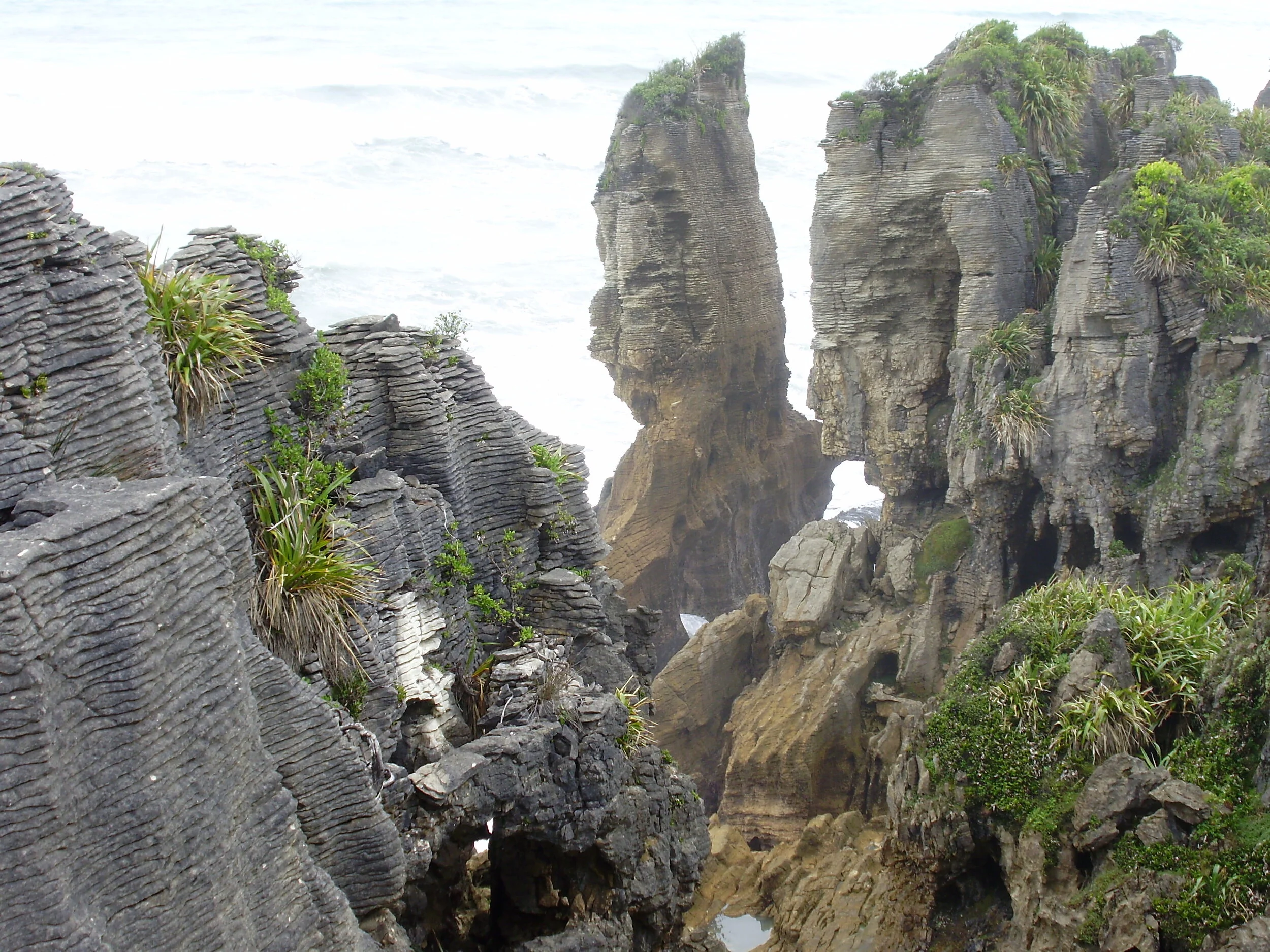
Top Tip: if you have time stay the night in Punakaiki, there is some top accommodation options and excellent walks and kayaking trips to appreciate. You will also get to enjoy the pancake rocks at quieter times.The loop walkway is easy to manage, it traverses through a native bush area full of Nikau Palms that forms the start of the track and you soon understand why it’s called Pancake Rocks. The limestone cliffs have been battered by both the weather and the tide over the years so that they now resemble pancakes stacked jaggedly on top of one another. Try to time your walk with high tide and ideally a rough sea. This will enable you to witness the blowholes in their full glory – the one labelled ‘chimney’ is aptly named as when a powerful surge of water flows through the chamber underneath it forces itself up through the rock creating a spray of water that looks like steam rising upwards into the air. I’ve been lucky enough to visit the rocks in various sea conditions – with rough seas you are avidly watching the waves form out to sea keen for them to break in time to raise the water level to pound through the narrow chambers. But equally in calm seas the rocks can be just as appealing as looking outwards you can often spot Hector’s Dolphins (the world’s smallest) cruising by in small pods close to the coastline.
Once you have completed your circuit and taken all the required photographs head across the road that is opposite the walkway entrance Here you will find a Department of Conservation centre useful for souvenirs or ideas for further adventures along the West Coast. There are also a couple of cafes that offer some good refreshment.
My next blog in this series will take us further up this striking coastline to Cape Foulwind and Westport.

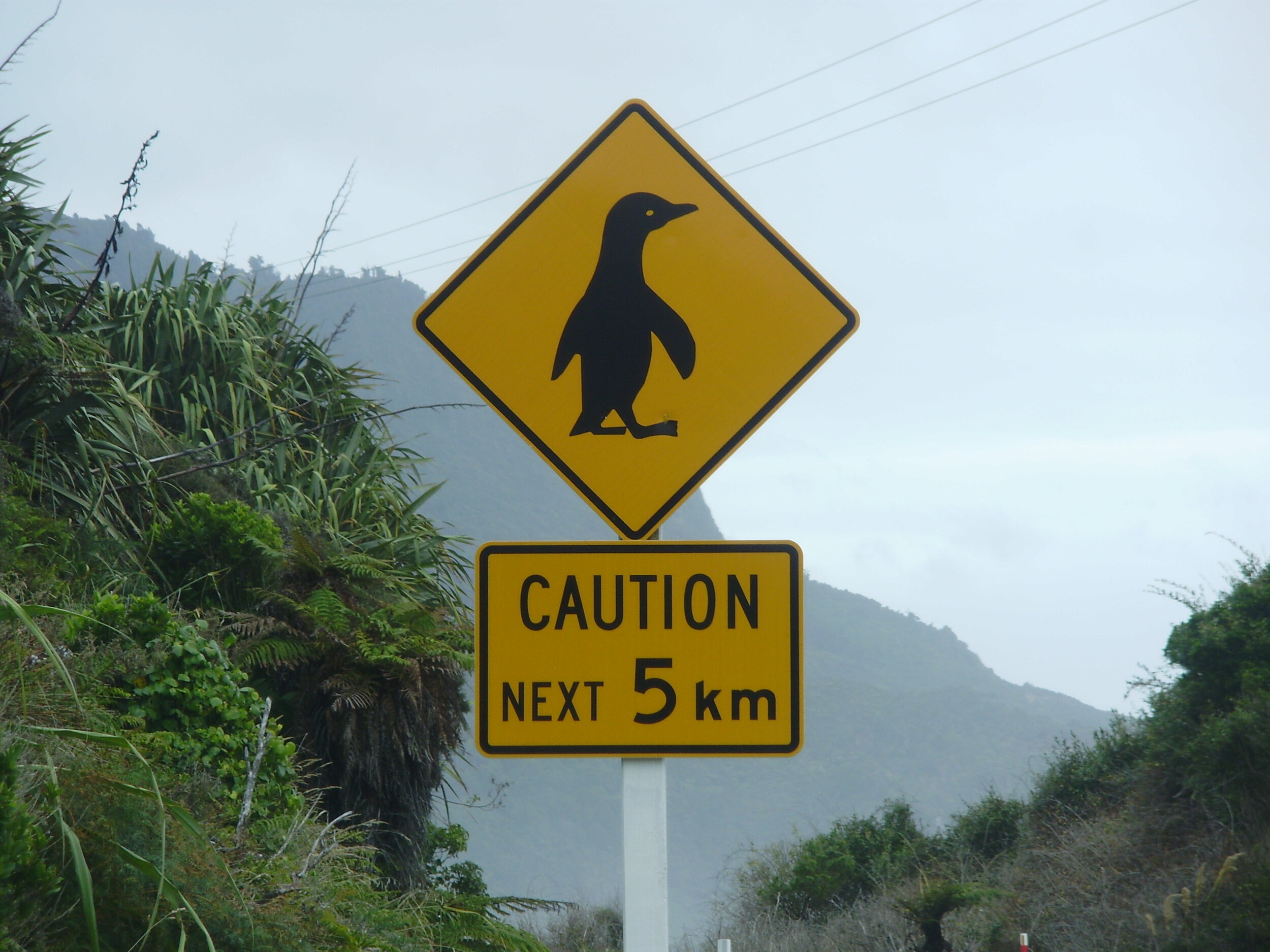
Biking the Little River Rail Trail in Canterbury, South Island New Zealand
Hiking and biking are two of my favourite outdoor activities.
They are easy to combine on a weekend and one of the best places is Little
River on the Banks Peninsula. There are some easily accessible Department of
Conservation walks in this area and the Little River Rail Trail is one of the
best mountain bike tracks in the country.The Trail covers nearly 50km of mainly off-road biking following, as you can probably guess, an old rail line from southern suburbs of Christchurch to Little River township. It can be broken down into easy manageable sections or enjoyed in one go – although if you aren’t a seasoned biker you will probably suffer sore calves if you do attempt this! Beware! It is all nicely flat though, which is a plus,
and takes you through some magnificent countryside so there are plenty of places to stop off at, rest, and enjoy the scenery and serenity. I have biked the trail a few times and one of my favourite parts is from the small town of Lincoln to Motukarara. This part does include some roadway negotiation, but it is so quiet and you tend to get distracted by all the sheep and horses in the fields, the Pukeko and paradise shell ducks that are abundant around here. Part of the trail traverses alongside the river and a new wetland has recently been developed by some keen locals eager to return the adopted farmland to its former habitat. There are signs telling you all about this initiative and it quite inspiring to witness
at first hand all the hard work and dedication. Over the next few years, as the
plants grow, and birds return it will be a pretty special place for all to
enjoy.Another recommended an enjoyable part of the track is from
Motukarara to Kaituna Quarry Reserve. Look behind you and you have the splendour of the Southern Alps mountain range in full view on a clear day. Beside you is Lake Ellesmere, an inland saltwater lake cut off from the sea by the Kaitorete Spit. The lake and all it’s wetlands and overflows, including Kaikuna Lagoon are home to literally thousands of birds. Up to 98,000 can be hanging out here at any one time! Often as I cycle along the raised track, I spot grey herons standing tall and proud on fence posts. In the wetlands are families of Australian Black Swans who raise their young in these sheltered waters. In Springtime the ponds at the side of the track are home to mother ducks with their tribe of little ducklings innocently negotiating the reeds and bushes. There are often some unusual birds to be found here that I would in all honestly struggle to name, but if you enjoy wildlife and nature it’s an excellent part of the track to explore and linger.My third and last recommended section is the part encompassing Birdlings Flat to Little River township itself. Birdlings Flat is a vast stone covered beach that is pounded constantly by the unforgiving and slightly mercilious Pacific Ocean. With its crumbling cliffs at one end and seemingly endless expanse at the other it is both atmospheric, wild and beautiful. Fishermen love it here and there is a constant trail of eager anglers keen to make a catch just off the beach. Little River reached by following the rail trail along the banks of Lake Forsyth from Birdlings Flat along the floor of the rolling hills of Prices Valley is a small settlement which is usually a stop off-point for those travelling further on around the peninsula. It has an excellent café, fuel stop, art gallery and even an American Diner. If you are keen enough to tackle the trail in one fell swoop it has the unique Silo Stay to spend the night – hay silos have been converted into stylish hotel units, there is even a place to hang your bike!
Once you have begun your exploration of the area, providing
you still have enough energy in those legs after your bike ride – which along
this trail has a habit of being longer than you expect it to be as you simply
can’t help gazing ahead of yourself despite your legs screaming at you to stop –
you will be keen to go off road altogether and follow one of the walking tracks
into the bush and countryside. The track I would recommend for a day walk would be the Okuiti Track. It’s quite a climb but once you reach the upper areas you are rewarded with some truly splendid awe-inspiring views.


A road trip into Mt Aspiring National Park never disappoints
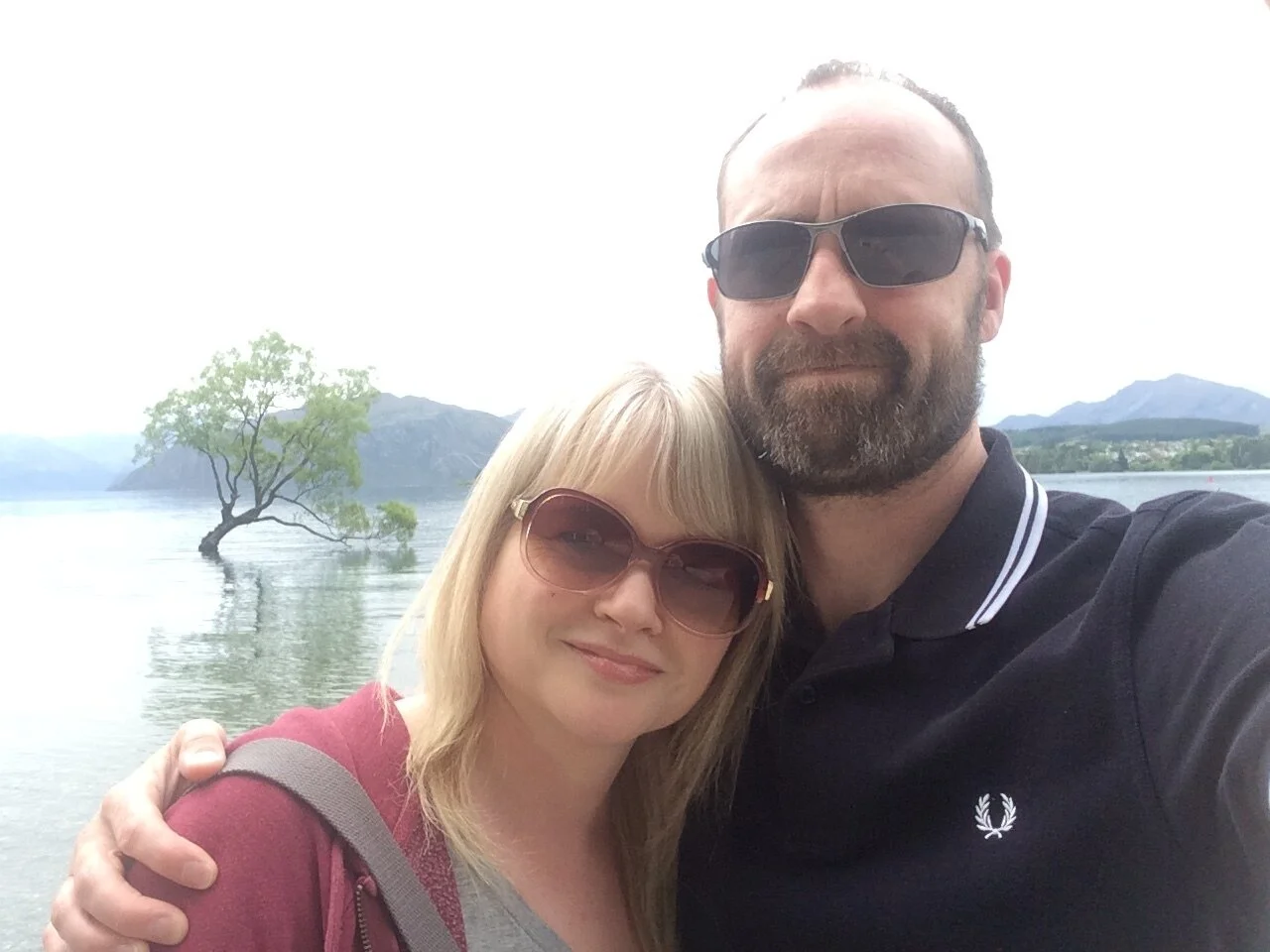
Dan and I beside the shores of Lake Wanka with the famous tree behind us - very touristy I know - but when in Wanaka…
Wanaka is famous for several things, its buzzing atmosphere, its picturesque setting, it’s large lake and it’s famous tree. But what is really inspiring about any road trip to Wanaka is leaving civilisation behind and heading deep into Mt Aspiring National Park.
My first day in Wanaka involved a stroll around the lakefront. I’ve hired a kayak before and taken it across the lake - that is well worth doing - hire of kayak and paddleboards is usually available on the edge of the lake near the town centre. Today though I just felt like a stroll so headed around past the jetty and marina. absorbing all those picture postcard views.
Top tip: make sure you head down the jetty to peer into the clear waters beneath - there are usually heaps of New Zealand Long Fin Eels swimming around. These eels can live up to 100 years in freshwater before heading out to sea.
The lakeside pathway I was following carries on through woodland and meanders by the lakes eastern reaches. You can carry on all the way to Albert Town if you so wish. As I strolled I spotted shags and herons fishing in the lake water and several fantails tweeted a chorus at me as they grazed on the bugs disturbed by my footprint.
I also strongly recommend walking around the other side of the lake which is an even prettier route to follow (had left from the town) and yes this route does indeed take you past the famous ThatWanakaTree# - its also quite a cool mountain biking track and offers some epic photo opportunities.
Wanaka itself is well worth devoting some time too. It’s home to some excellent cafes and restaurants and some cracking pubs. The Lake Bar is one of my favourites - positioned on the corner it does, as the name suggests, have great lake views. The wine and beers pretty good too… Lots of locals congregate here. A few doors away there is an attractive bar called Alchemy which is apparently good to eat in - I haven’t tried it yet as I’m rather addicted to Francesca’s Italian, a somewhat Wanaka institution that serves fabulous pasta and desserts. Don’t miss their polenta fries for starters either - they are irresistible. Whilst mentioning food in Wanaka I must recommend the scones from the Federal Deli found tucked down a little alleyway off the main street (Helwick Street), they sell out quickly but the cheese and date scones here are from another planet……
The shops in Wanaka all tend to cater for the great outdoors which is hardly surprising given where Wanaka is situated. If you don’t go outdoors here and do some hiking, climbing or cycling there is probably something suspicious about you. Yes, I appreciate I’ve just mentioned some incredible eating and drinking spots (I haven’t even started on the wineries and chocolate shops present nearby, I’ll save those for another day) but you must get out in the outdoors in Wanaka it’s just not negotiable - and just think how good you will feel about tucking in to said food and beverage after a day full of exercise….
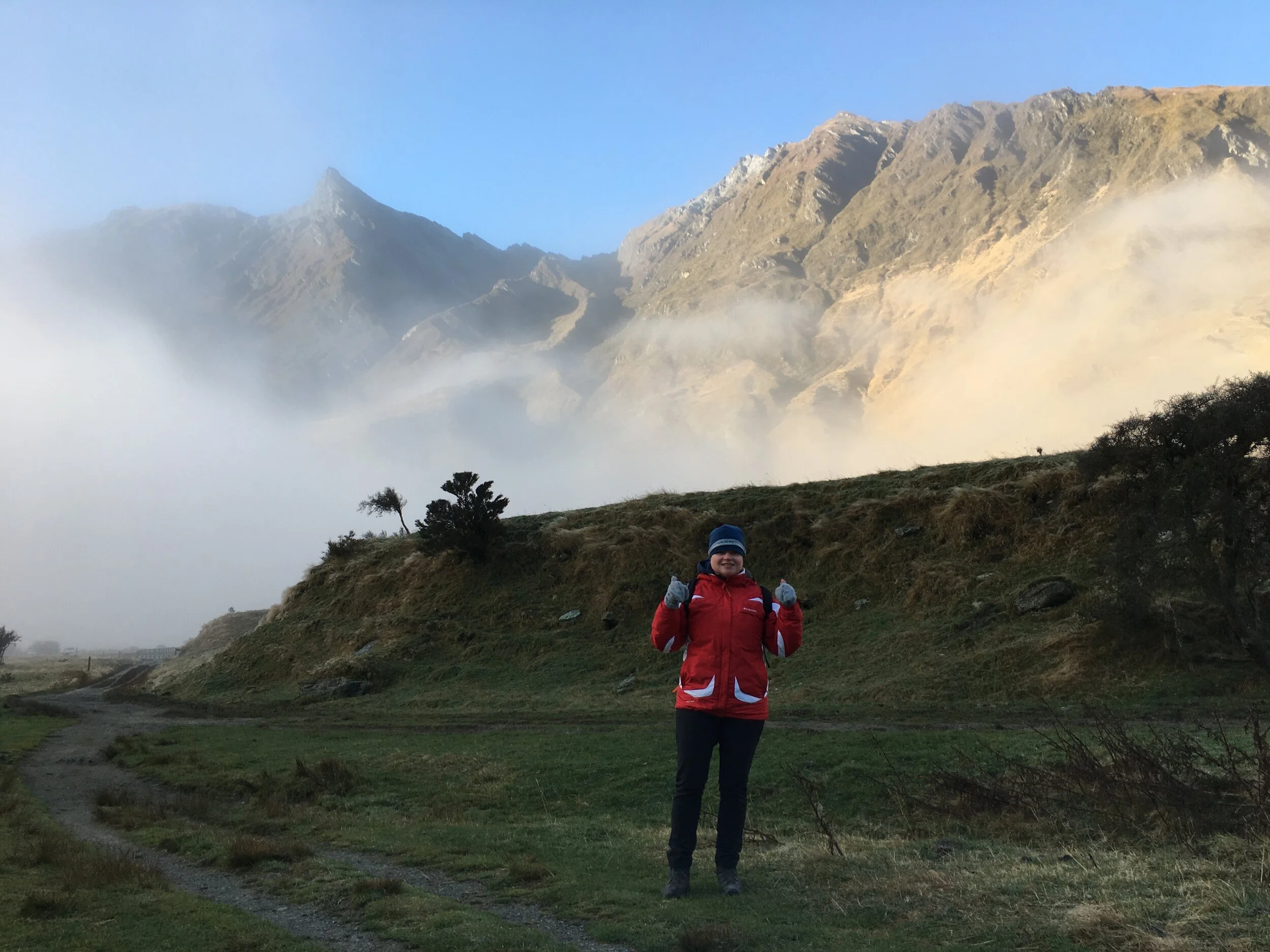
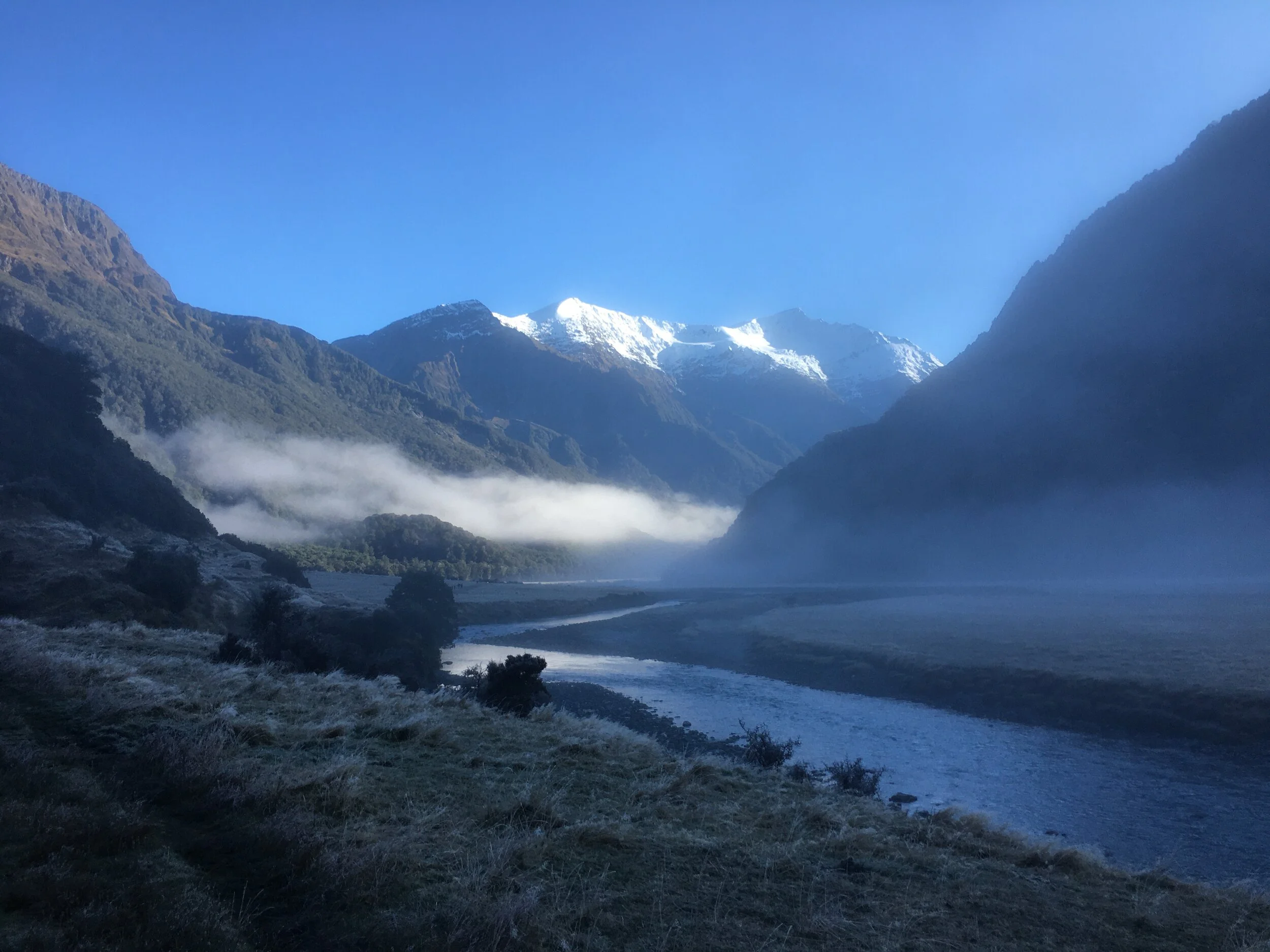
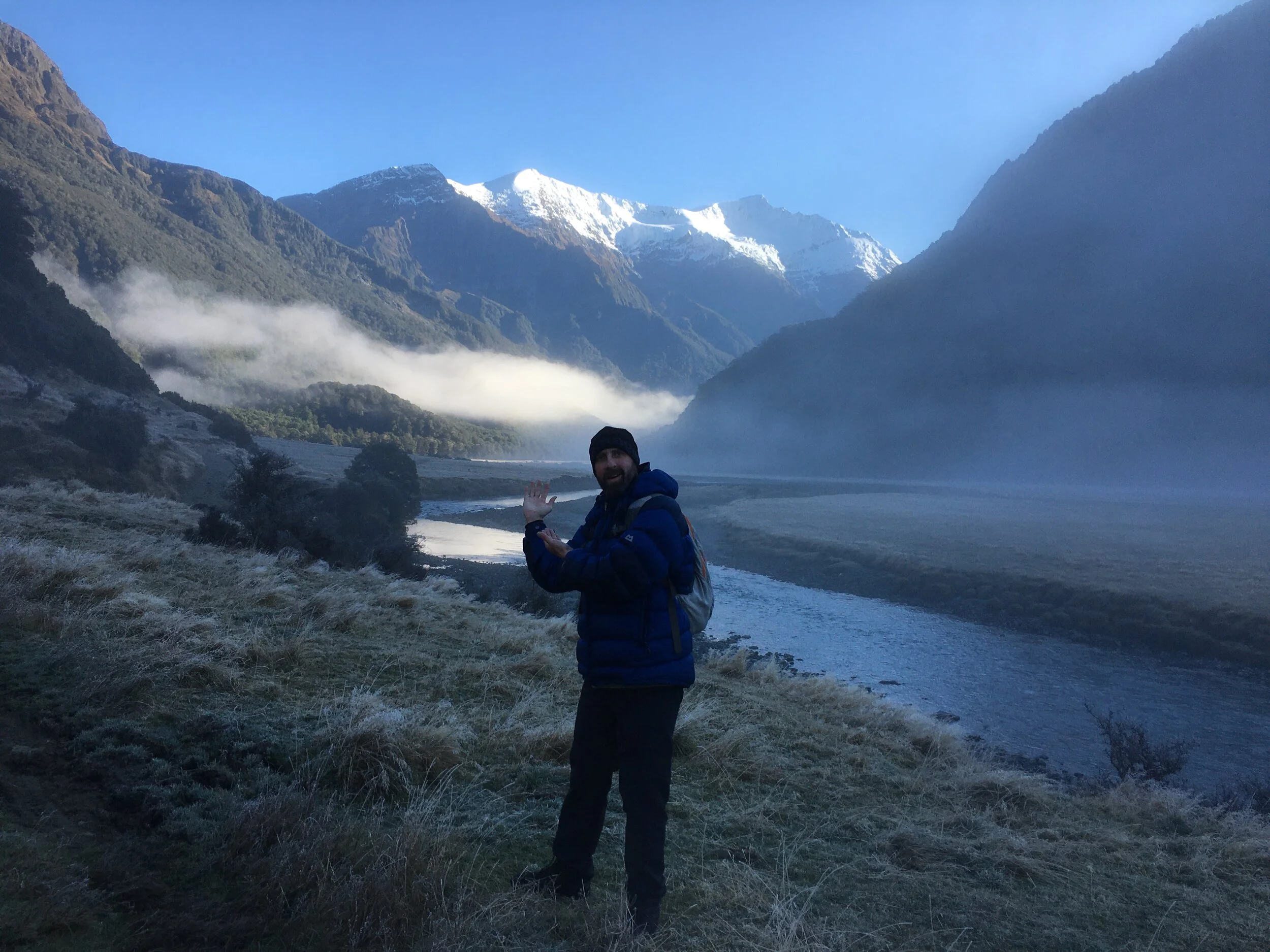
So, in keeping with what I’ve just strongly suggested, my start the next day was early - super early. I opened the curtains to a bank of fog - mountains, what mountains, was grumbled as I looked out of my motel room. This annoying deterrent though did not stop me from heading out on the hour plus drive to Mt Aspiring National Park and the Raspberry Creek Carpark as the sun rose. I could barely make out the valley I was driving through as the fog settled although I did come across a few sheep jams along the way and a couple of cows on the road - hey this is New Zealand after all. After weaving my way along an unsealed road and through some narrow stretches with tight turns I came to the car park which was virtually empty on this cold grim morning. I hoped, as I wrapped myself up in all my cold weather gear, that the visibility would improve - and it sure did in such an incredible way. Glancing up as a began my walk I noticed the top of a snow covered mountain looming high above and slowly poking Its peak out of the freezing blanket of fog and into the sun.
Read my next blog about Mt Aspiring National Park, Rob Roy Glacier and drinking the best hot chocolate ever at Patagonia
A journey to the West Coast - Arthurs Pass to Hokitika
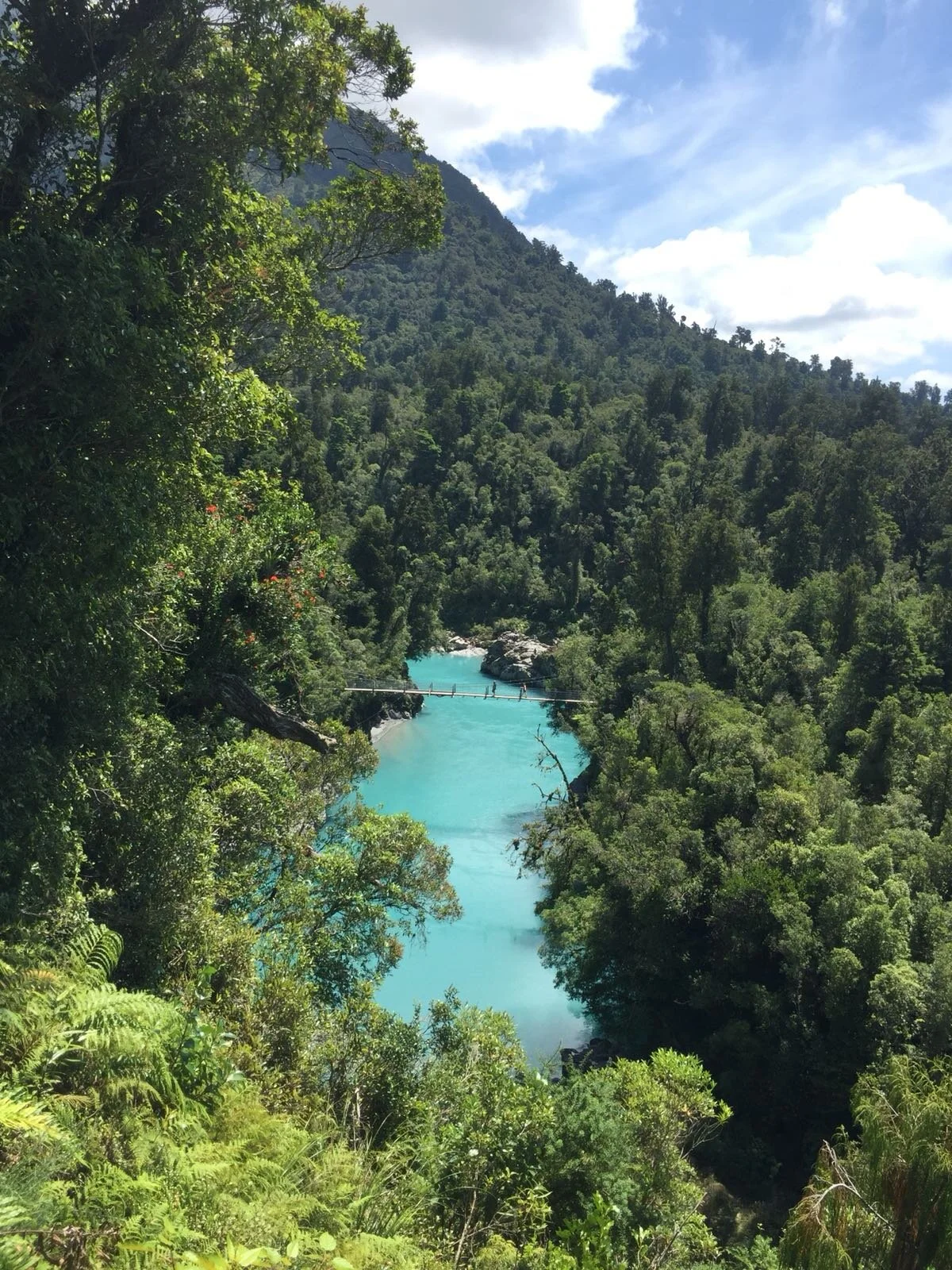
The vivid blue colours of Hokitika Gorge, well worth exploring on any road trip around the West Coast of the South Island
Arthurs Pass traverses its way through the mountain ranges of the Southern Alps in the middle of the South Island. Named after Arthur Dudley Dobson, who was the first European to escort a party through the area, it is a drive that requires you to have your camera at the ready. My first port of call was the small settlement of Sheffield. Sheffield is home to an amazing pie shop - one that is world famous around Canterbury! Each day they serve up a vast array of sweet and savoury pies and stopping for one is kind of a compulsion for anyone in the know. I bought my vegetarian pie (yes I know but I love my veggies, although the chicken pies are also pretty tasty) complete with a nanna slice (chocolate heaven) for afterwards and headed on my way. The scenery on this, the Eastern side of the Alps, is tussock grasses, oddly shaped rocks (Castle Rock is an excellent stopping point) glistening lakes brimming with trout, expansive braided rivers and sharp mountain edges. Numerous gravel tracks lead off the highway to various tramping tracks and ski resorts in winter. Everything is so immense it causes you to catch your breath.
Top Tip: stop at Arthurs Pass Village - it’s not only great for a refreshment break (the coffee is good), there is also a chance of spotting a Kea - the world’s only Alpine Parrot. I’ve had one approach me and try to pinch my mobile phone whilst I sat outside one of the roadside cafés sipping my coffee. Please don’t feed them though as so many die from being too close to the road or eating the wrong type of food.
As I left Arthurs Pass Village I noticed the scenery begin to change. The rainforest of the West Coast begins to emerge with enormous waterfalls plunging down from mountain edges and road sides covered in a dense assortments of ferns. This is the wet side of the country and the scenery certainly reflects that. Rugged forests climb high up the mountain edges. Arthurs Pass finishes at Kumara Junction where I joined State Highway 6 - the only road to be found up and down the West Coast. I was heading to Hokitika but first my journey took me through farmland towards Lake Kaniere. Even on a misty overcast day this lake is something else. It’s setting is sublime, with rainforest edging its shore and the peaks of the Southern Alps looming above. The lake is a mecca for watersport but I enjoyed wandering some of the tracks nearby. A loop walk took me through a Kahikatea forest and past a small stream. Weka (a native bird which looks a bit like a kiwi only it is active during the daytime and doesn’t have quite as long a beak) came and approached me as a I ate my pie at the lakeside.
I drove around the lakeside until the road zig zagged it’s way through farmland to Hokitika Gorge. Up ahead the weather had cleared and I could just about make out the peak of Aoraki/Mt Cook, New Zealand’s largest mountain. Hokitika Gorge is a real feature of this area - a place where the glacial rock salt has caused the water to look such a vivid blue it appears as though dye has been poured into it. I tried to take a picture from the viewing platform overlooking the gorge but couldn’t really do it justice. A pleasant board walk took me out to a swing bridge across the river - holding on to your bags and cameras here is a must as with a couple of people on it the bridge really does swing! On the other side the walk continued through untouched bush and I was serenaded by fantails and bellbirds. There is a spot where you can clamber down onto rocks and actually reach the rivers edge if you so wish.
That evening I headed back into Hokitika Town. Please see my next blog for the Hokitika and Pancake Rocks road trip weekend adventure.